Incorporating recycled materials into your garden edging not only elevates the aesthetic appeal of your outdoor space but also champions eco-friendly gardening practices. Utilizing repurposed items to frame planting beds offers a sustainable alternative to conventional borders, diverting waste from landfills and infusing your garden with unique textures and colors. Whether you’re aiming for a rustic vibe or a sleek, modern look, recycled edging materials provide versatile, budget-friendly options that enhance both function and style. This guide explores innovative ways to redefine your garden boundaries using reclaimed resources, inspiring creativity while promoting environmental responsibility.
Creative Garden Borders Using Recycled Materials
1. Colorful Wine Bottle Borders
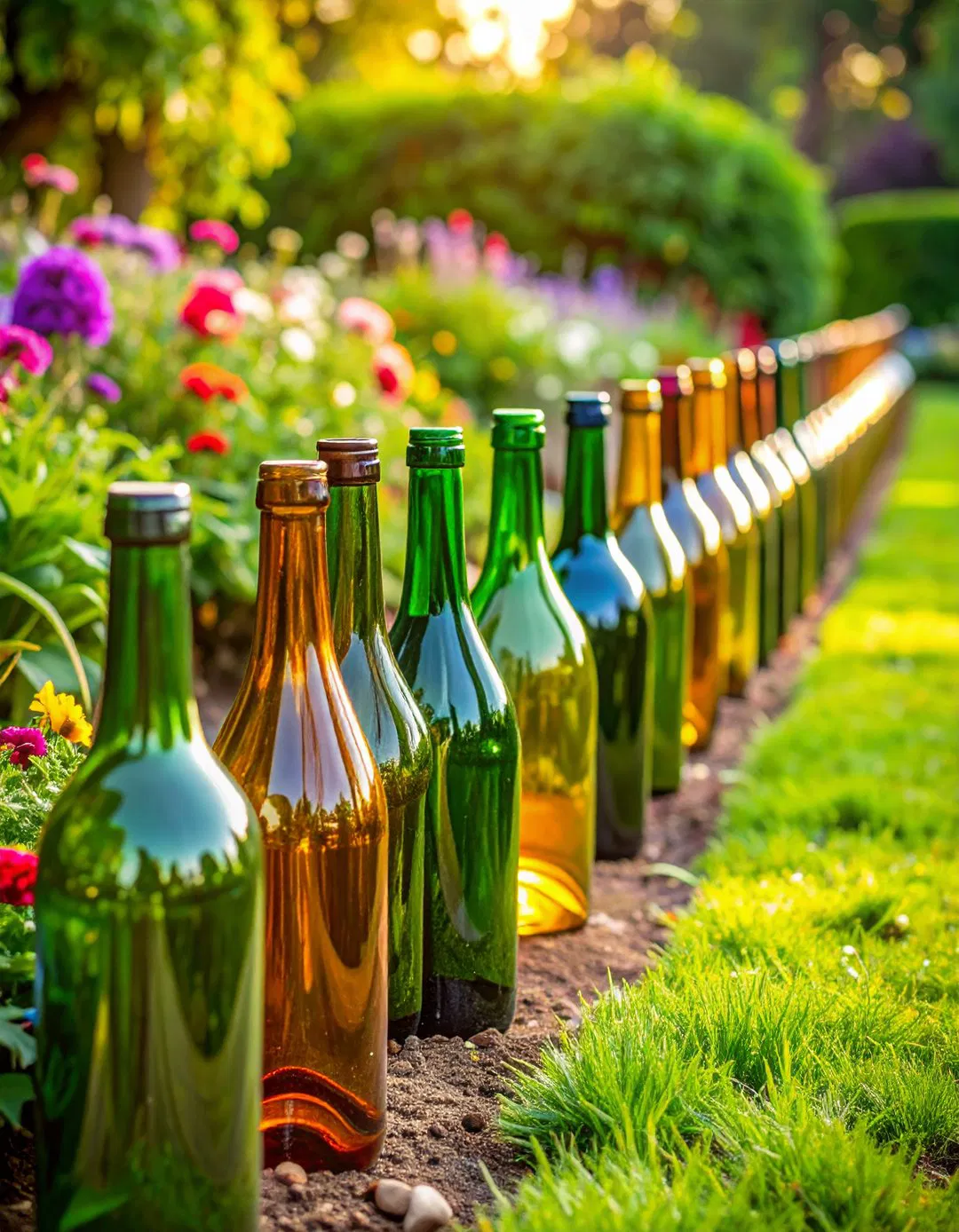
Transform empty wine bottles into vibrant garden borders by embedding them neck-down into the soil, leaving a portion visible above ground. The assortment of glass hues-ranging from emerald green to cobalt blue and amber-creates a dazzling spectrum that catches sunlight throughout the day. This method is especially effective for curving garden beds or herb patches where rigid edging materials might be challenging to install. Secure placement ensures stability against wind and accidental contact, making it both a practical and artistic choice.
2. Rustic Charm with Salvaged Bricks
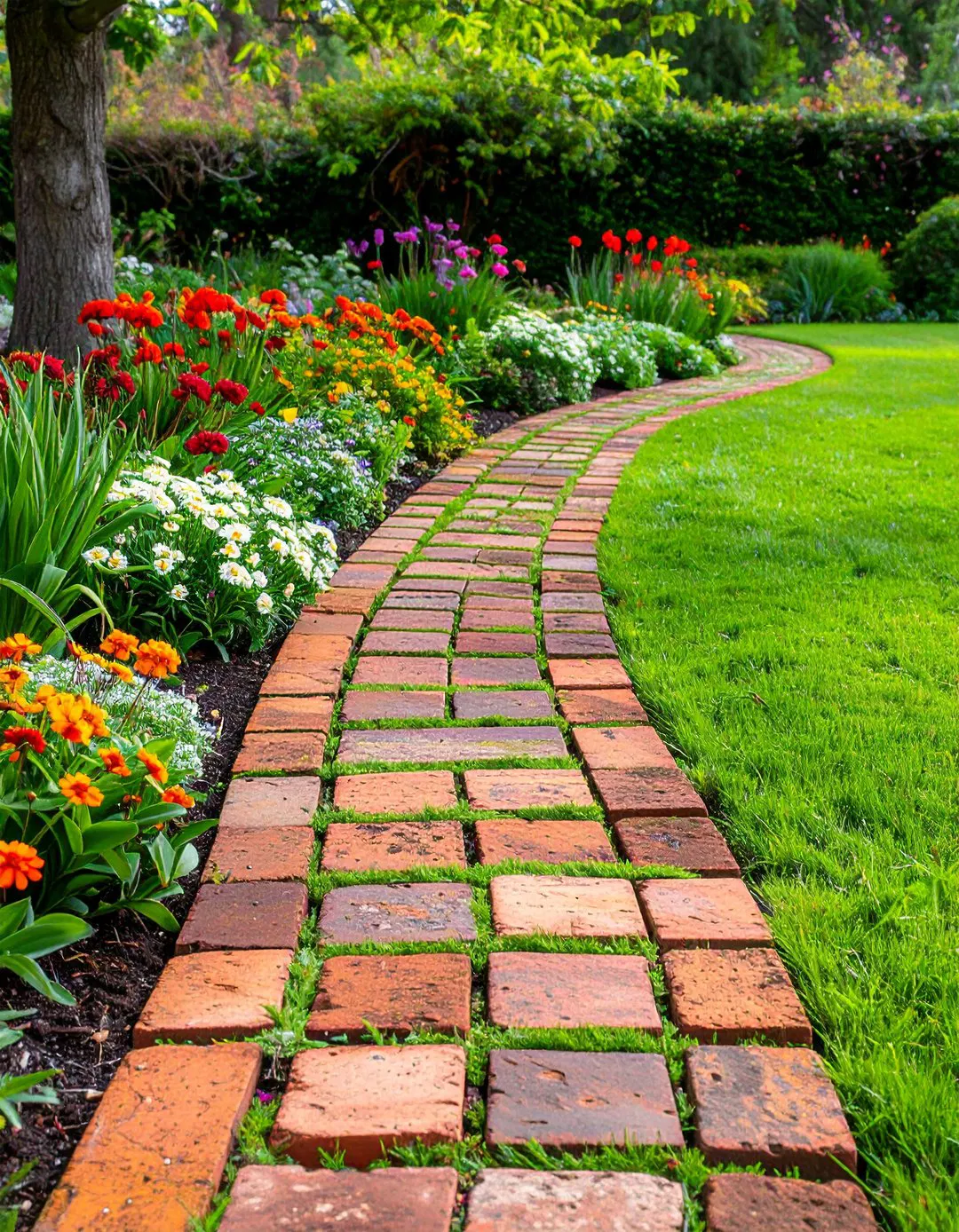
Reclaimed bricks sourced from old buildings or construction leftovers offer a timeless, weathered look that new bricks can’t replicate. Arrange them in patterns such as herringbone or simple linear rows to add depth and character to your garden edges. Their natural patina and slight imperfections lend authenticity, while their durability withstands seasonal weather fluctuations. This edging style pairs beautifully with cottage gardens and traditional landscapes, providing a sturdy and charming boundary.
3. Upcycled Pallet Wood for Versatile Edging
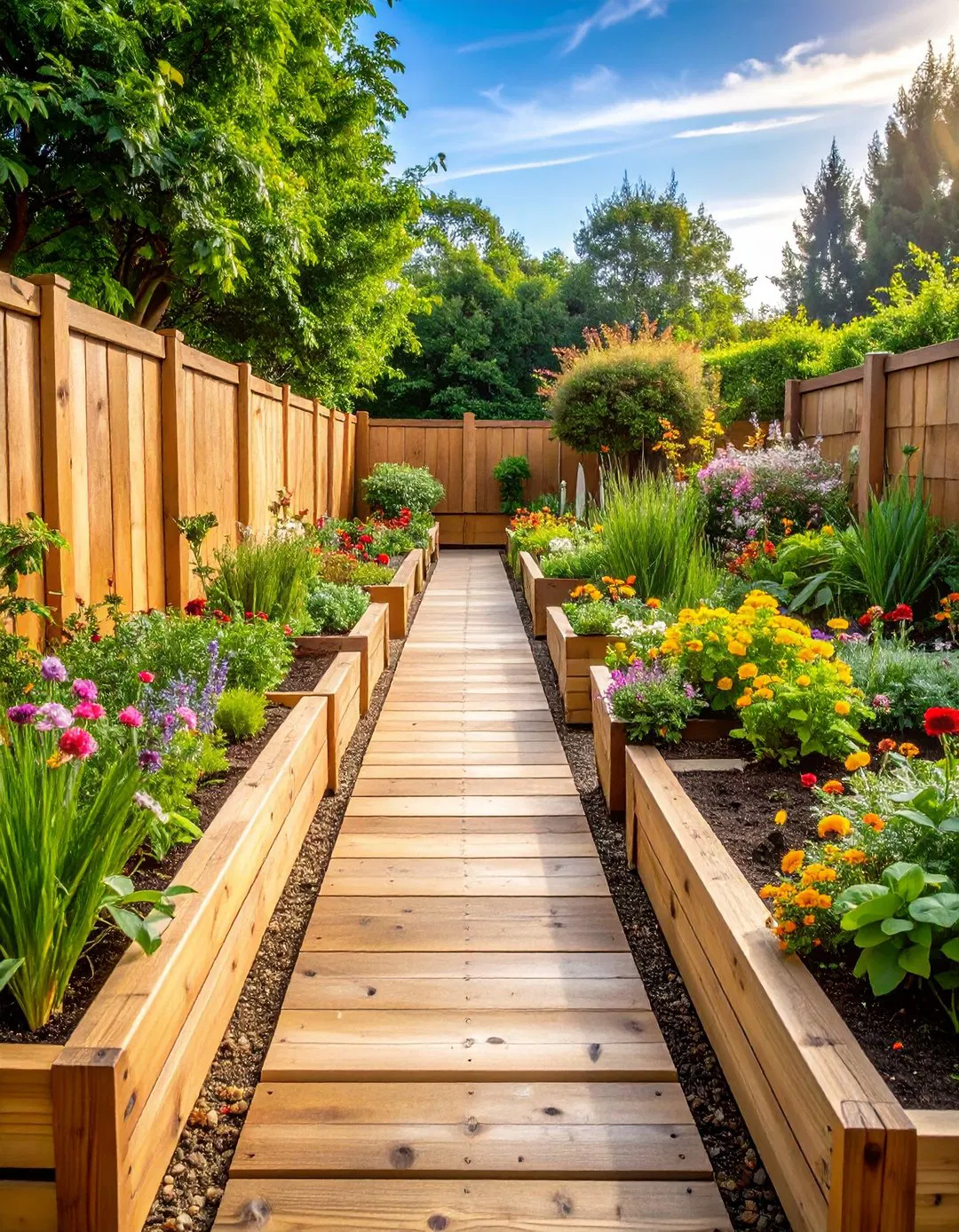
Old shipping pallets can be dismantled and repurposed into charming wooden borders that suit informal gardens and vegetable patches. Cut the planks into uniform lengths and install them vertically or horizontally to frame your beds. To enhance longevity, treat the wood with outdoor sealants or paint it to match your garden’s color scheme. The modular nature of pallet wood makes it easy to customize for curved or irregular garden shapes, perfect for gardeners seeking a hands-on project with a rustic finish.
4. Vibrant Tire Ring Edging
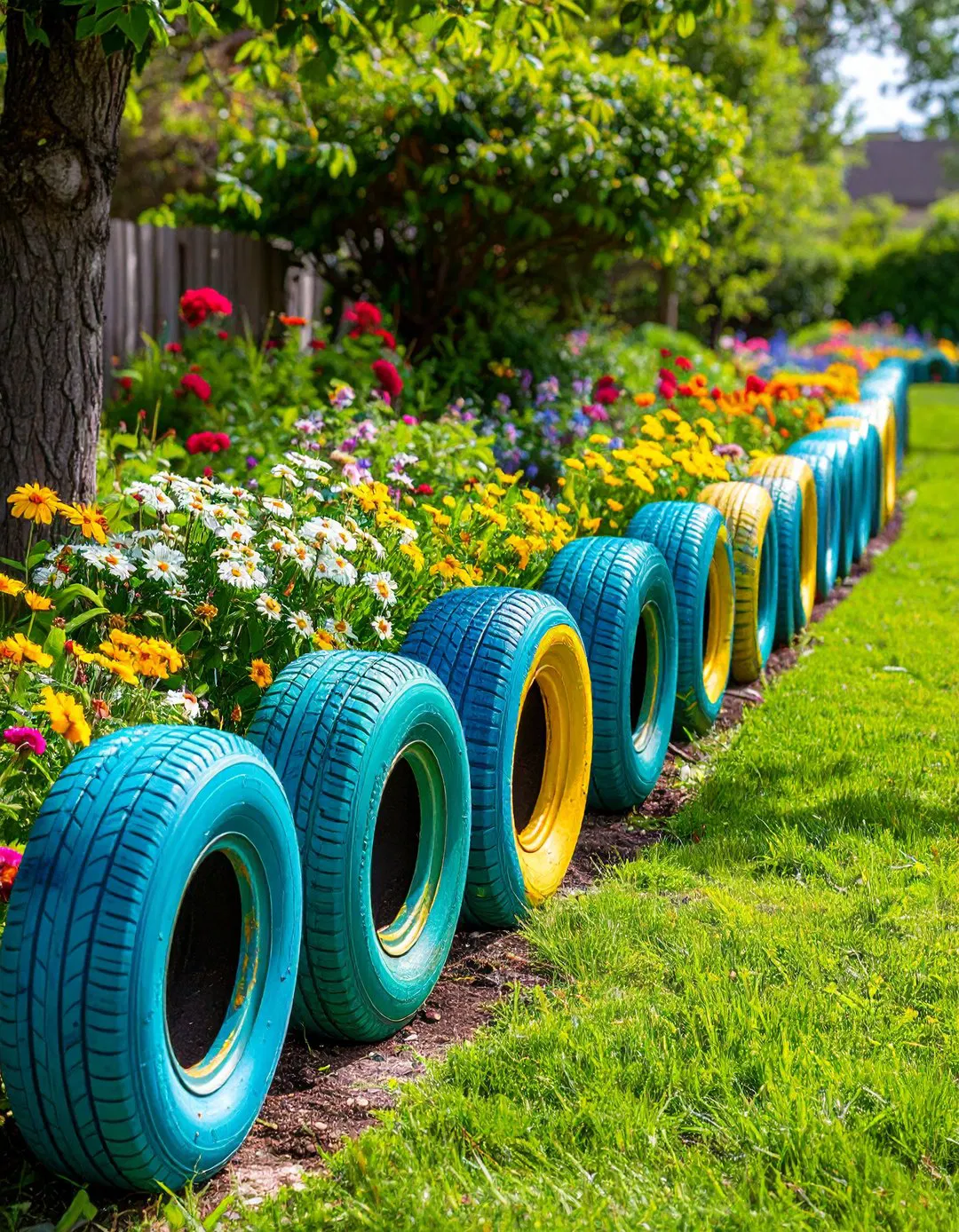
Repurpose old tires by cutting them into rings and painting them with durable, weather-resistant colors like teal, mustard, or coral. These colorful rings can be arranged whole or halved to create playful, eye-catching borders that also retain soil effectively. This approach is ideal for children’s gardens or casual vegetable plots, adding a fun and functional element. For added stability, partially bury the rings and fill them with soil to create mini planting pockets.
5. Durable Concrete Block Edges
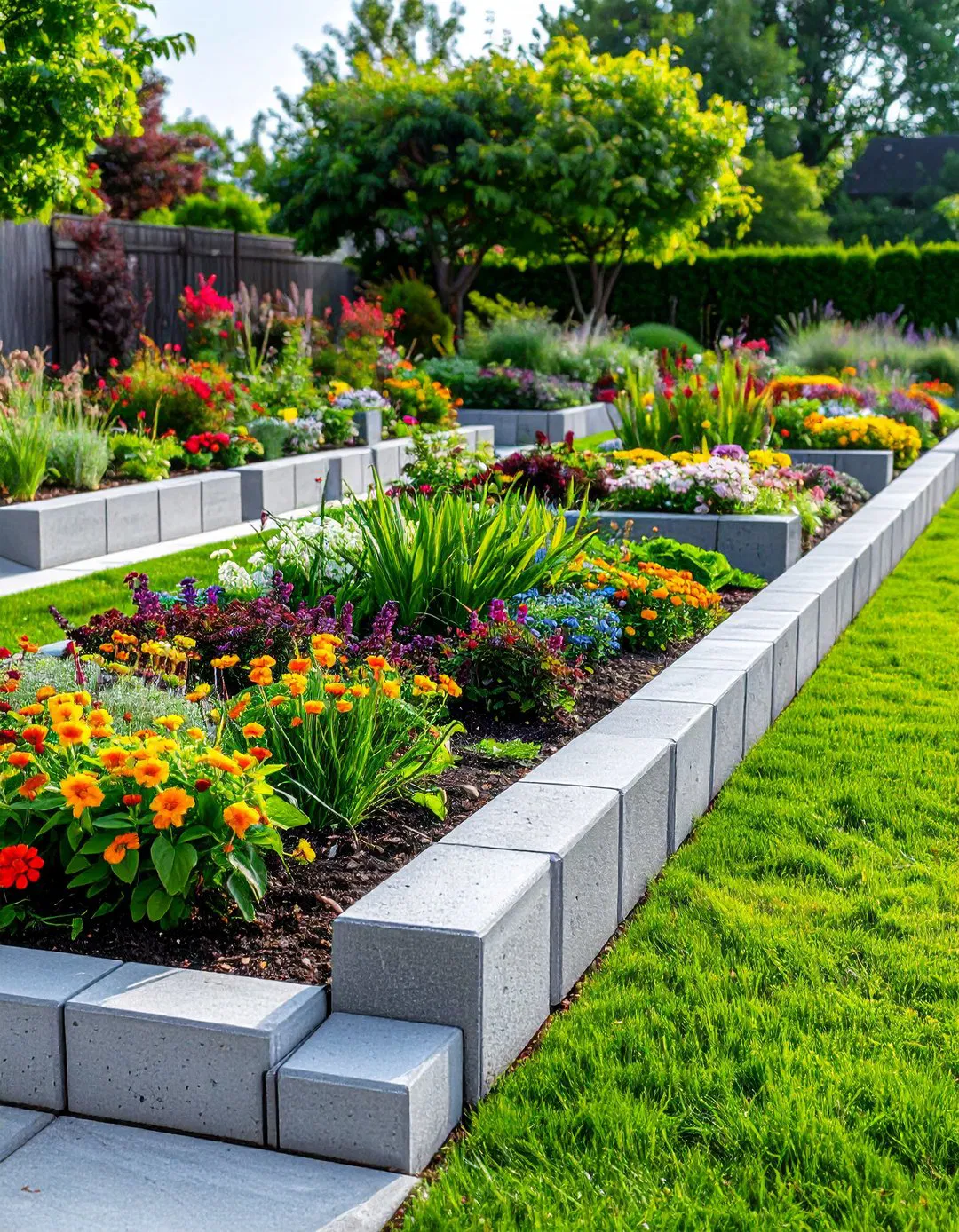
Concrete blocks salvaged from demolition sites offer a robust and modern edging solution. Their geometric shapes can be stacked or aligned to create clean lines or gentle curves. The hollow centers provide opportunities for additional planting or decorative stone placement. Concrete blocks can be painted or stained to harmonize with your garden’s palette, making them a versatile choice for contemporary landscapes. Their substantial weight ensures they remain stable on slopes without extra anchoring.
6. Mosaic Borders with Mixed Glass Bottles
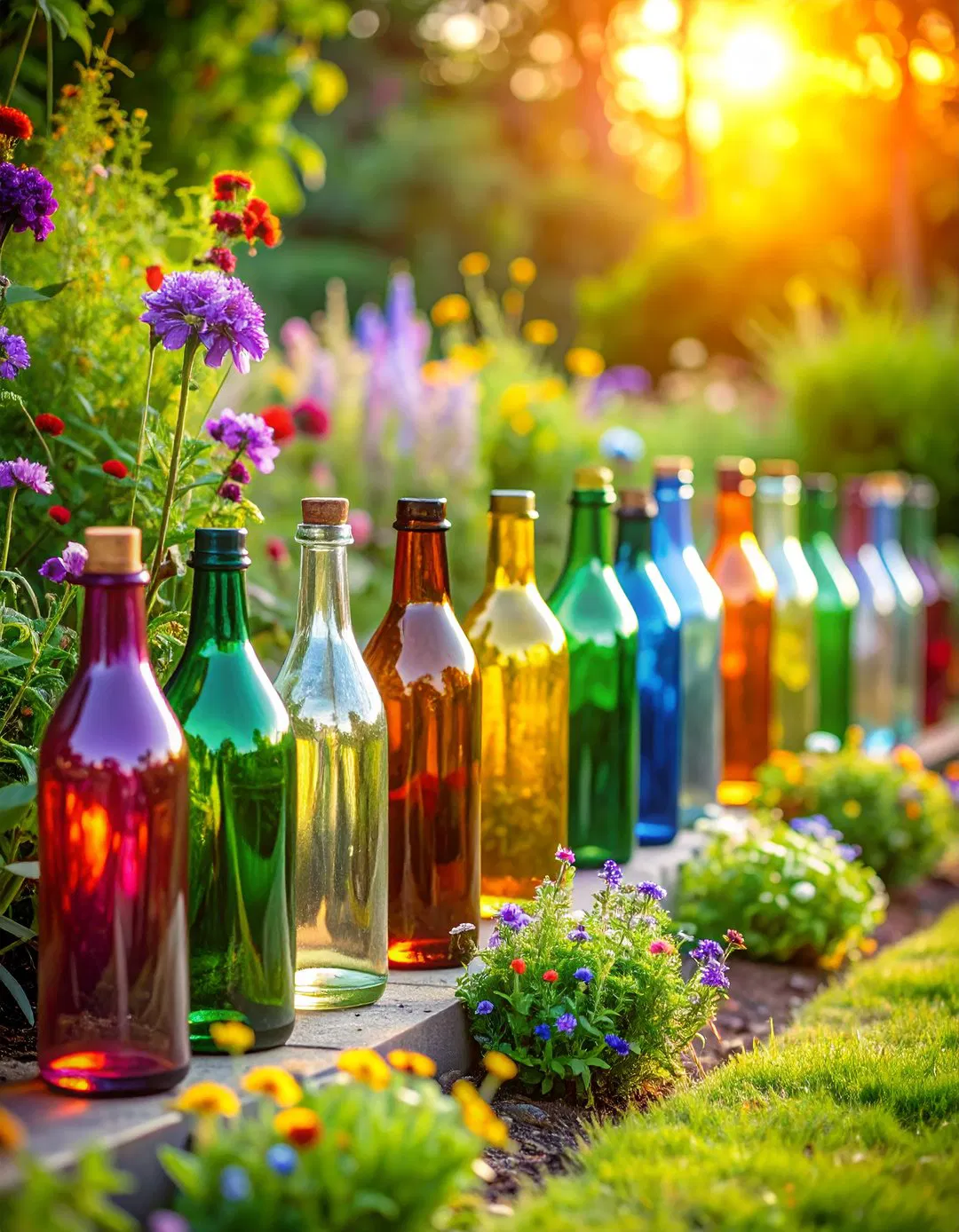
Combine various glass containers-such as soda bottles, beer bottles, and jars-to craft a sparkling mosaic border that plays with light and color. Arrange these bottles in artistic patterns along your garden’s edge, embedding them securely in the soil. The translucent nature of glass creates dynamic reflections, enhancing informal garden spaces with a touch of whimsy and creativity.
7. Elegant Slate Tile Borders
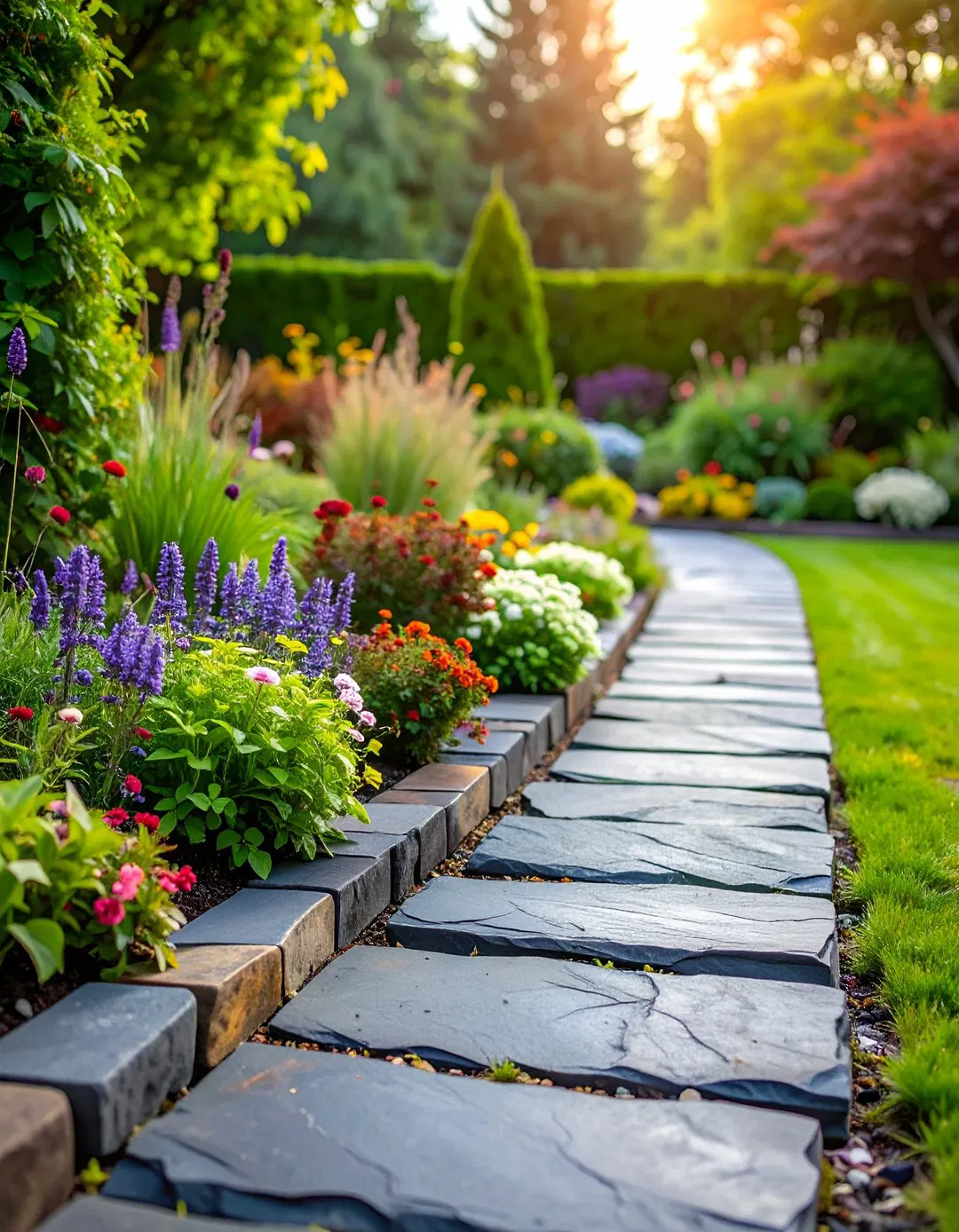
Old slate tiles, often reclaimed from roofing projects, offer a sophisticated and durable edging option. Their natural clefts and varied hues-from deep grays to subtle purples-add texture and elegance. Arrange tiles vertically for a modern look or lay them flat for a classic border. Slate’s weather resistance ensures long-lasting beauty, making it ideal for formal gardens, zen spaces, or architectural landscapes.
8. Natural Log Borders
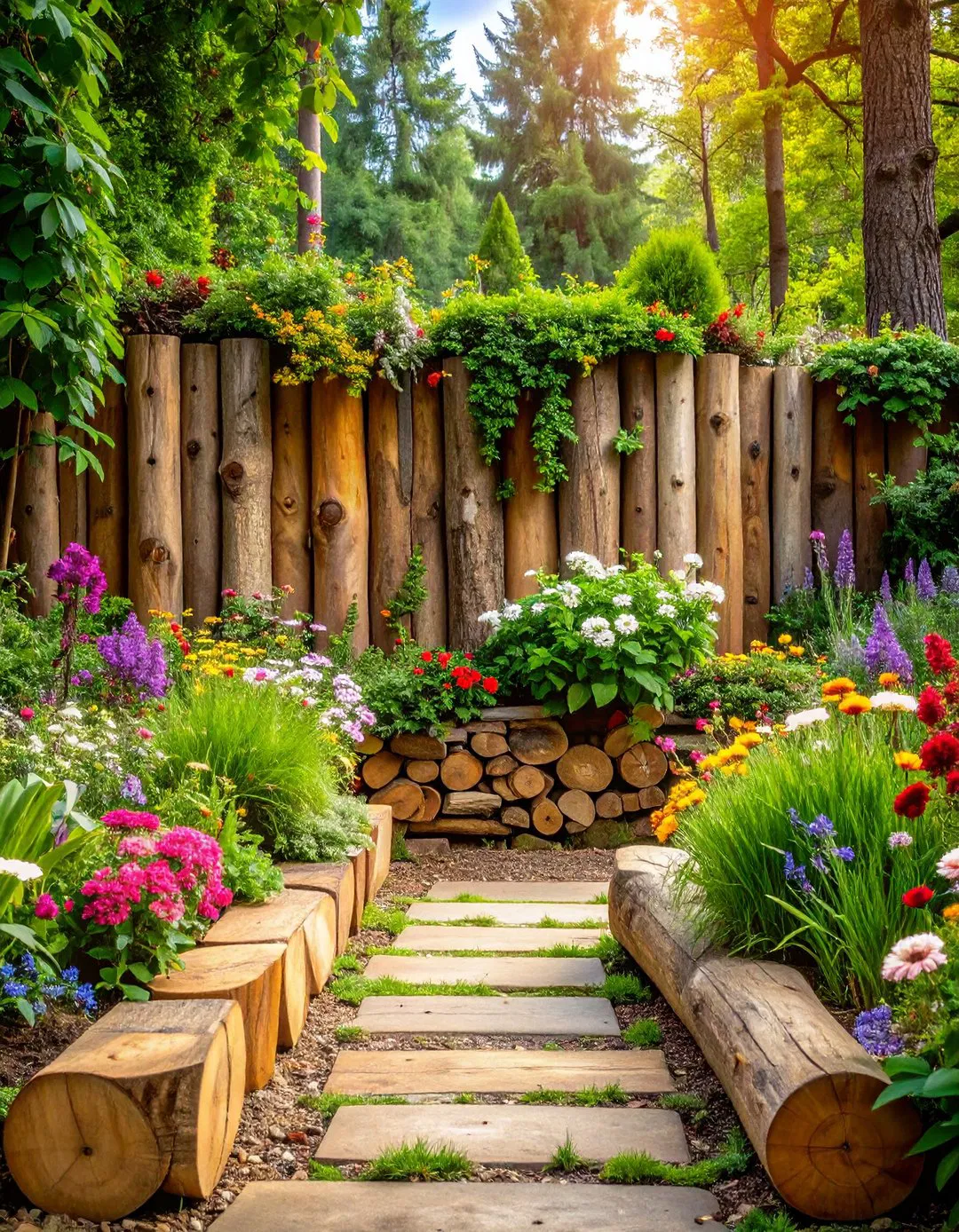
Utilize fallen tree branches or sections of logs to create organic garden edges that blend seamlessly with woodland or naturalistic landscapes. Logs can be laid horizontally or stood vertically to form rustic fences. Their natural bark and grain patterns add authentic texture, and varying log sizes can create dynamic, flowing borders that follow the land’s contours. Over time, these wooden elements weather gracefully, integrating further into the environment.
9. Urbanite: Broken Concrete Edging
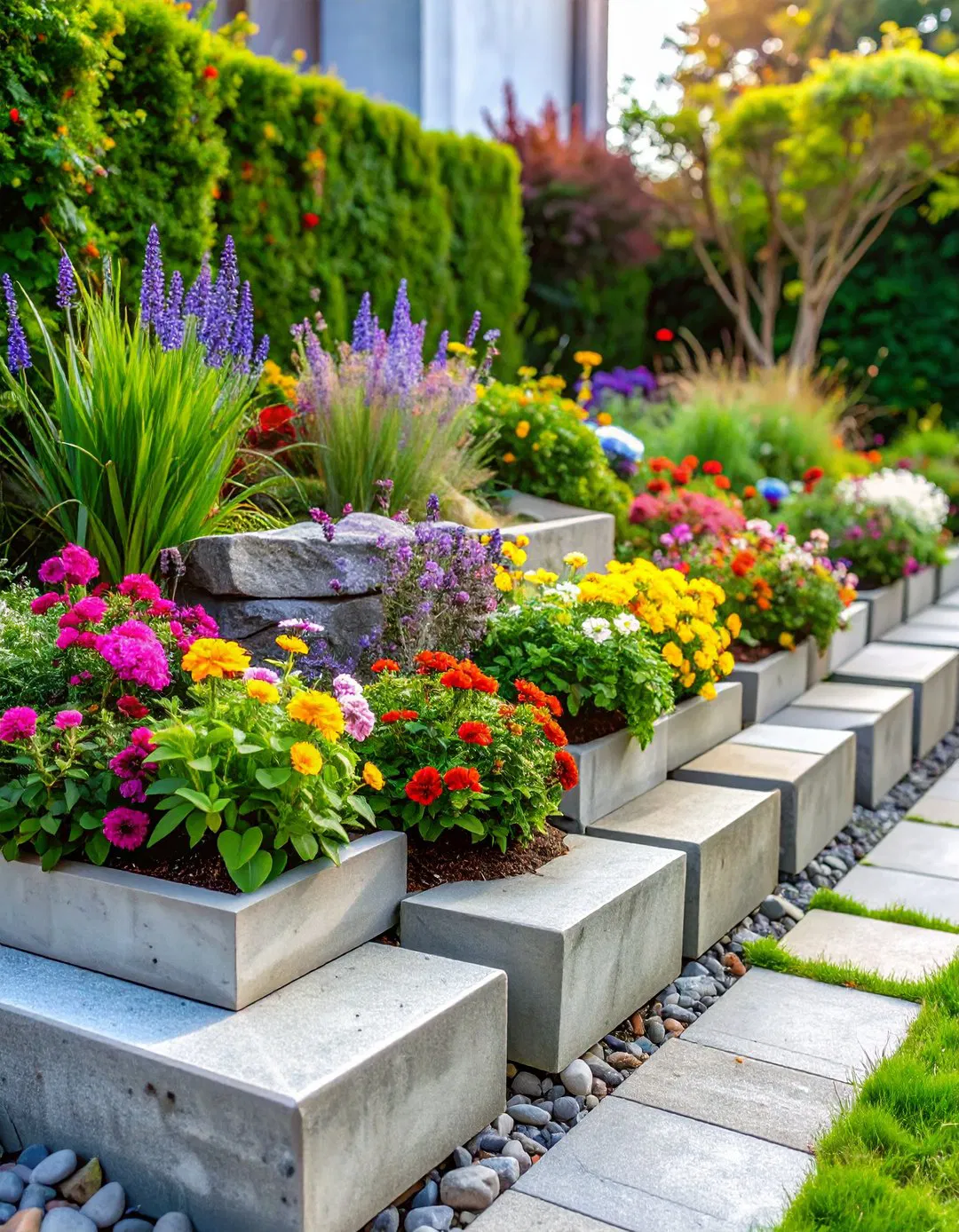
Repurpose chunks of broken concrete from sidewalks or foundations to create industrial-style garden borders known as urbanite. These irregular pieces can be stacked or laid flat to form sturdy, textured edges that contrast beautifully with lush plantings. Painting or staining the concrete allows for personalized color schemes. Urbanite is especially suited for modern gardens or spaces requiring durable, low-maintenance borders.
10. Terra Cotta Pot Borders
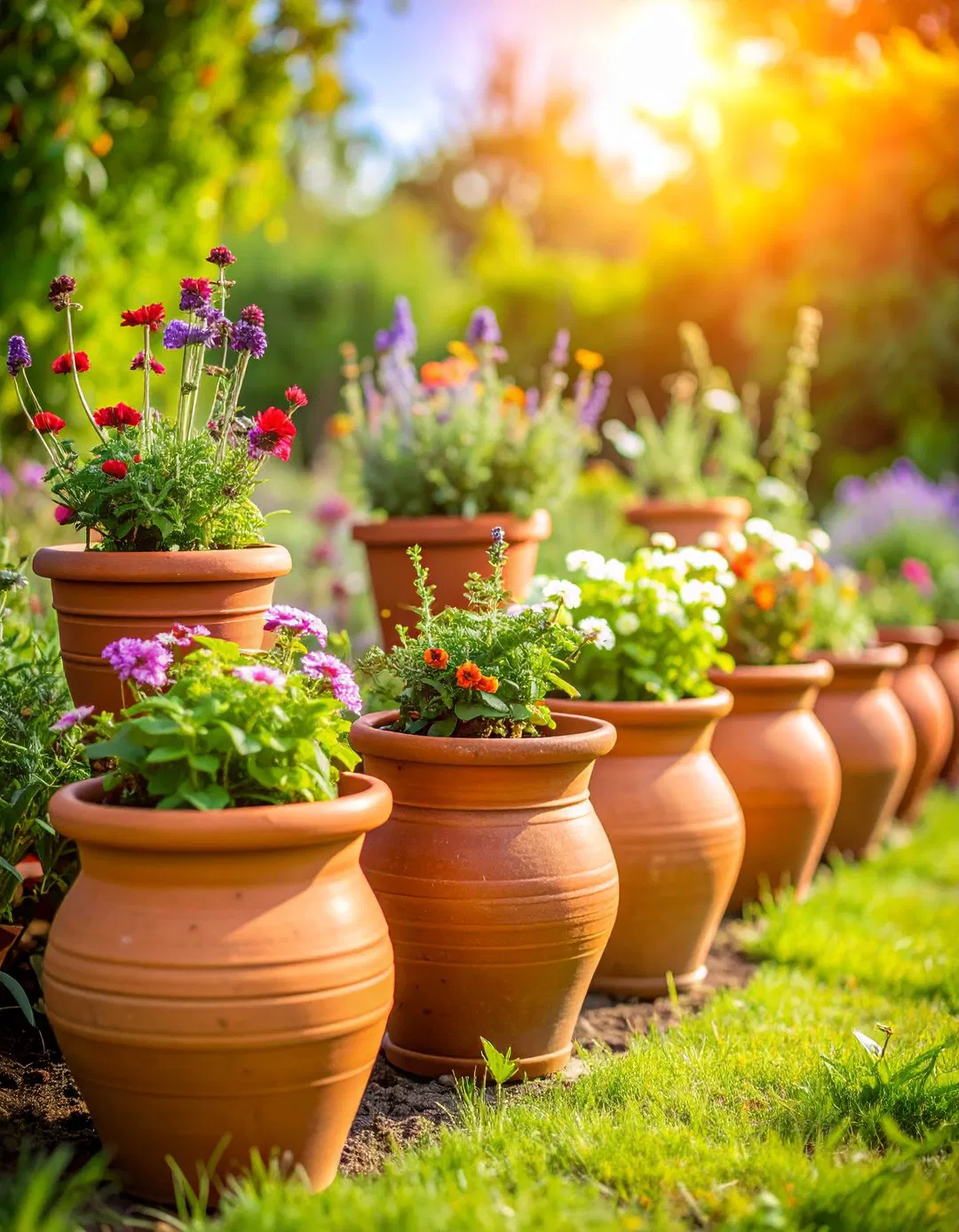
Flip old terracotta pots upside down to form charming, Mediterranean-inspired garden borders. Their warm, earthy tones complement a wide range of plants, and varying pot sizes add visual interest. Pots can be filled with soil to host small plants or left hollow for a minimalist look. This method is ideal for herb gardens or container plantings and allows for easy seasonal updates by swapping pots of different colors or sizes.
11. Repurposed Metal Bed Frame Edging
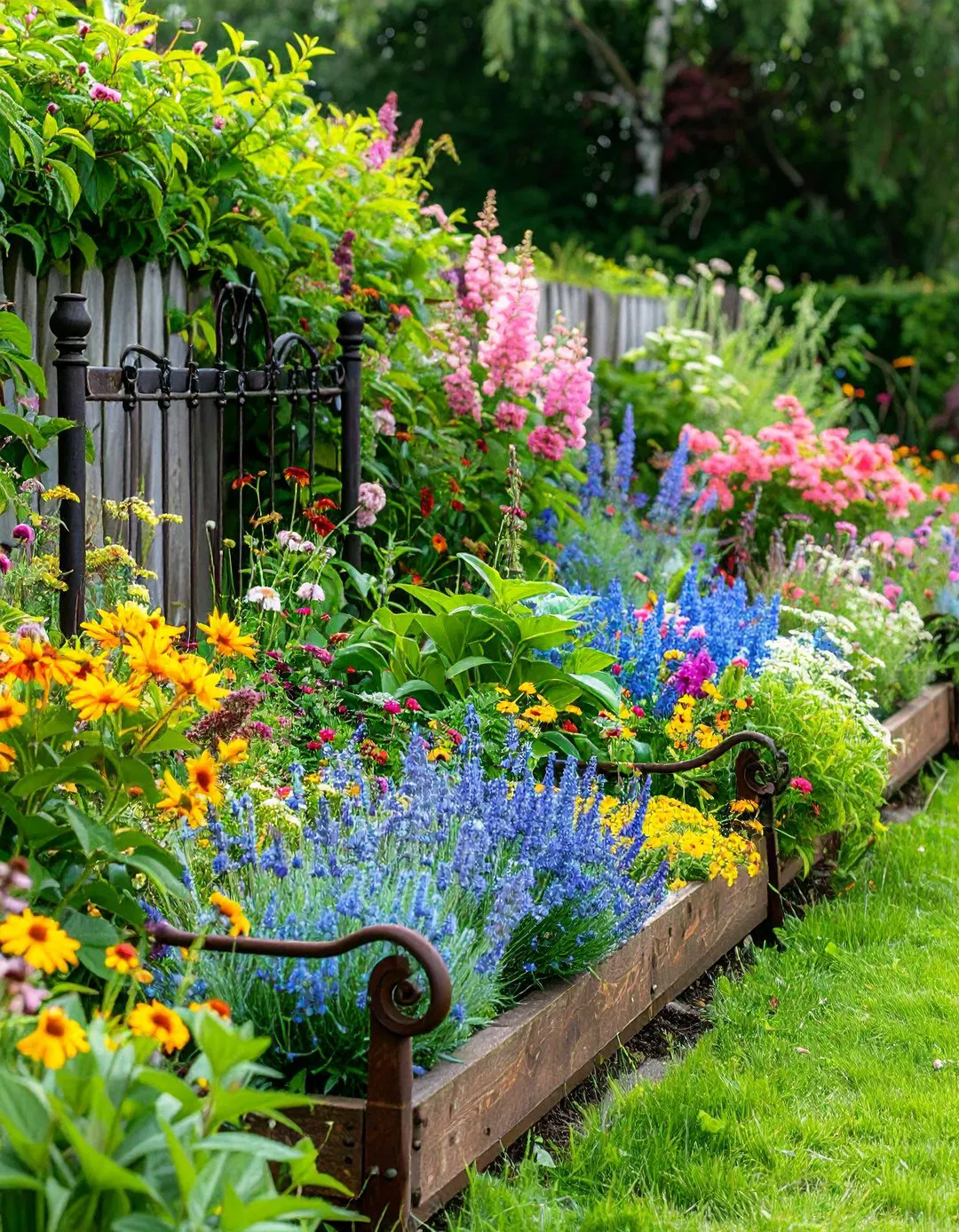
Old iron or steel bed frames can be cut and arranged to create sturdy, vintage-style garden borders. Vertical placement mimics fencing, while horizontal installation offers low-profile edging. These metal elements can be painted to match your garden’s theme, and ornate headboards add decorative flair. This approach suits cottage gardens or vintage-inspired landscapes, combining durability with distinctive character.
12. Whimsical China Plate Edging
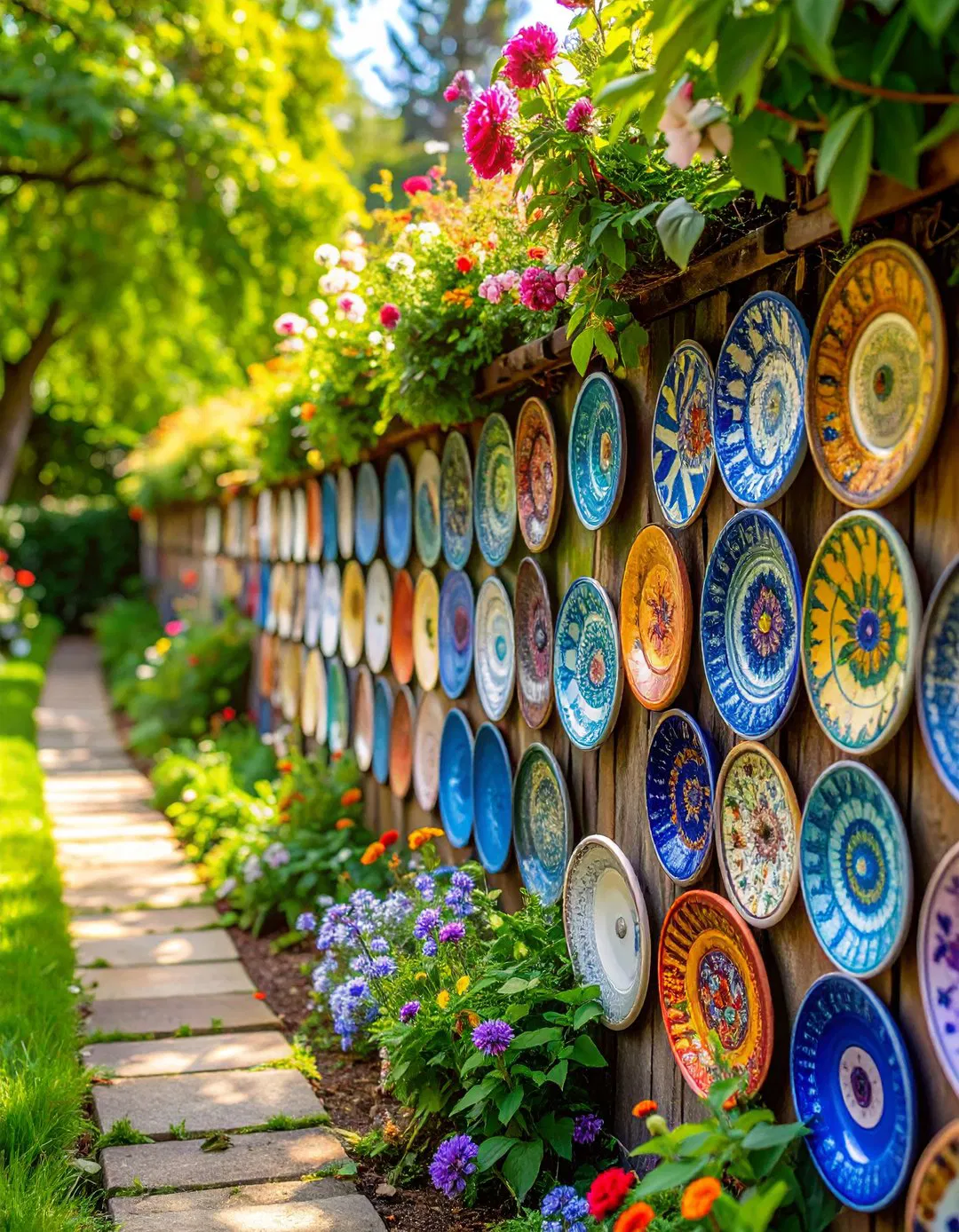
Use mismatched or chipped ceramic plates to craft playful garden borders that add personality and charm. Partially bury plates vertically to create scalloped edges with varied patterns and colors. This technique is perfect for informal flower beds or herb gardens, where a touch of whimsy enhances the overall design. Ceramic’s durability ensures these borders withstand weather while reflecting light for added visual interest.
13. Painted Tin Can Borders
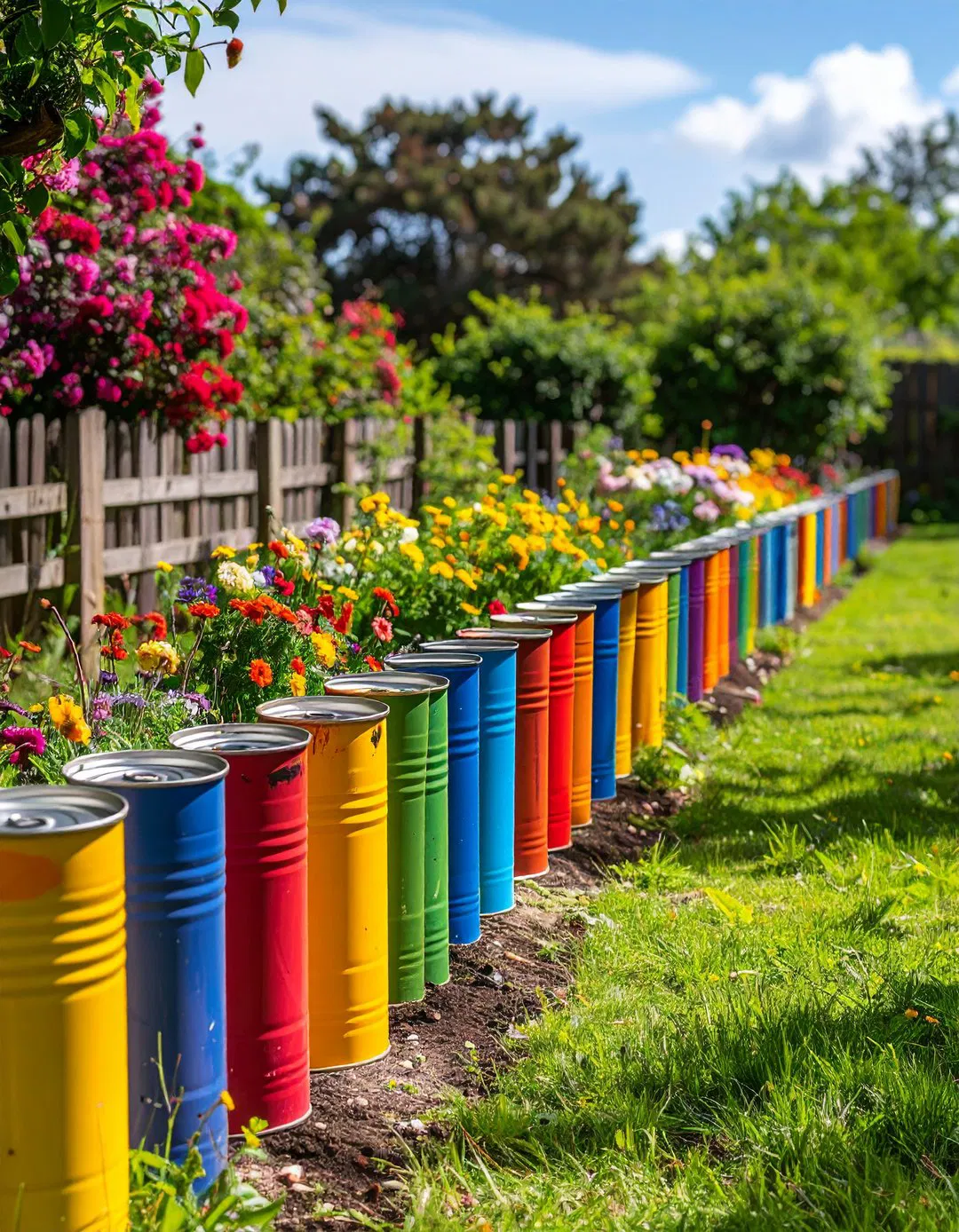
Empty tin cans, once cleaned and painted with weatherproof finishes, become colorful and lightweight garden edging. Arrange them vertically or at angles to create dynamic borders that brighten vegetable gardens or children’s play areas. Adding drainage holes prevents water buildup, ensuring longevity and preventing mosquito breeding. This budget-friendly option allows for seasonal color changes and easy installation.
14. Plastic Bottle Garden Barriers
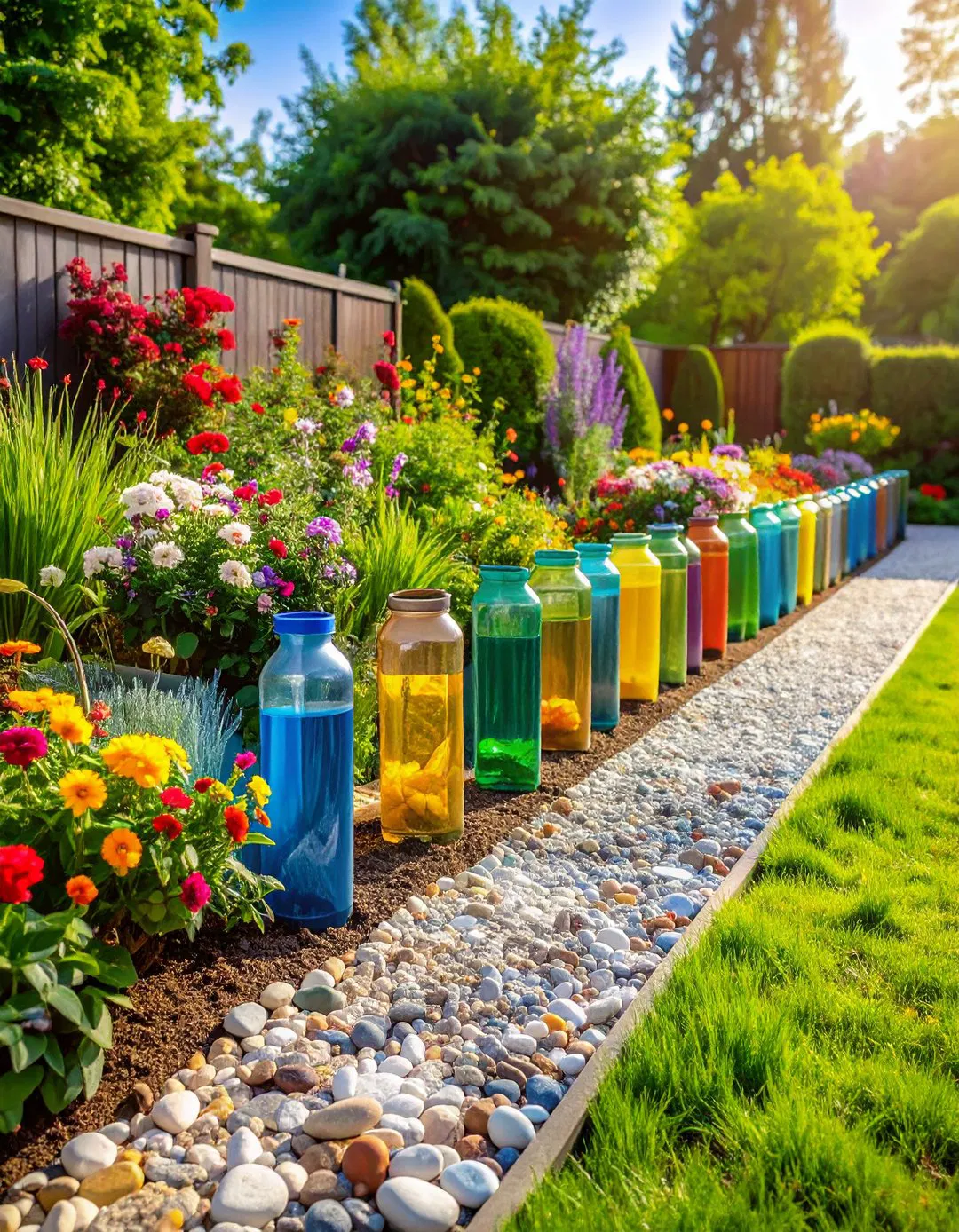
Repurpose large plastic bottles by filling them with sand or stones for stability and arranging them as garden borders. The variety of bottle shapes and colors creates an eclectic look, while clear bottles can showcase decorative fillings. This method is ideal for temporary or seasonal gardens, offering a lightweight, weather-resistant, and cost-effective edging solution. Painting the bottles can further customize the appearance to suit your garden’s style.
15. Reclaimed Railroad Tie Edging
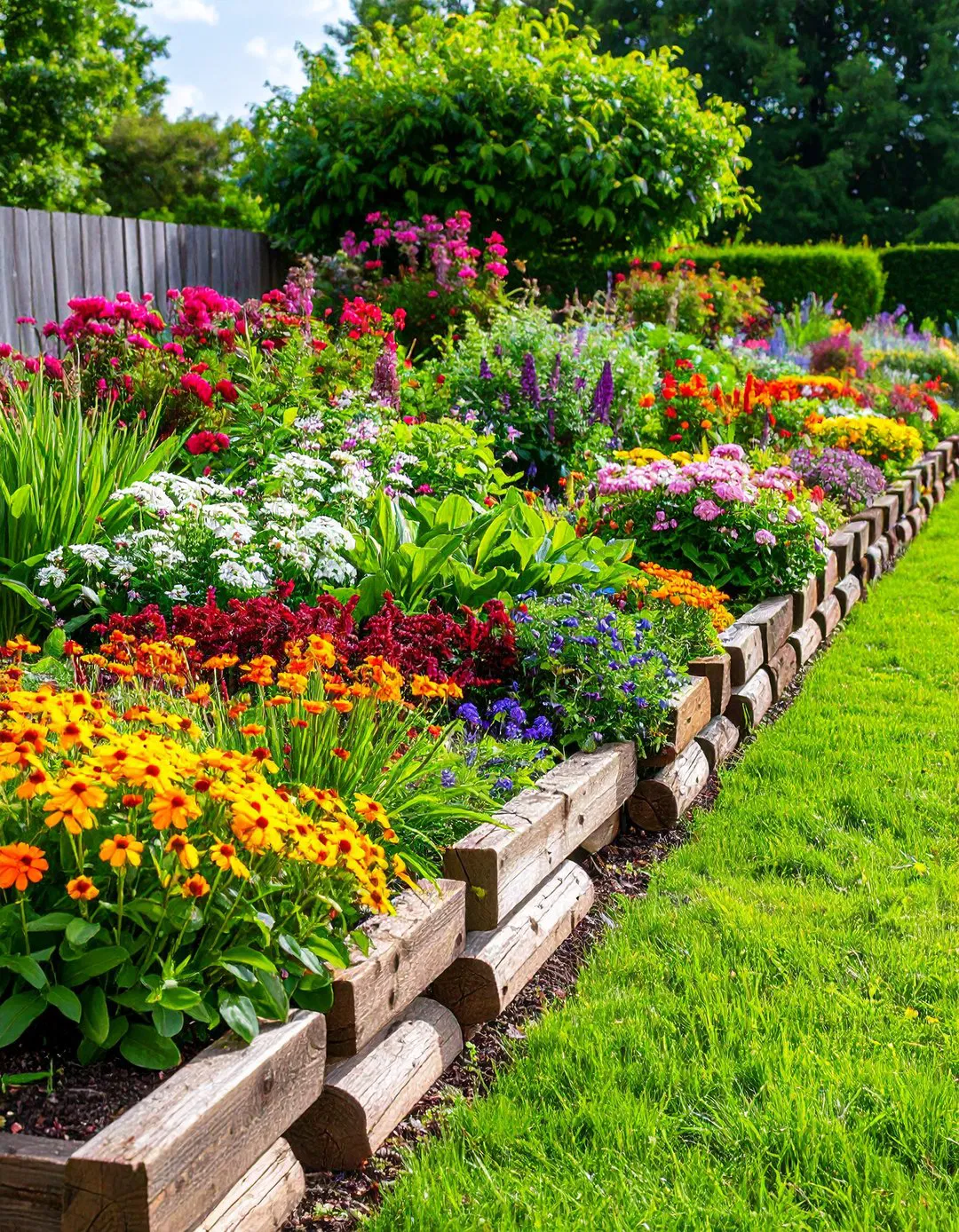
Heavy railroad ties offer robust, rustic borders that define garden beds with industrial charm. Their size makes them excellent for raised beds and soil retention, and they can double as seating along garden edges. Treated to resist decay and pests, these ties are suitable for large-scale projects requiring durable infrastructure. While installation may require equipment due to weight, the result is a long-lasting, visually striking garden feature.
16. Antique Fence Panel Borders
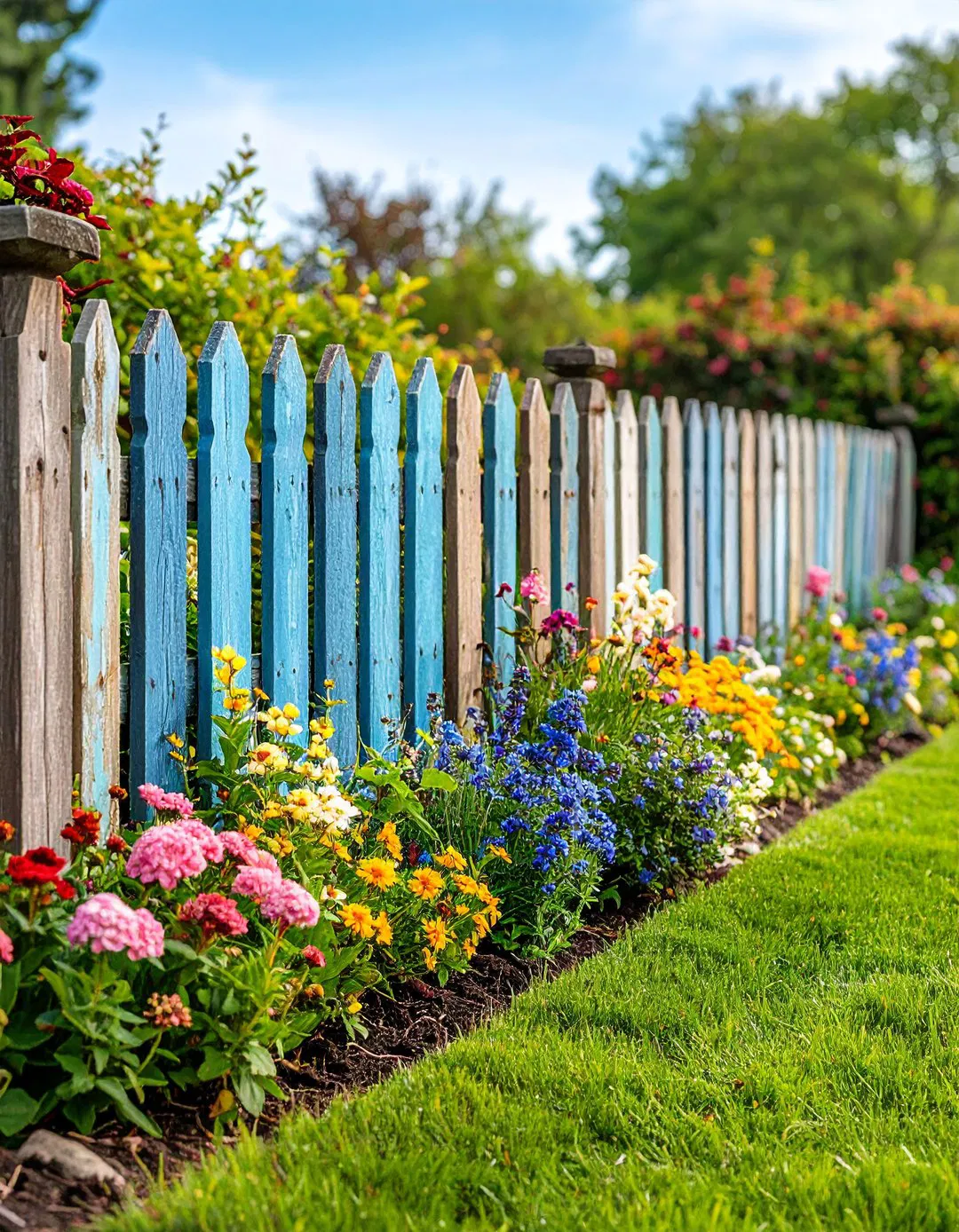
Repurpose sections of old fencing-such as picket fences, wrought iron panels, or wooden slats-to create decorative garden borders rich in historic character. These panels can be installed at reduced heights to frame beds, adding architectural interest and elegance. Combining different materials allows for eclectic designs that reflect personal style, perfect for cottage gardens or heritage properties. Regular upkeep will maintain their charm and longevity.
17. Upside-Down Terracotta Pot Edging
Positioning terracotta pots upside down creates uniform, warm-toned borders that complement Mediterranean or rustic garden themes. The curved shapes soften transitions between garden beds and pathways. Pots can be filled with soil to host small plants or left empty for a minimalist look. This flexible edging is easy to install and allows for seasonal customization by swapping pots of different sizes or colors.
18. Natural Stone and Gravel Borders
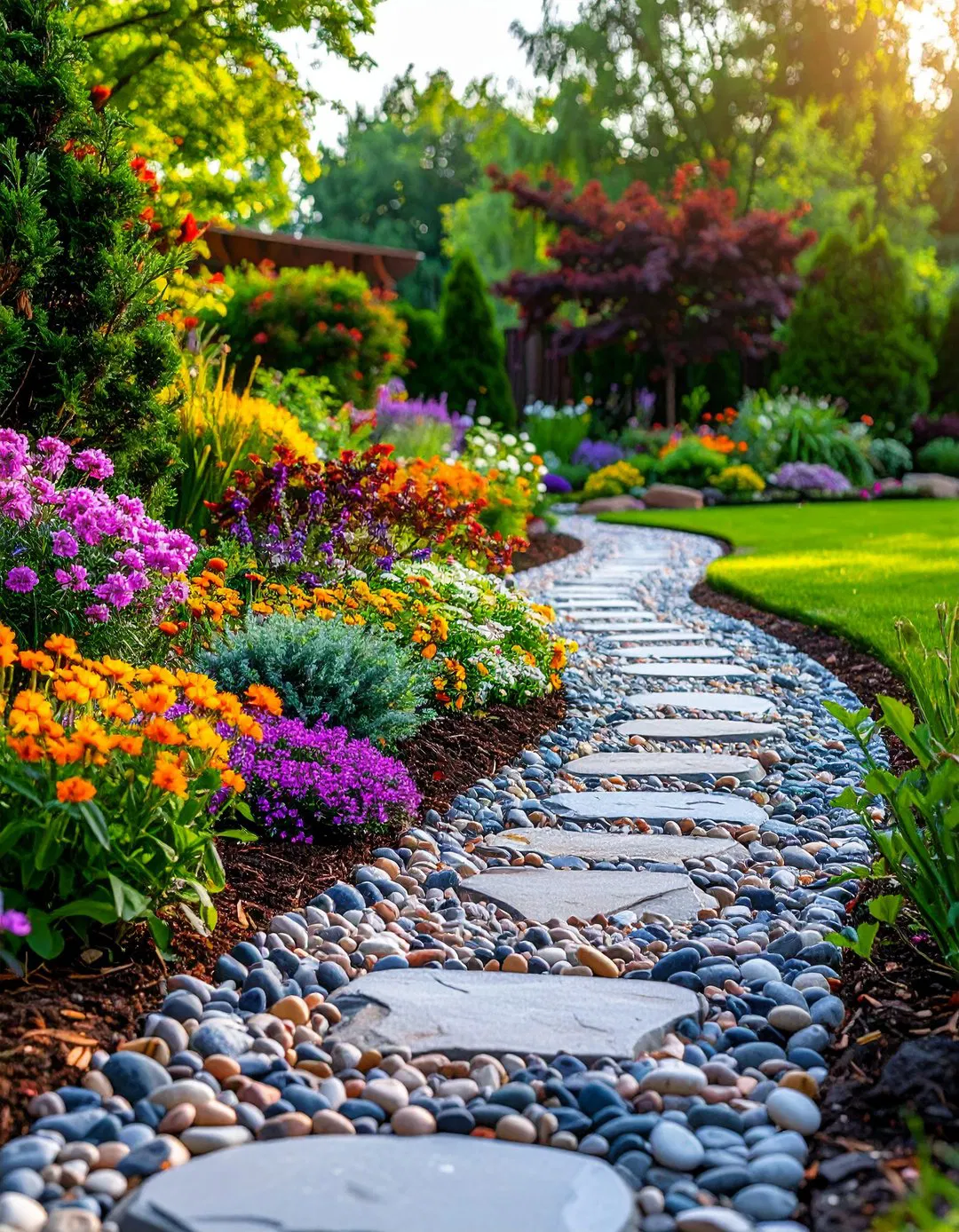
Utilize collected stones, river rocks, or recycled gravel to form naturalistic garden edges that blend seamlessly with the landscape. Their permeability aids drainage and suppresses weeds, while the variety of sizes and colors adds texture and visual interest. This edging style suits xeriscapes, naturalized gardens, and informal settings. Installation involves laying landscape fabric beneath the stones to maintain stability and reduce maintenance.
19. Flexible Rubber Tire Edging
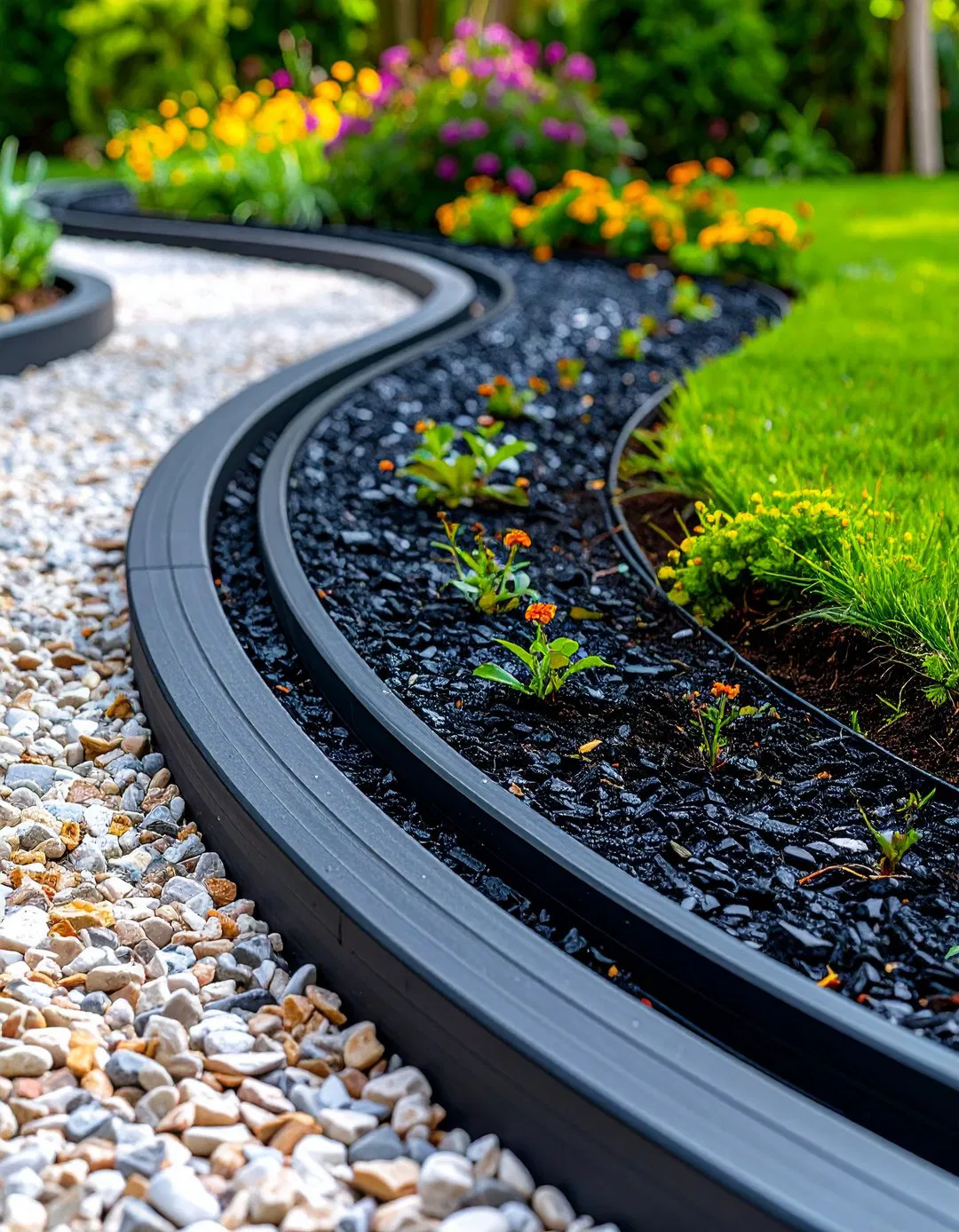
Processed rubber from recycled tires offers a flexible, durable edging option that easily conforms to curved garden beds. Resistant to UV rays, freeze-thaw cycles, and mechanical damage, rubber edging provides a safe, cushioned border ideal for play areas and contemporary landscapes. Installation involves securing the edging in shallow trenches with landscape spikes, ensuring a neat and stable finish.
20. Mosaic Edging with Broken Ceramic Tiles
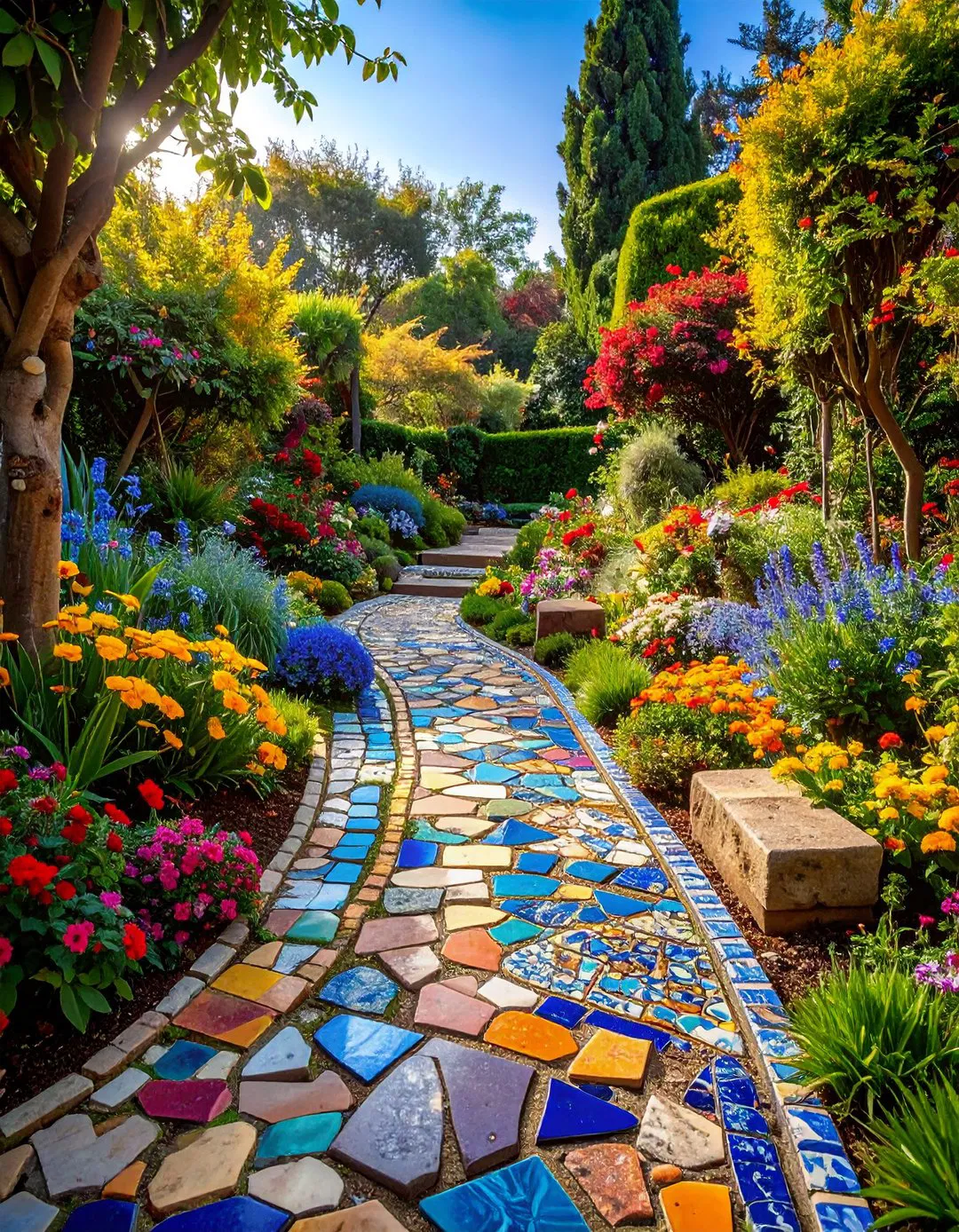
Broken ceramic tiles from kitchen or bathroom renovations can be arranged into colorful mosaic borders that add artistic flair to patios and small garden beds. Grouting the pieces creates a polished look, while the variety of colors and textures allows for personalized designs. This edging is weather-resistant and easy to maintain, perfect for gardeners seeking a creative and decorative boundary.
21. Gabion Stone Basket Edging
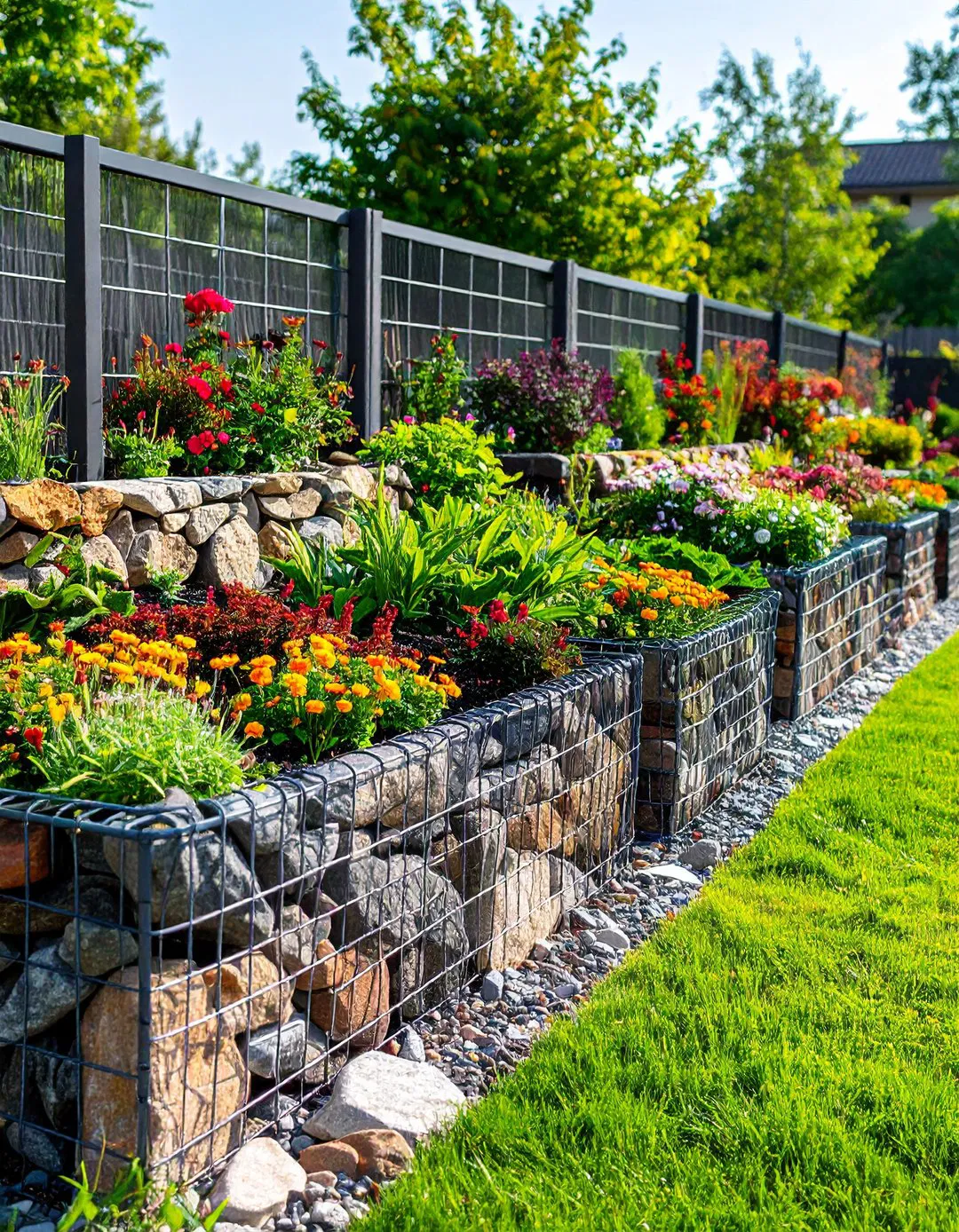
Wire mesh gabion baskets filled with recycled stones, concrete fragments, or decorative rocks create sturdy, modular garden borders with an industrial edge. These baskets can be stacked to different heights and allow partial plant growth through the mesh, softening their appearance. Ideal for erosion control and sloped gardens, gabions provide excellent drainage and stability. Installation involves positioning the baskets and filling them with chosen materials, ensuring consistent compaction for a professional finish.
22. Kitchen Colander Planter Edges
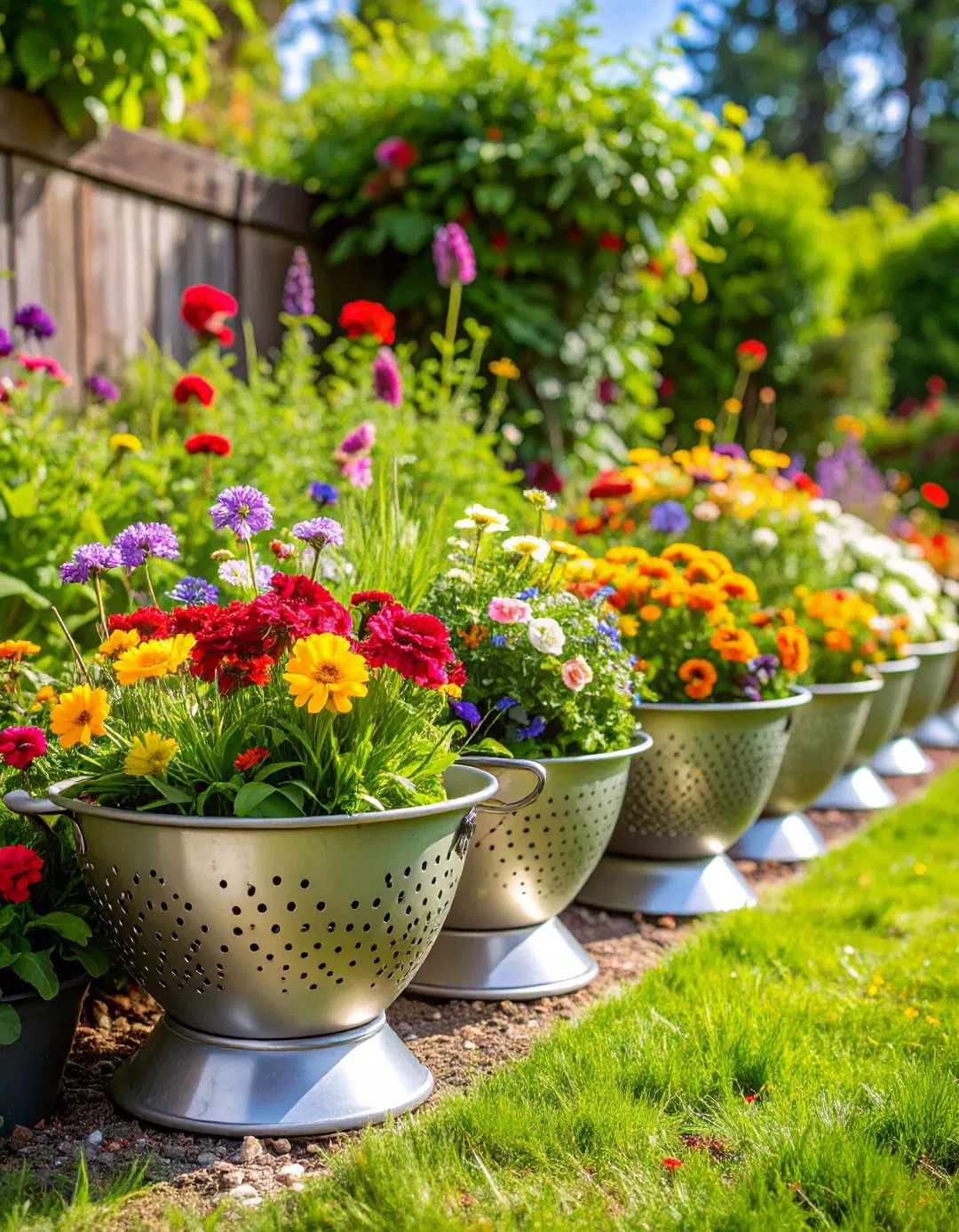
Metal kitchen colanders repurposed as garden edging combine functionality with charm, offering additional planting space for herbs or small flowers. Their perforated design ensures excellent drainage, and handles make repositioning easy for seasonal changes. Stainless steel colanders resist weathering, making them durable and visually appealing. This edging style suits kitchen gardens and areas where portable borders are desired.
23. Wood Shingle Edging
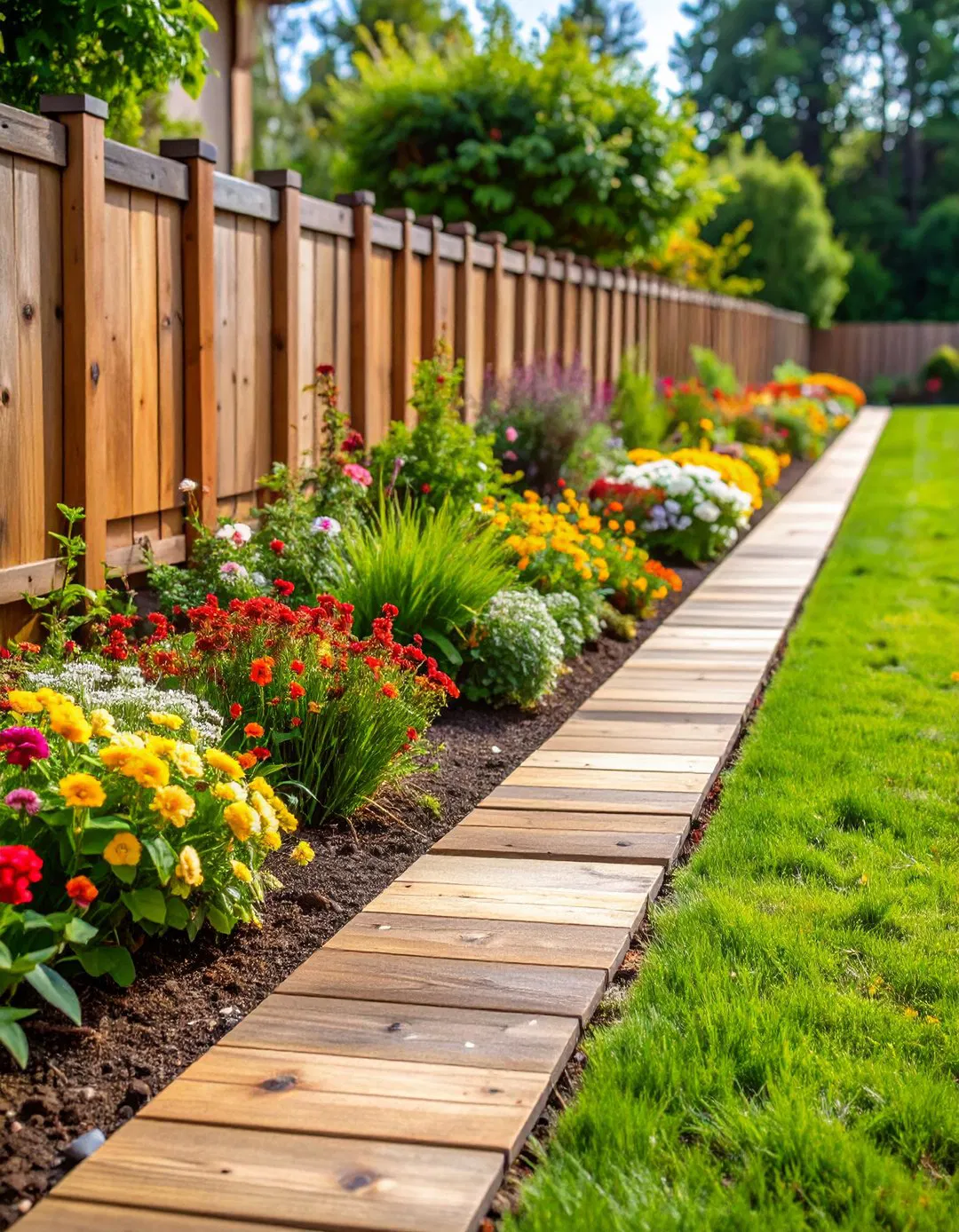
Old cedar shingles and shakes create textured, natural garden borders that complement woodland and cottage-style landscapes. Positioned vertically or overlapped for scalloped effects, these lightweight wooden pieces add warmth and character. Cedar’s natural resistance to decay ensures longevity, and shingles can be stained or painted to suit your garden’s palette. This edging is easy to install and maintain, perfect for informal garden settings.
24. Sleek Metal Sheeting Borders
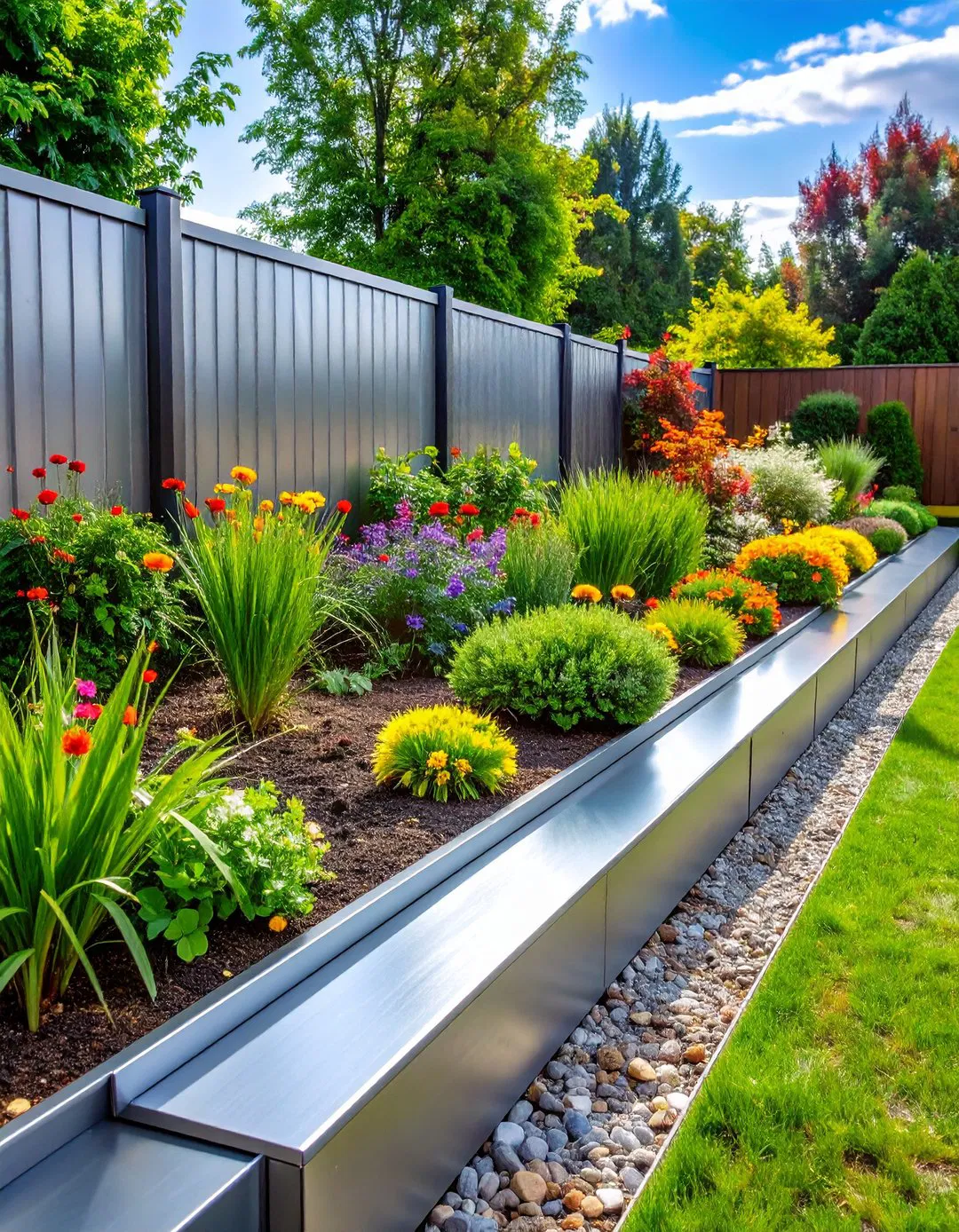
Repurposed aluminum or steel sheets offer clean, modern garden edging with an industrial flair. These thin metal strips can be gently curved to follow garden contours, providing excellent soil retention and weed suppression. Paint finishes allow for color customization, while natural weathering develops an attractive patina over time. Ideal for geometric or minimalist garden designs, metal sheeting creates a sharp, professional boundary between lawn and planting areas.
Final Thoughts on Sustainable Garden Edging
Utilizing recycled materials for garden edging is a brilliant way to merge creativity with environmental stewardship. These diverse options-from colorful glass bottles to sturdy railroad ties-demonstrate how repurposed items can redefine garden boundaries with style and sustainability. Beyond cost savings, recycled edging reduces landfill waste and offers gardeners a chance to personalize their outdoor spaces uniquely. Embracing these eco-conscious techniques proves that beautiful, functional gardens and environmental responsibility can flourish hand in hand.
For those interested in sourcing materials, explore recycled garden edging supplies on Amazon to find tools and materials that support your sustainable landscaping projects.