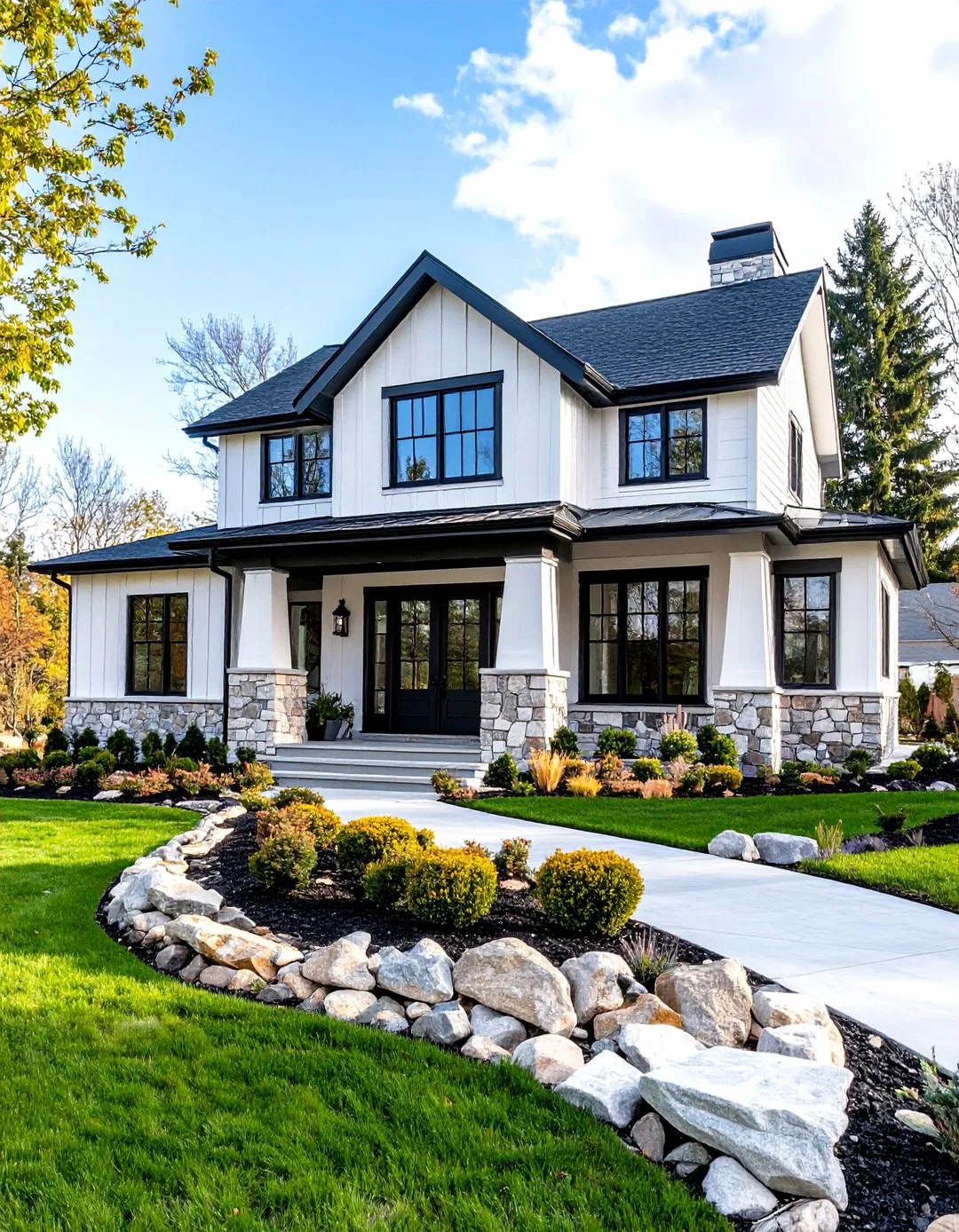
The classic combination of white farmhouse exteriors paired with black window frames delivers a captivating contrast that merges rustic warmth with modern elegance. This design trend has surged in popularity due to its ability to elevate any residence into a charming yet contemporary haven. The interplay between pristine white siding and striking black window accents offers homeowners a versatile canvas to showcase their unique tastes while preserving the authentic farmhouse vibe. Whether embarking on new construction or remodeling, these design concepts illustrate how this timeless color duo can accentuate architectural details, harmonize with natural surroundings, and boost curb appeal that endures through changing styles.
Elevating Farmhouse Style with Vertical Board and Batten Siding
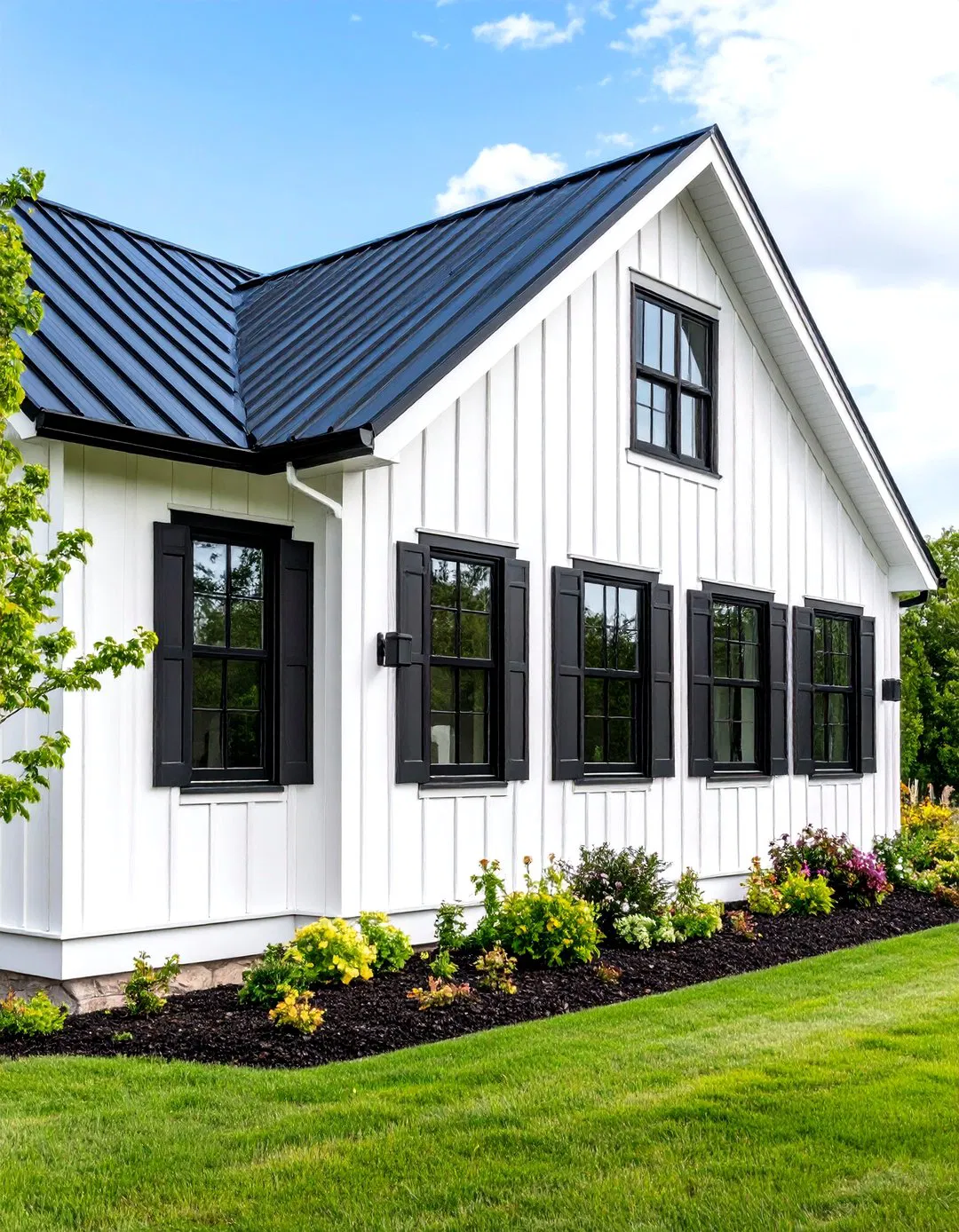
Imagine the visual drama created by vertical board and batten siding combined with sleek black window frames. This traditional farmhouse exterior style uses broad vertical boards separated by narrow battens, adding texture and a sense of height to the facade. The vertical lines naturally guide the eye upward, lending an impression of grandeur and stature. Opting for durable materials like fiber cement or steel that mimic wood grain ensures longevity without sacrificing farmhouse authenticity. The black window frames punctuate the white backdrop with bold geometric shapes, reinforcing the vertical rhythm. This approach works well for entire facades or as accent walls, offering design flexibility while preserving the sought-after modern farmhouse charm.
Creating Visual Interest with Mixed Siding Textures
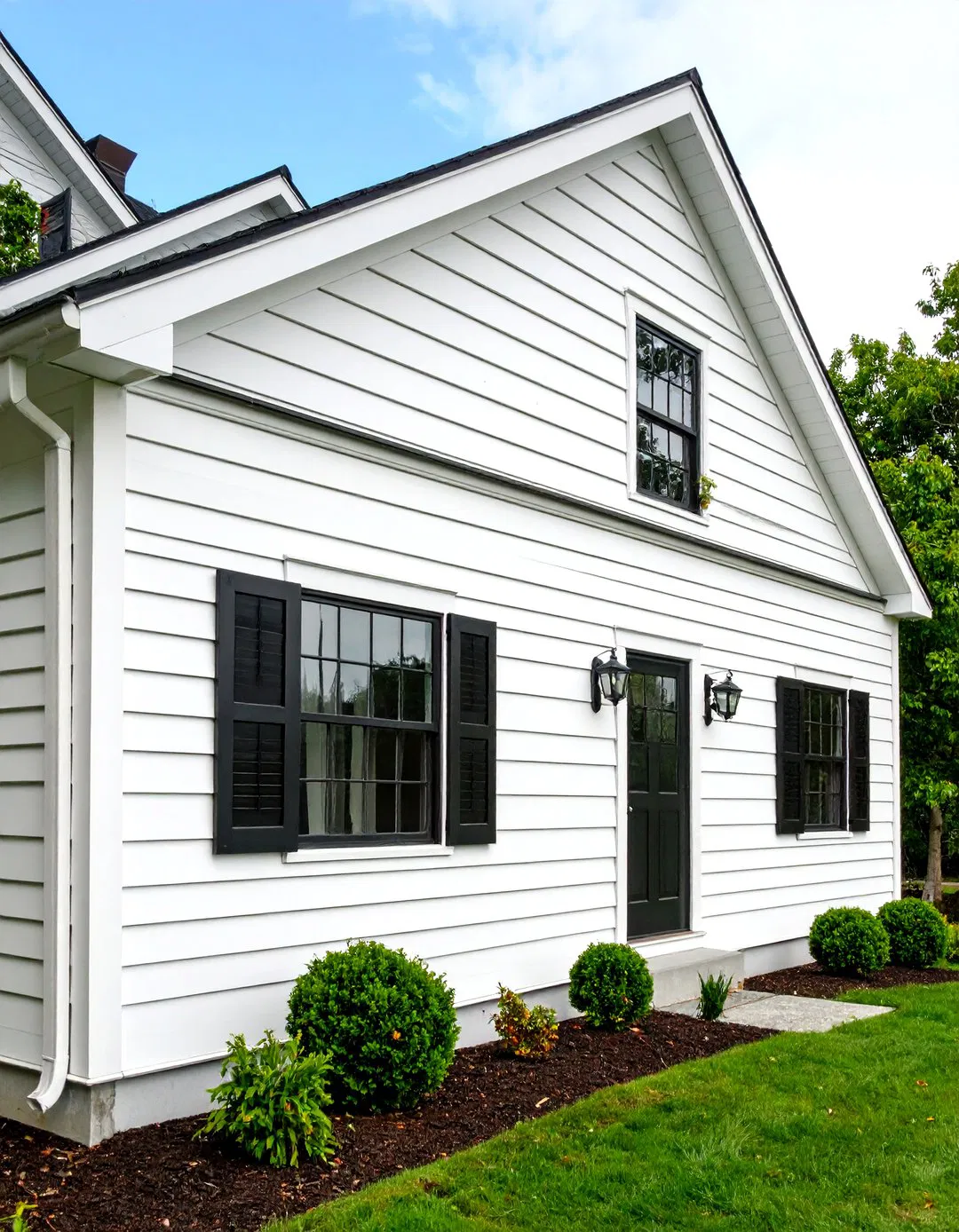
Blending various siding textures on a white farmhouse exterior introduces depth and architectural intrigue that captivates from every viewpoint. Combining horizontal lap siding with vertical board and batten sections creates distinct visual zones, breaking up the facade dynamically. The consistent white palette unifies these textures, while black window frames serve as recurring accent points throughout the design. For example, pairing smooth fiber cement panels on lower stories with board and batten on upper gables or alternating cedar shakes with lap siding adds tactile variety. This method prevents visual monotony and highlights the bold contrast of black windows against the white exterior.
Inviting Charm with Wraparound Porches and Black Columns
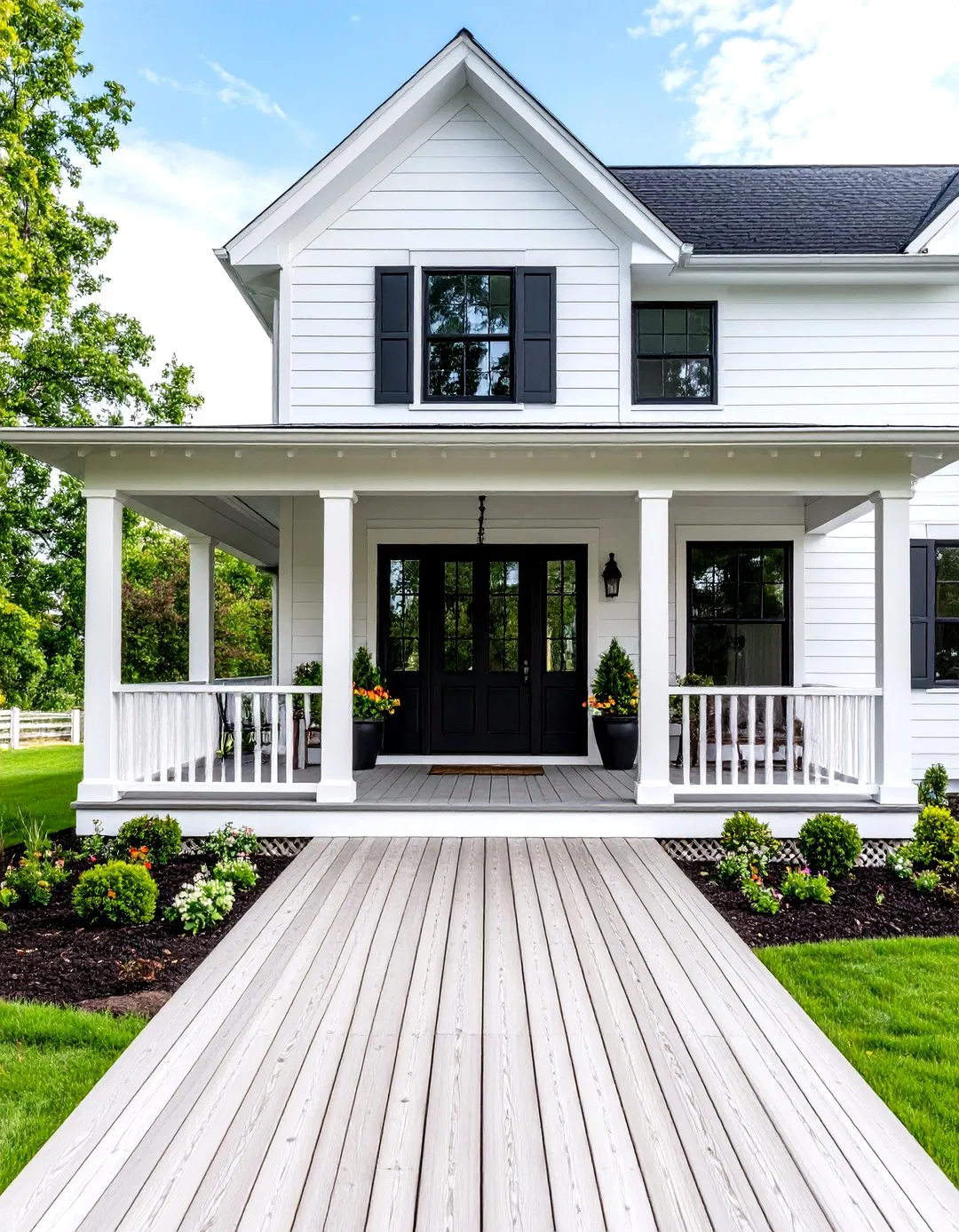
A wraparound porch can transform your farmhouse into a warm and inviting retreat. Incorporating black-painted columns that echo the window frames creates a cohesive and sophisticated color story. This expansive covered porch extends your living area outdoors, balancing the home’s proportions with architectural weight. White railings and ceilings keep the space bright, while black columns and window trims introduce striking vertical accents. Natural wood decking adds a welcoming warmth to the monochrome palette, and generous overhangs protect windows and entryways from the elements. This design encourages outdoor living and offers multiple vantage points to enjoy your property’s natural beauty.
Gable Roofs Enhanced with Metal Roofing Accents
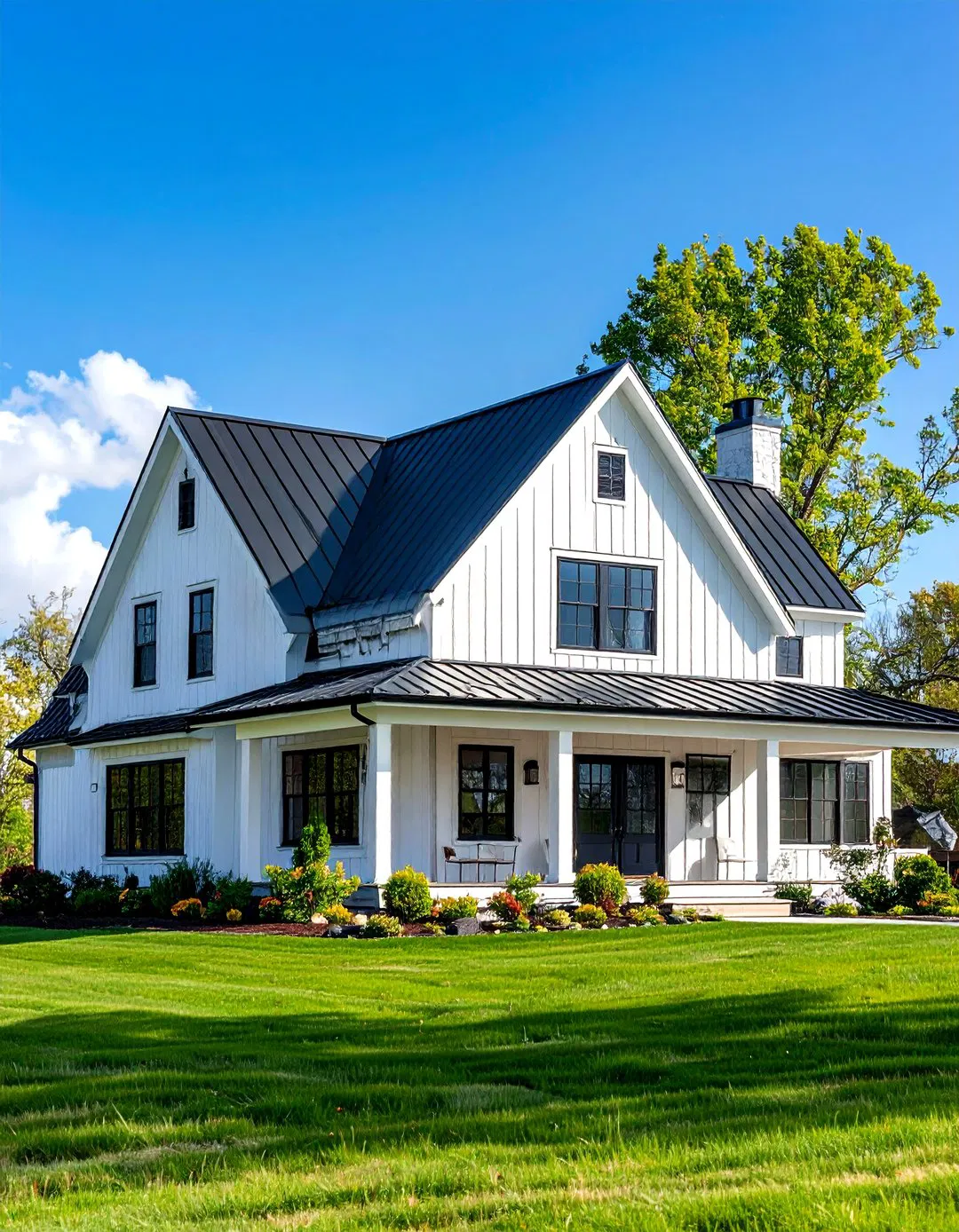
Steep gable roofs perfectly complement white farmhouse exteriors with black windows by evoking a barn-inspired silhouette that defines farmhouse architecture. Standing seam metal roofing in charcoal or black tones pairs seamlessly with window frames, offering exceptional durability and weather resistance. Multiple gable peaks add visual complexity and break up large roof surfaces, allowing for dormers and varied window arrangements. The steep pitch facilitates efficient water runoff and snow shedding, while the metal’s reflective surface adds an extra dimension of visual interest. For a touch of warmth, consider copper accents on smaller roof elements like dormers or entryways, which harmonize beautifully with the black and white palette.
Grounding Your Home with a Stone Foundation Base
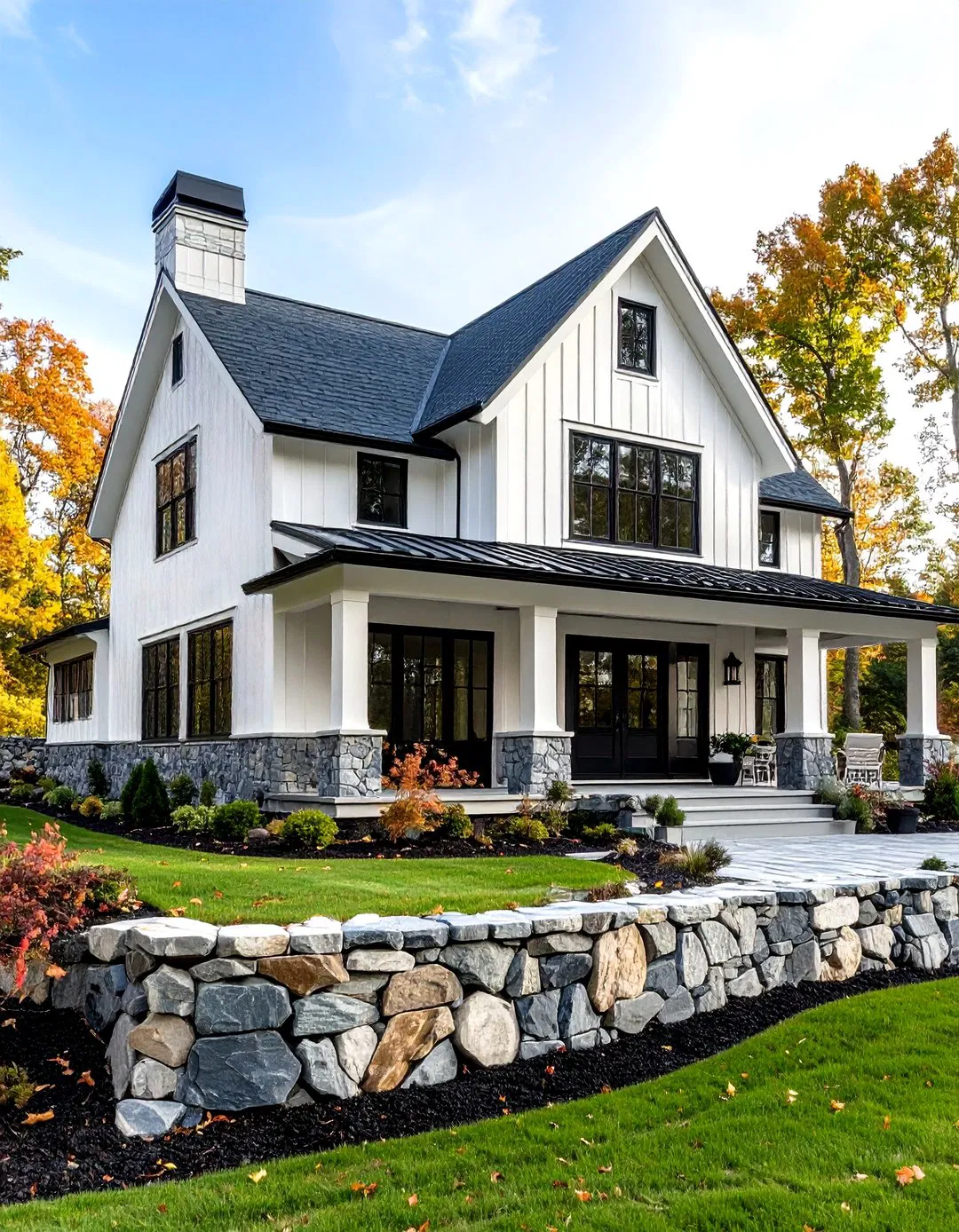
A natural stone foundation anchors your farmhouse design, adding visual weight and a seamless connection to the surrounding landscape. Using local materials such as fieldstone, limestone, or cultured stone in gray hues complements the black window frames and creates a sophisticated three-tone palette. Typically extending 18 to 36 inches above ground level, the stone base protects against moisture while contributing substantial architectural character. Extending this material into landscape features like garden walls or fire pits further integrates your home with its environment, enhancing the overall farmhouse aesthetic.
Distinctive Black Window Grid Designs
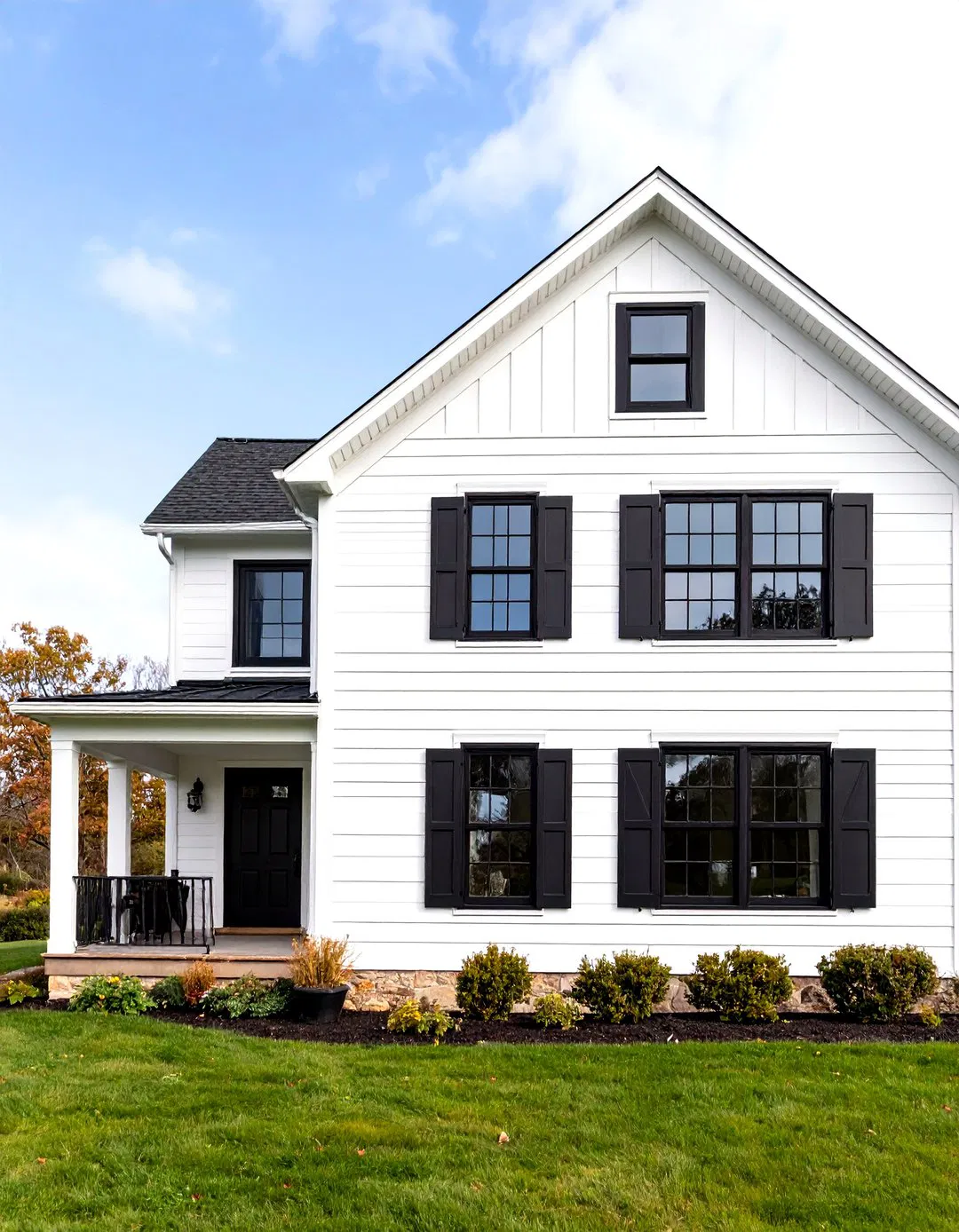
The style of window grids significantly shapes your farmhouse’s personality. From traditional colonial six-over-six patterns to sleek, minimalist single panes, the muntin layout influences both character and scale. Prairie-style horizontal grids add a craftsman touch, while diamond patterns offer unique architectural flair. Black frames make these grid designs stand out against white siding, creating rhythmic graphic elements that enhance facade balance. Maintaining consistent grid patterns across windows ensures cohesion, while varying sizes accommodate different room functions and lighting needs.
Choosing the Ideal Farmhouse Front Door
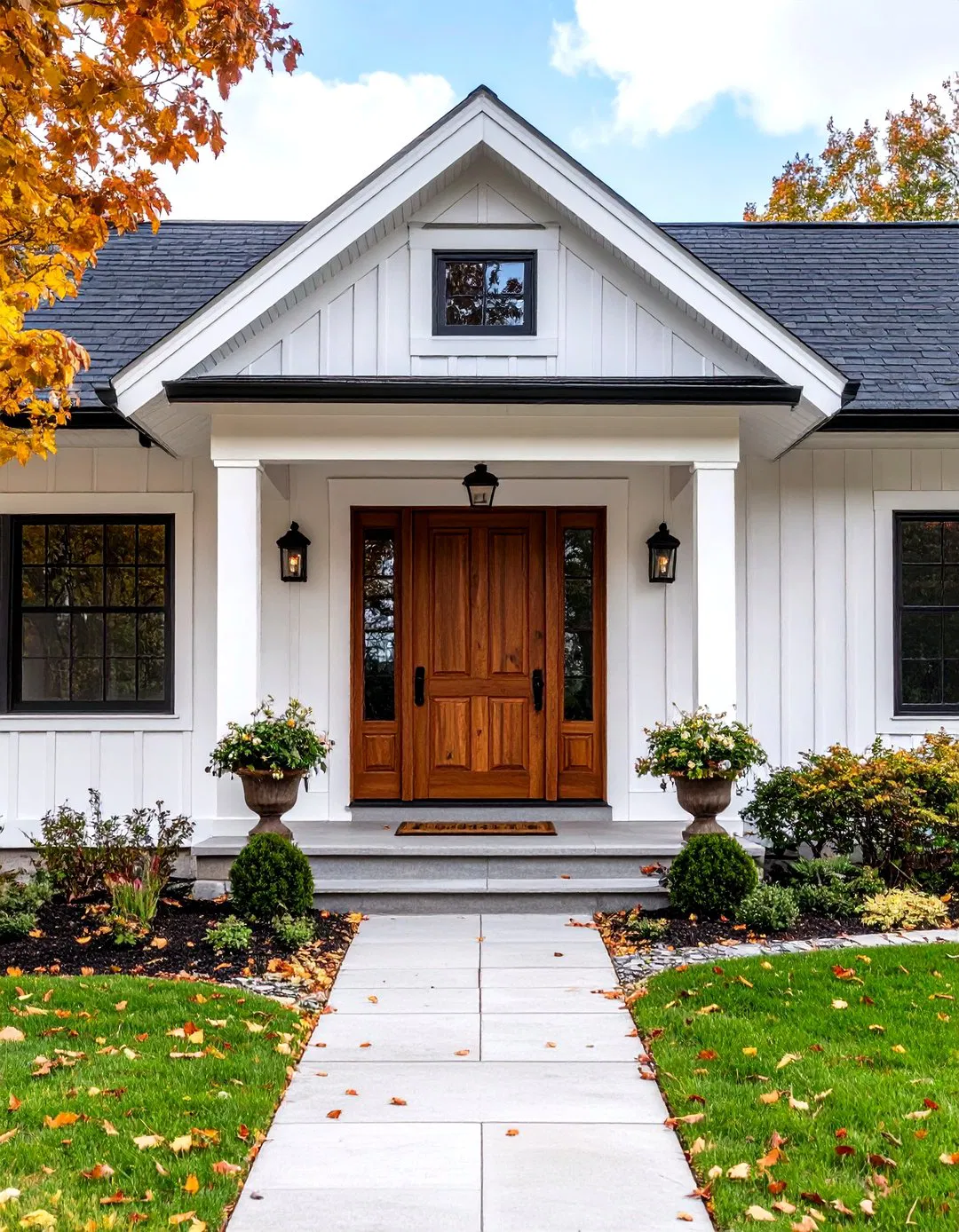
The front door serves as a focal point that unifies your farmhouse’s exterior palette. A rich wood-stained door in walnut or mahogany introduces warmth to the crisp black and white scheme. Alternatively, a painted door in deep hues like forest green, navy, or classic red offers a vibrant yet complementary accent. Incorporating glass panels or sidelights enhances natural light while preserving the door’s substantial presence. Hardware in black or dark bronze ties in with window frames, and a covered entryway protects the door while welcoming guests.
Maximizing Function and Style with Dormer Windows
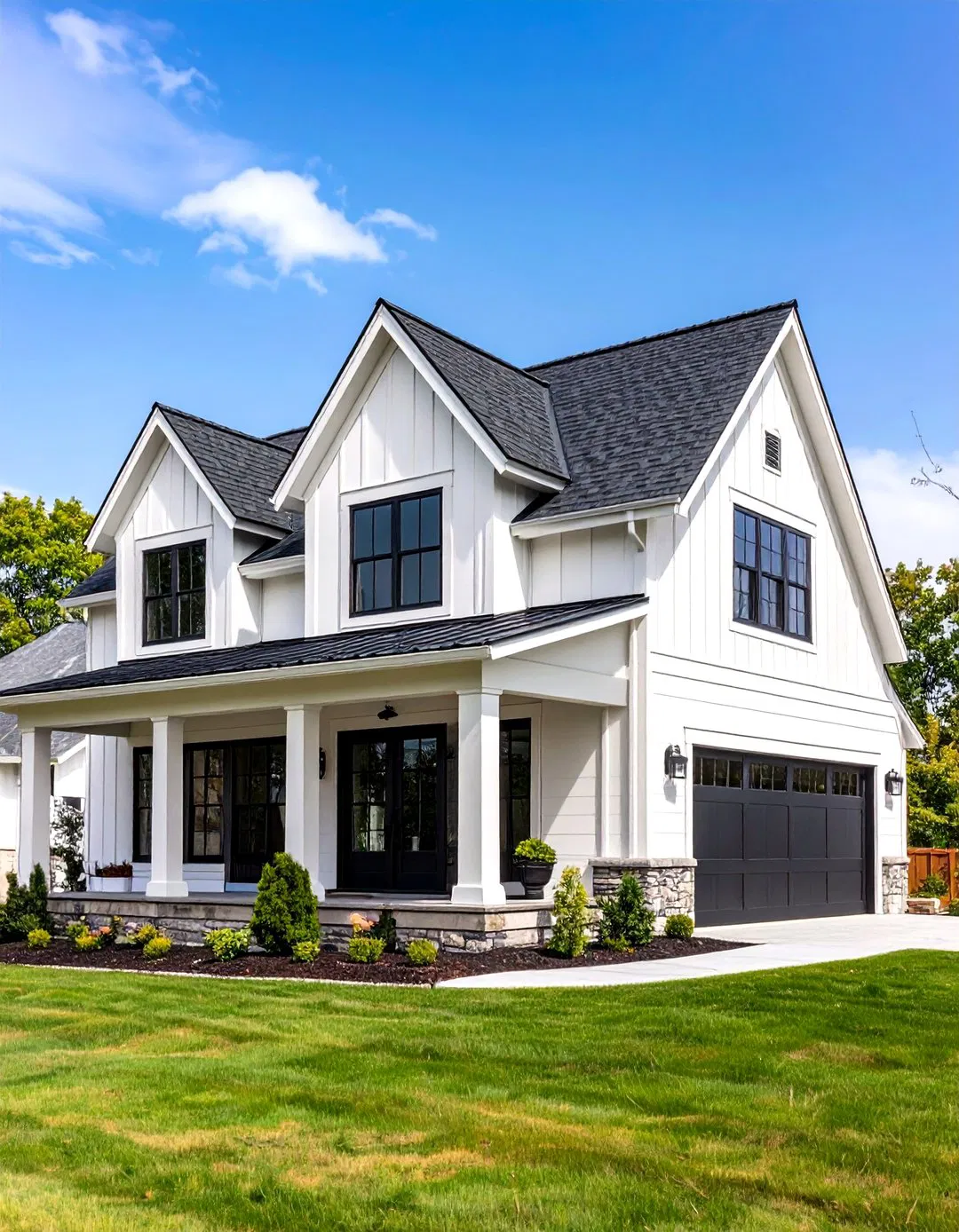
Dormer windows add architectural depth and increase natural light and usable space in upper levels. White dormers with black-framed windows echo the main color scheme, breaking up expansive roof surfaces. Shed dormers offer clean, modern lines, while gabled dormers provide traditional charm and weather protection. Proper sizing and placement ensure dormers complement rather than dominate the roofline. Metal or copper roofing on dormers adds subtle contrast while maintaining harmony with the primary roof and window accents.
Harmonizing Landscaping with Farmhouse Architecture
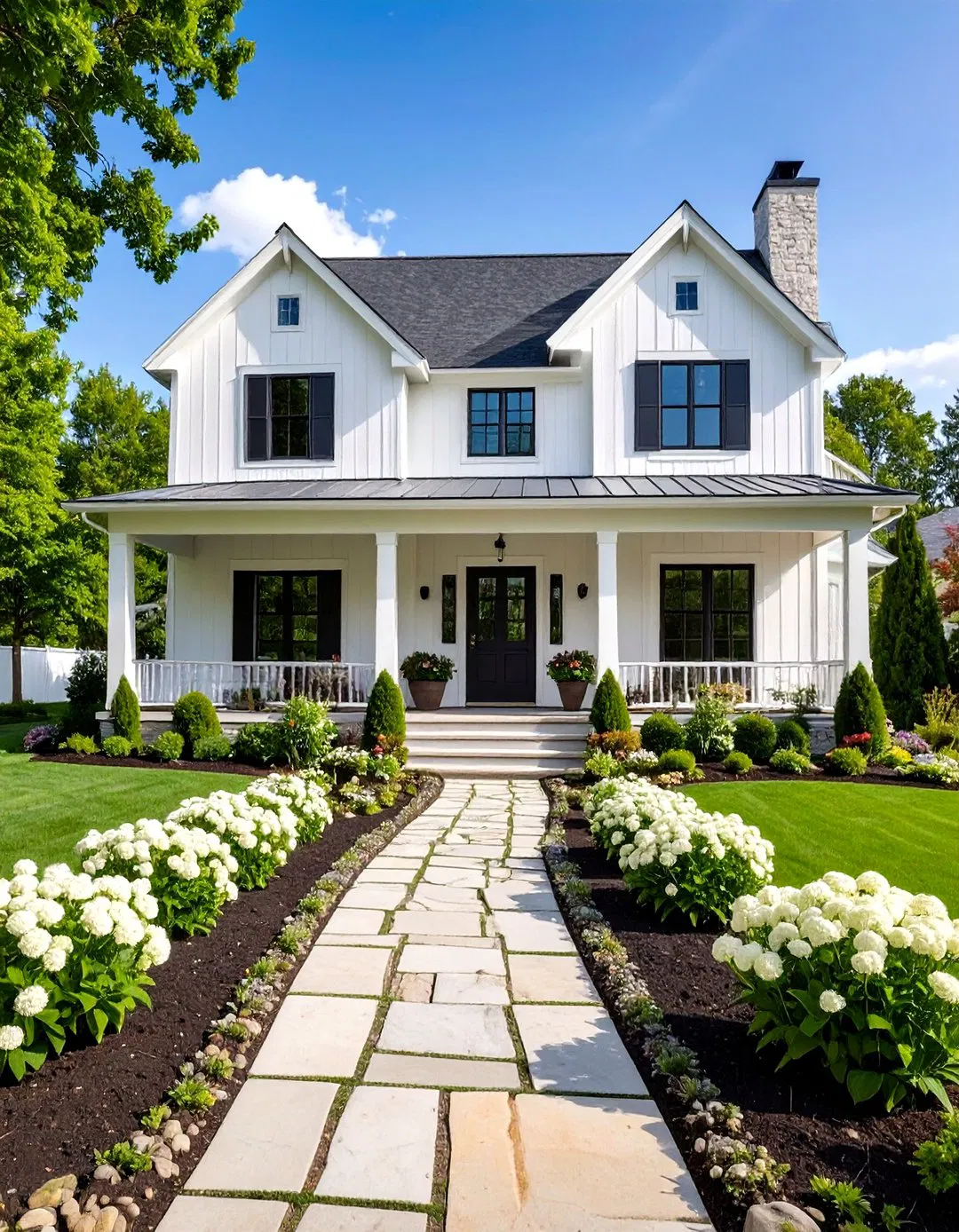
Thoughtful landscaping enhances your farmhouse’s visual appeal by complementing architectural features without overpowering them. White flowering plants such as hydrangeas, gardenias, and jasmine echo the siding color and provide seasonal interest against black window frames. Evergreen shrubs of varying heights offer year-round structure and frame the home’s base elegantly. Stone pathways and garden walls crafted from materials matching your foundation extend the color palette into the landscape. Planning for mature plant sizes ensures your greenery accentuates rather than obscures your windows and architectural details.
Designing a Welcoming Covered Entry Portico
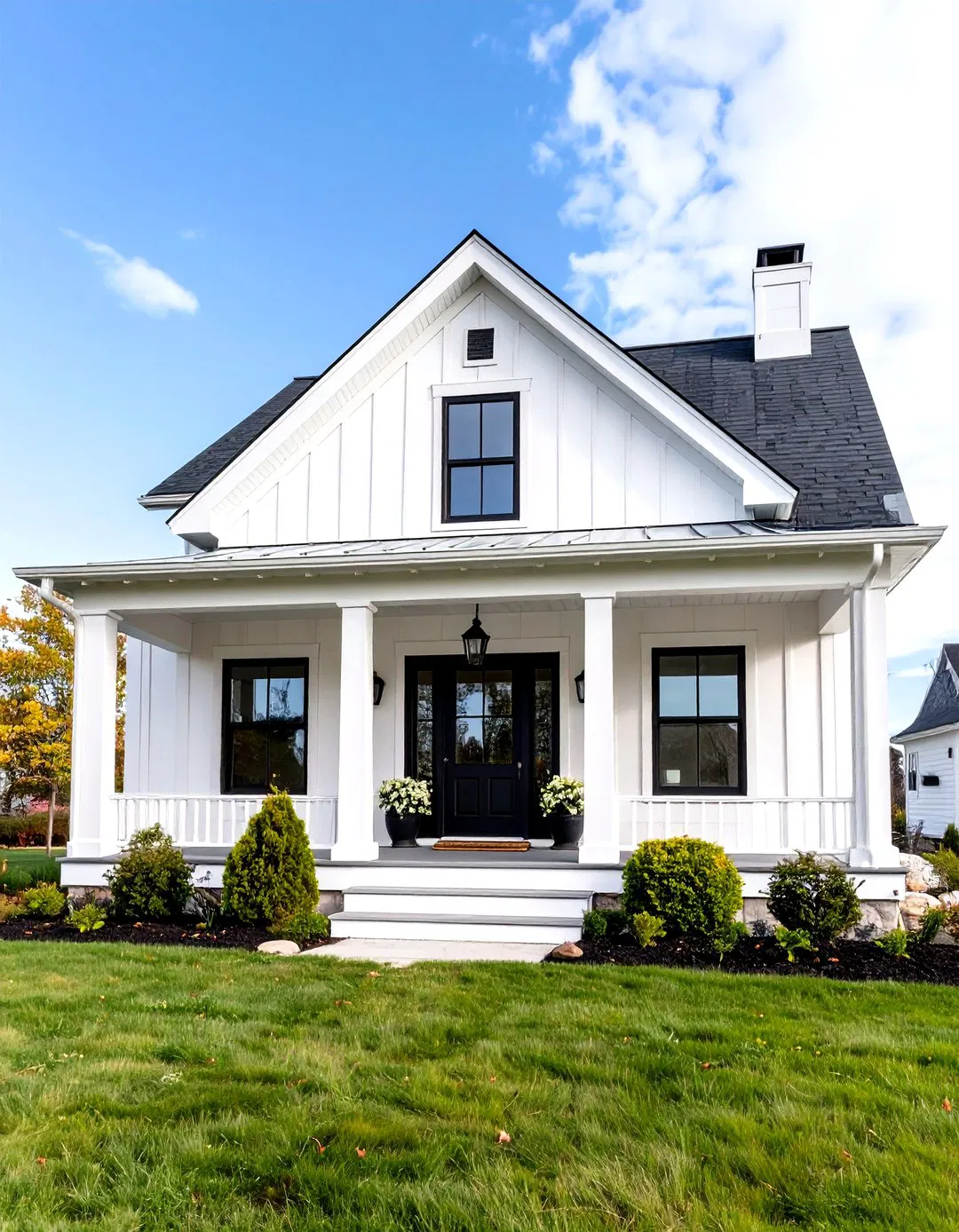
A well-proportioned covered entry portico adds architectural presence and practical shelter for visitors and deliveries. White columns supporting a gabled or shed roof echo the home’s primary color, while black trim details coordinate with window frames. The portico should extend sufficiently-typically six to ten feet-to create a comfortable transition space. Stone or brick bases for columns tie into foundation materials, and wood or composite decking offers a warm landing area. Black or dark-finished lighting fixtures maintain color consistency and enhance safety and ambiance during evening hours.
Coordinating Black Metal Roofing for Striking Contrast
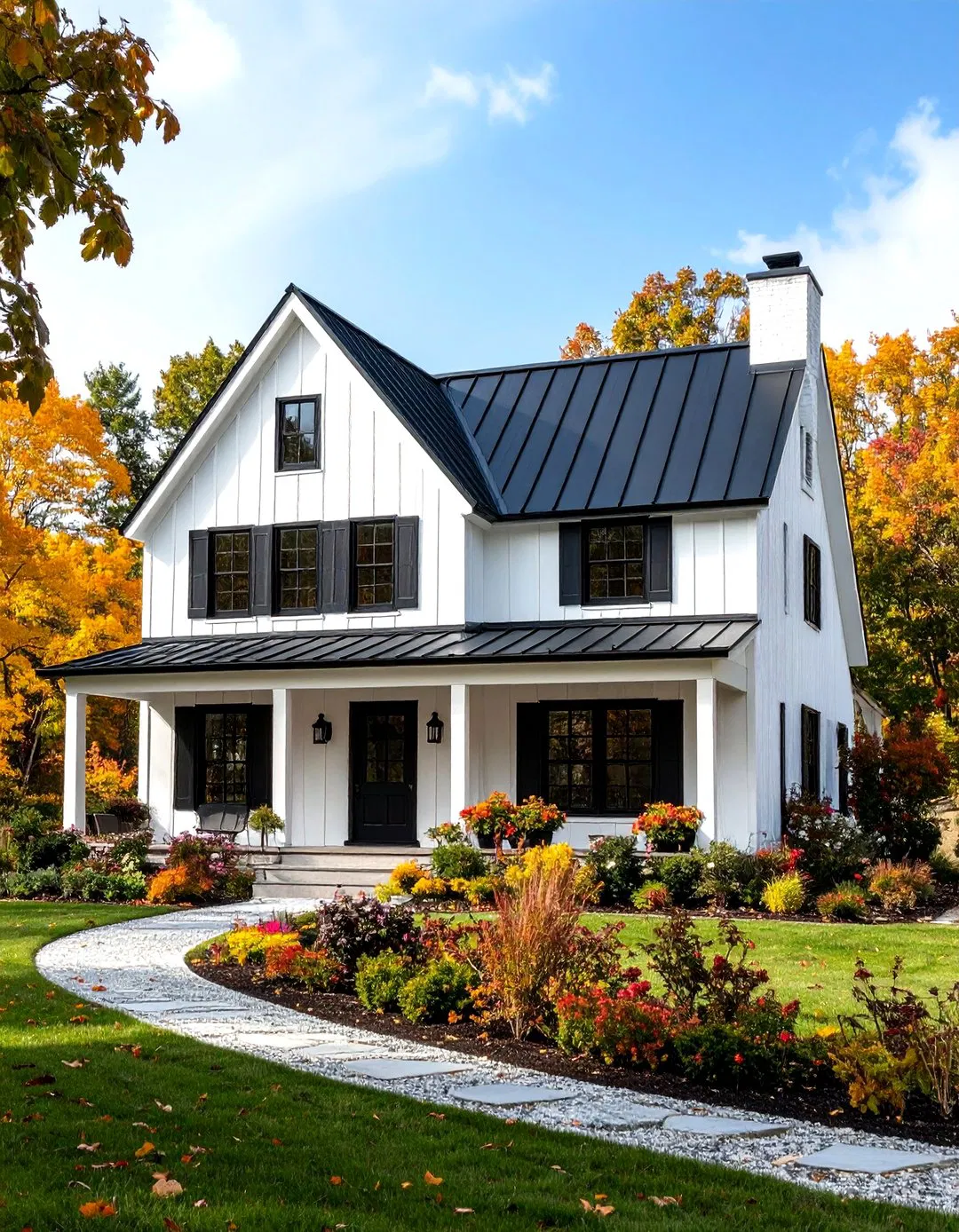
Black metal roofing offers a bold contrast to white siding and perfectly complements black window frames, creating a unified and contemporary farmhouse look. Standing seam metal roofs emphasize clean lines and geometric forms while providing exceptional durability and weather resistance. The dark color absorbs solar heat efficiently in cooler climates and adds visual weight that grounds the design. This roofing style pairs especially well with steep farmhouse roof pitches, accentuating dramatic angles. Think of the roof as a fifth facade, where the black finish creates stunning contrast against the sky and harmonizes with window trim.
Extending Farmhouse Living with Outdoor Spaces
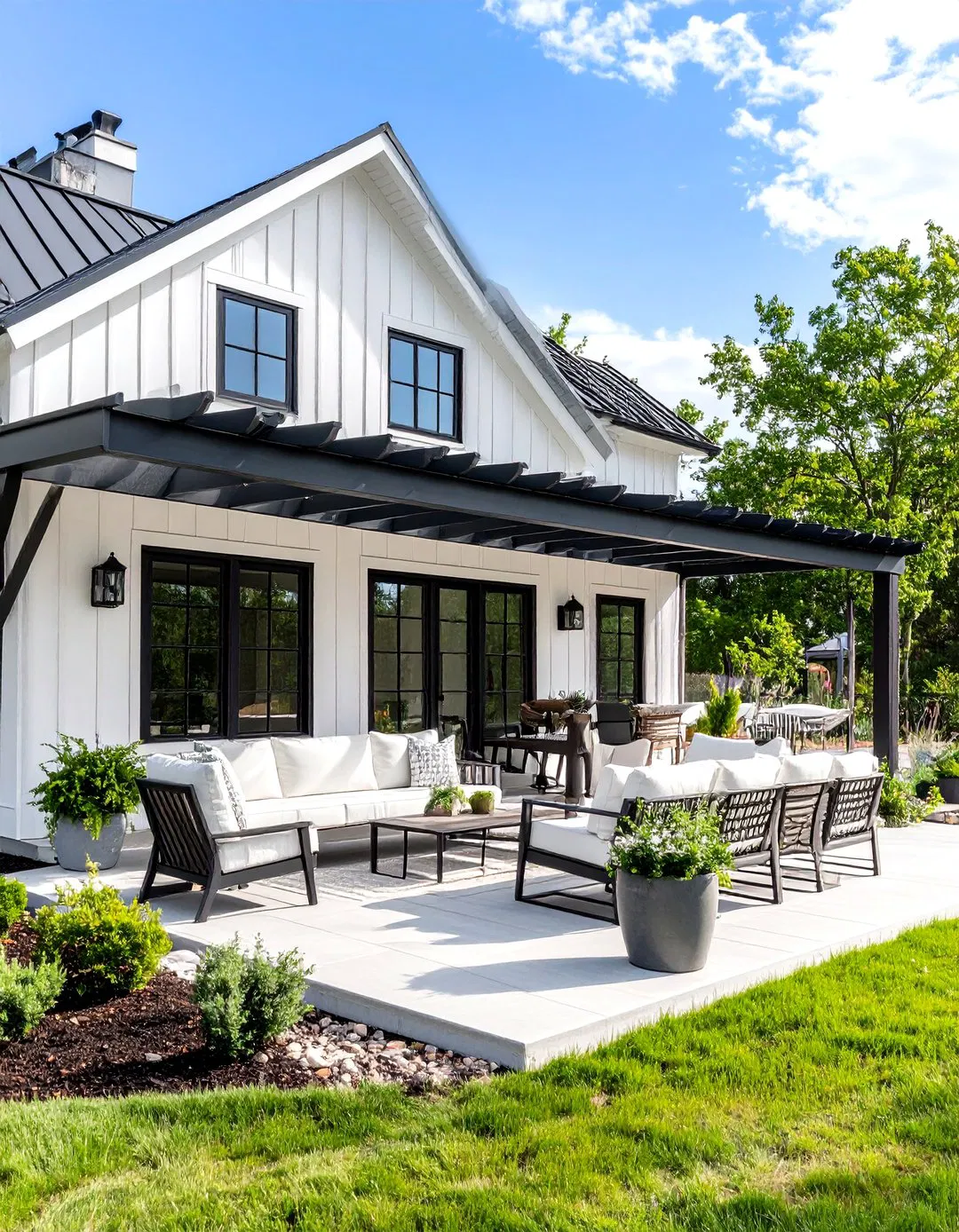
Seamlessly connect indoor and outdoor living by incorporating black window frame accents into your outdoor furniture and fixtures. White outdoor seating with black cushions or detailing mirrors your home’s color scheme while providing inviting gathering spots. Black metal pergolas or gazebos echo window frames and define outdoor rooms. Fire features built from natural stone coordinate with foundation materials and create cozy focal points for evening entertainment. The goal is to craft outdoor areas that feel like natural extensions of your interior, celebrating the striking contrast between white exteriors and bold black architectural elements.
Authentic Farmhouse Texture with Shiplap Siding
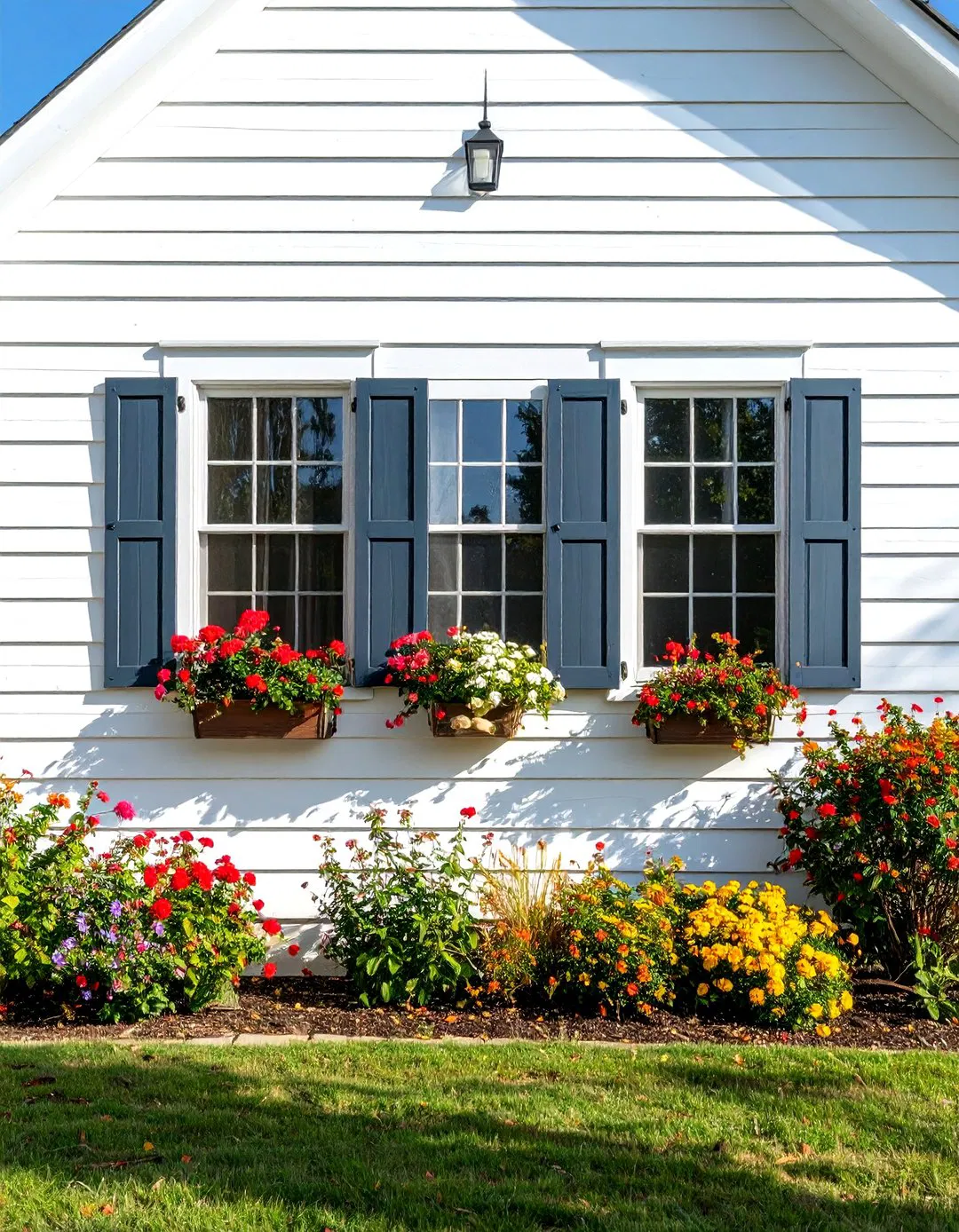
Shiplap siding’s horizontal wood planks with subtle reveal gaps add texture and shadow lines that enrich white farmhouse exteriors. Originating from barn construction, shiplap offers authentic farmhouse character and weather protection. Modern fiber cement shiplap replicates wood’s aesthetic with enhanced durability and low maintenance. The horizontal emphasis balances the verticality of black window frames, creating harmonious proportions. Experimenting with varied board widths or combining shiplap with other siding styles can define architectural zones and enhance your home’s character.
Optimizing Window Size and Proportion
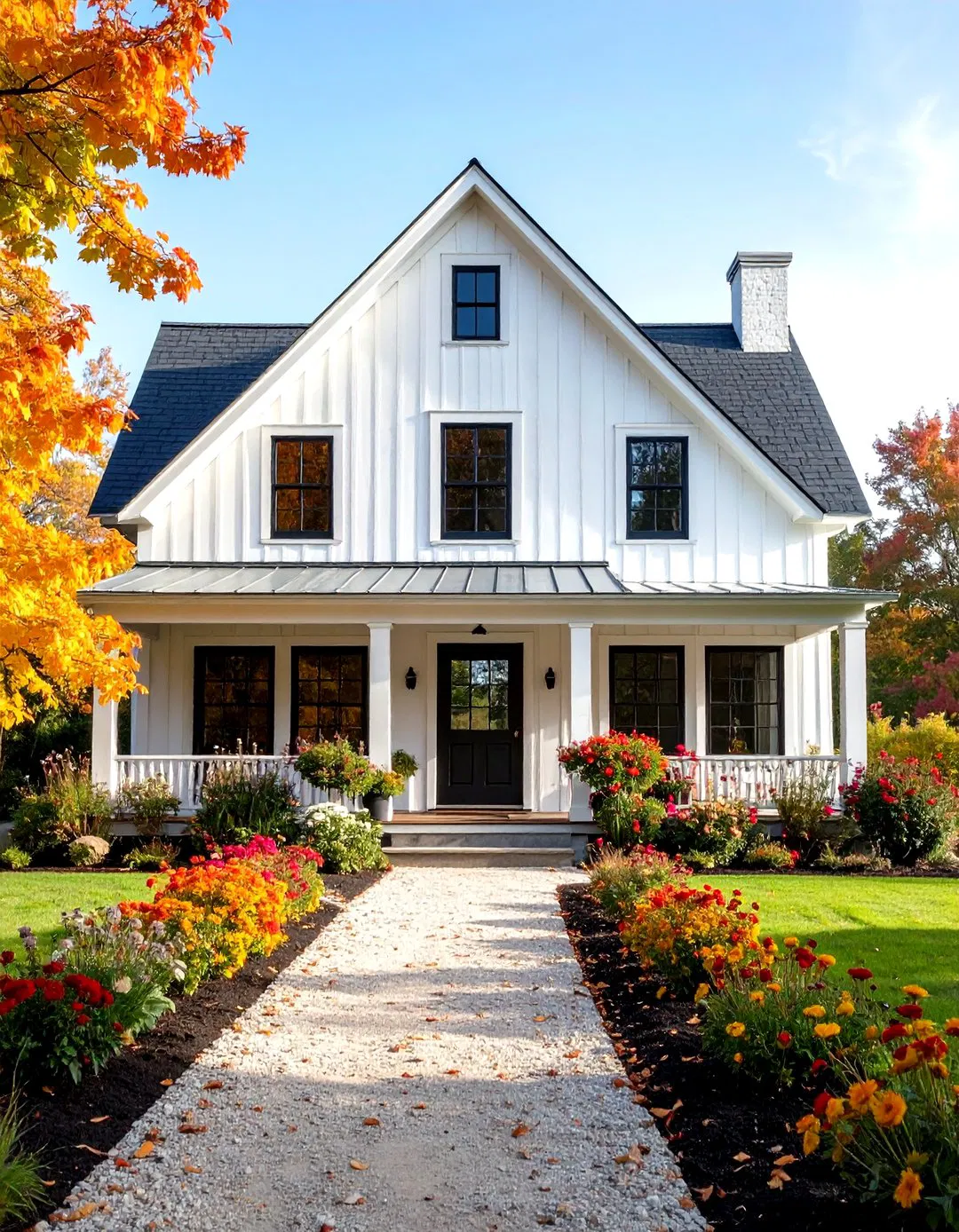
Choosing the right window dimensions profoundly influences your farmhouse’s style and interior ambiance. Larger windows flood interiors with natural light and create bold graphic elements against white siding. Black frames become more prominent with increased window size, serving as dramatic focal points. Taller windows evoke traditional charm, while wider windows lean toward modern aesthetics. Grouping windows thoughtfully establishes rhythm and balance across the facade, ensuring sufficient wall space between openings. Remember, windows serve both functional and decorative roles, impacting energy efficiency and curb appeal.
Adapting Seasonal Colors to Enhance Farmhouse Appeal
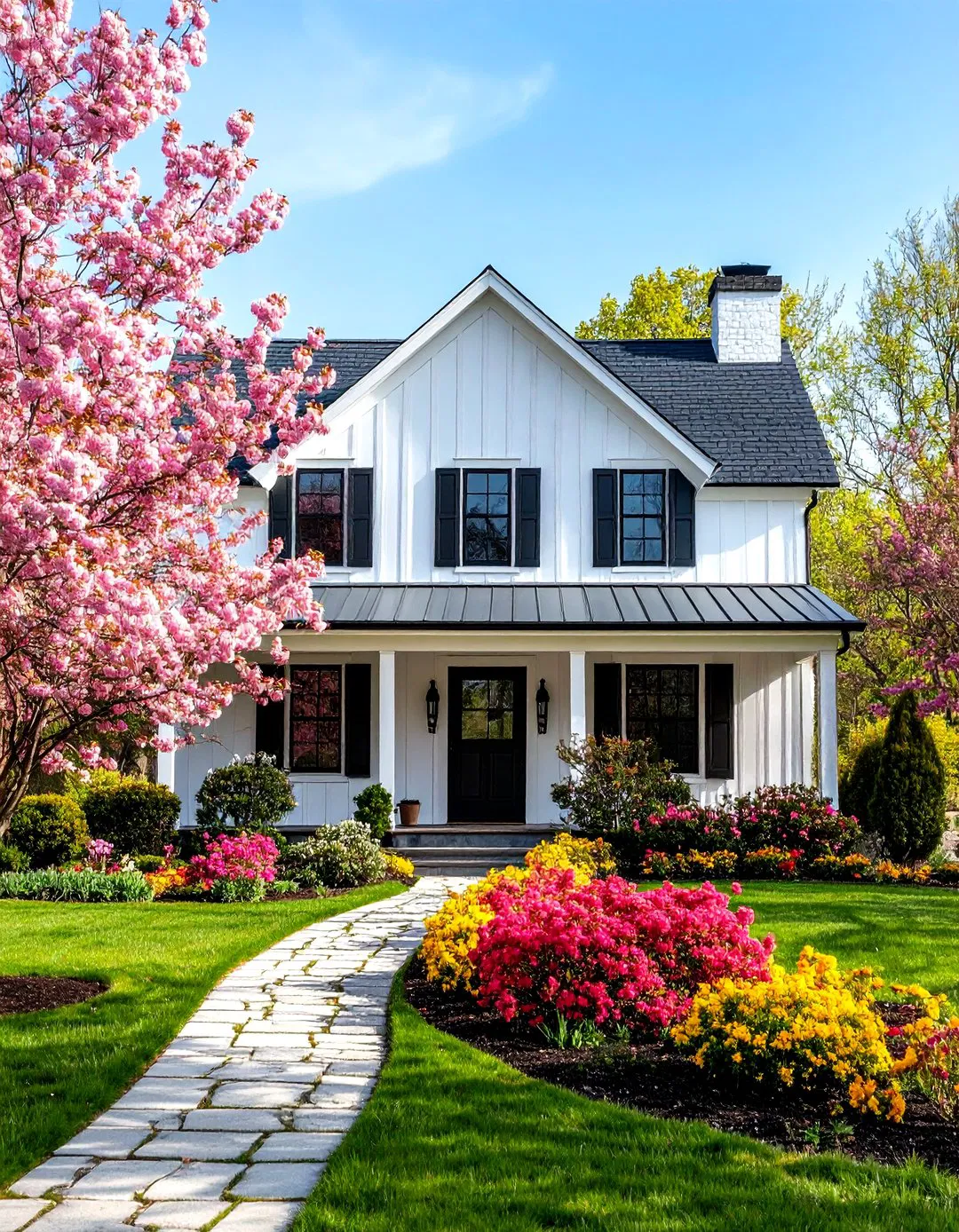
Your white farmhouse with black windows can shine year-round with strategic seasonal planning. Spring blooms like tulips and dogwoods provide vibrant backdrops that make white siding pop and highlight black window details. Summer’s lush greenery offers natural contrast, emphasizing clean lines and architectural forms. Autumn’s warm foliage complements the neutral palette, while winter snow blankets create magical contrasts against dark windows and roofing. Seasonal decorations such as window boxes, porch planters, and lighting can further enhance your home’s timeless farmhouse charm throughout the year.
Blending Foundation Materials for Authenticity
Combining different foundation materials enriches your farmhouse’s visual texture and grounds it authentically in its environment. Pairing natural stone with painted concrete or brick introduces varied colors and tactile interest along the foundation line. These materials should harmonize with black window frames and provide a smooth transition between white siding and the earth. Common pairings include fieldstone with concrete bands or brick accented with stone corners. This approach adds construction authenticity and allows incorporation of regional materials, strengthening your home’s connection to its locale.
Designing Accessible and Inviting Front Yard Approaches
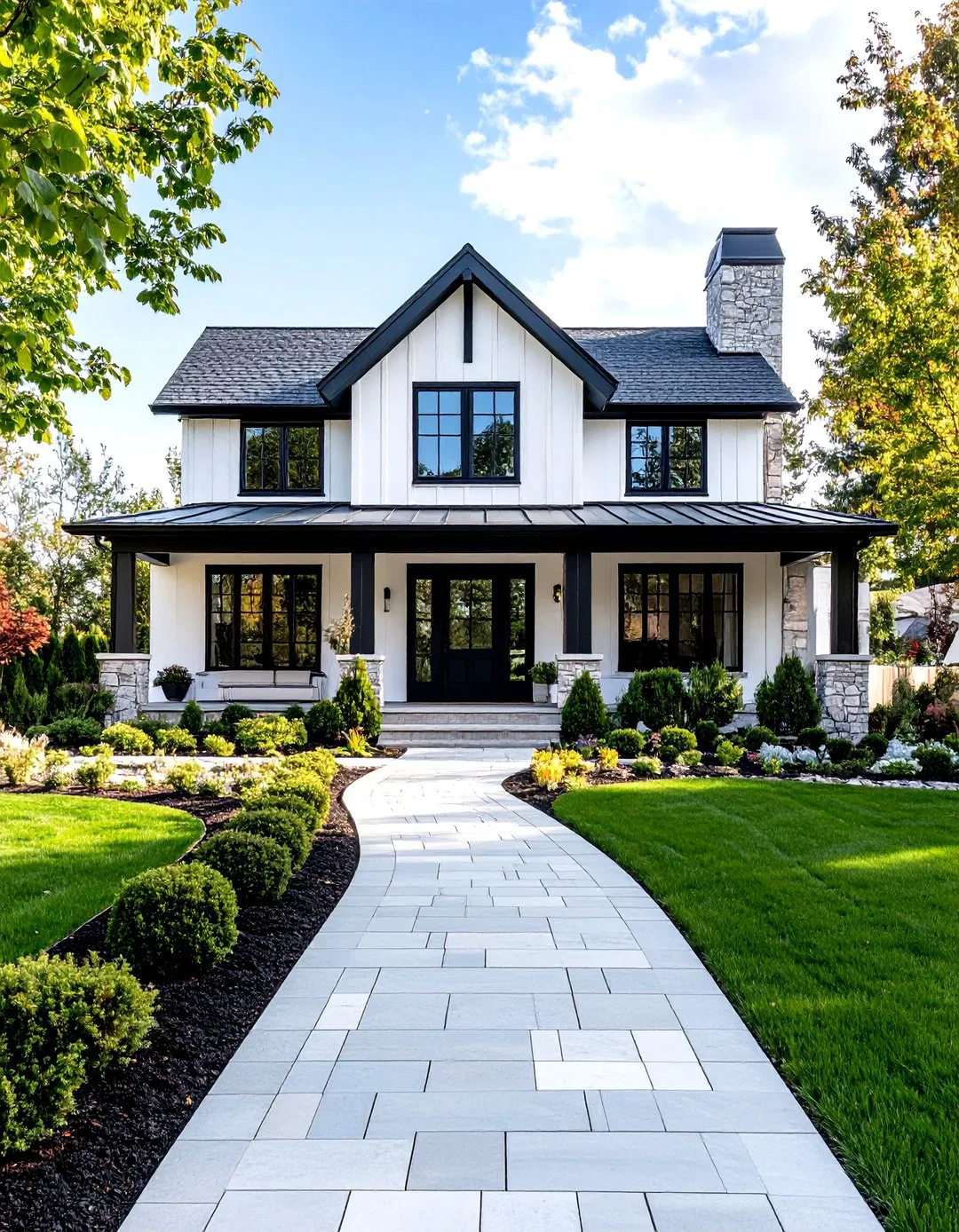
Creating a front yard that is both beautiful and accessible enhances your farmhouse’s welcoming character. Wide, gently sloped pathways made from natural stone or concrete pavers ensure safe navigation and complement foundation materials. Spacious landings at entrances provide comfortable maneuvering, while covered porches shield visitors from weather. Black-finished handrails coordinate with window frames and offer necessary support. Thoughtful lighting illuminates paths and architectural features, ensuring safety and enhancing evening curb appeal. The goal is a natural, inviting approach that meets accessibility standards without compromising farmhouse style.
Adapting Farmhouse Design to Regional Climates
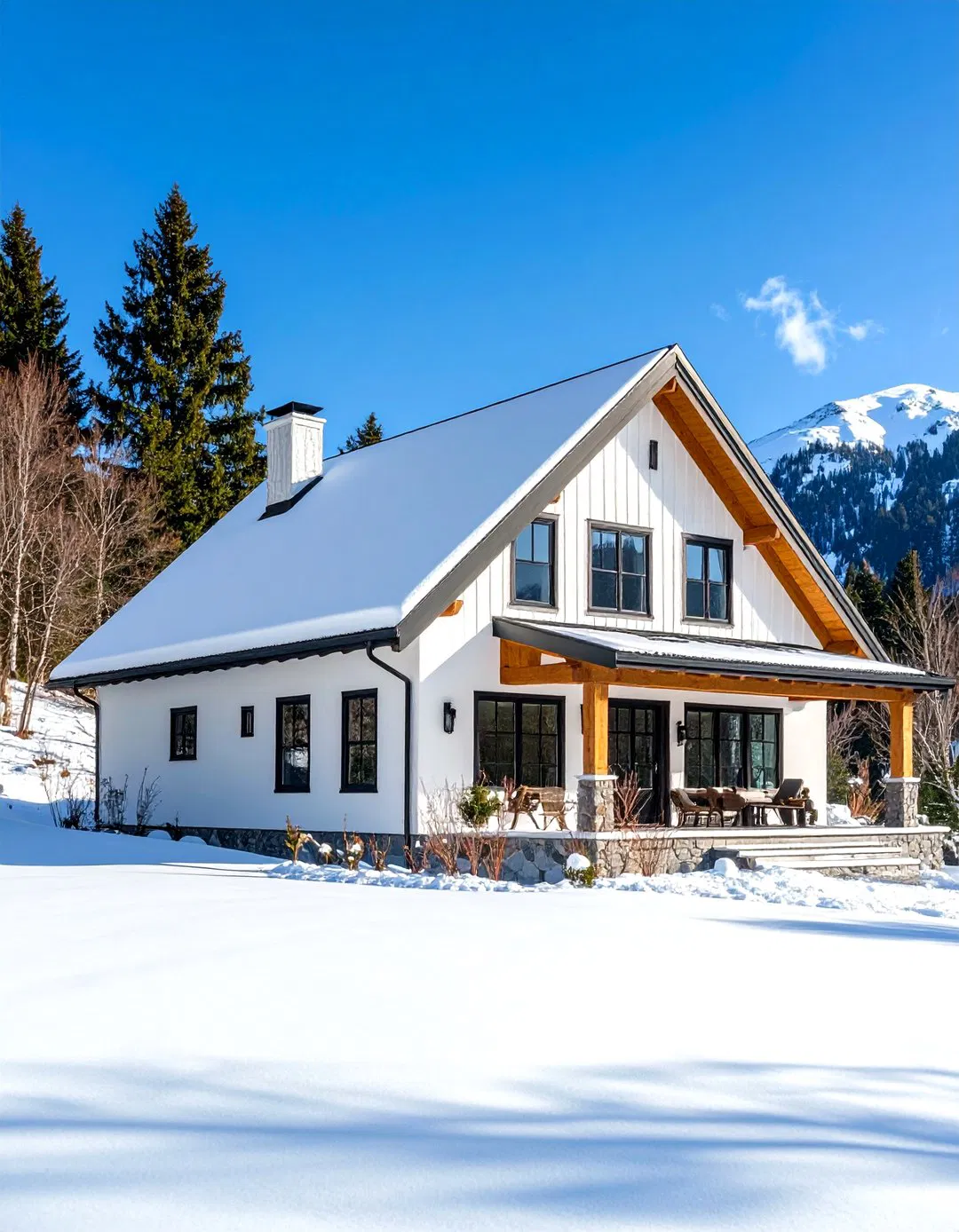
Regional climate plays a crucial role in shaping your farmhouse’s design and material choices. Cooler climates benefit from dark roofing that absorbs heat and steep roof pitches that shed snow efficiently. Warmer regions require lighter roofing colors and generous overhangs to provide shade and reduce heat gain. Coastal areas demand materials resistant to salt air corrosion and moisture, while mountainous zones need robust construction to withstand temperature extremes and heavy snowfall. These practical considerations inform your design without compromising the timeless farmhouse aesthetic.
Seamless Interior and Exterior Color Coordination
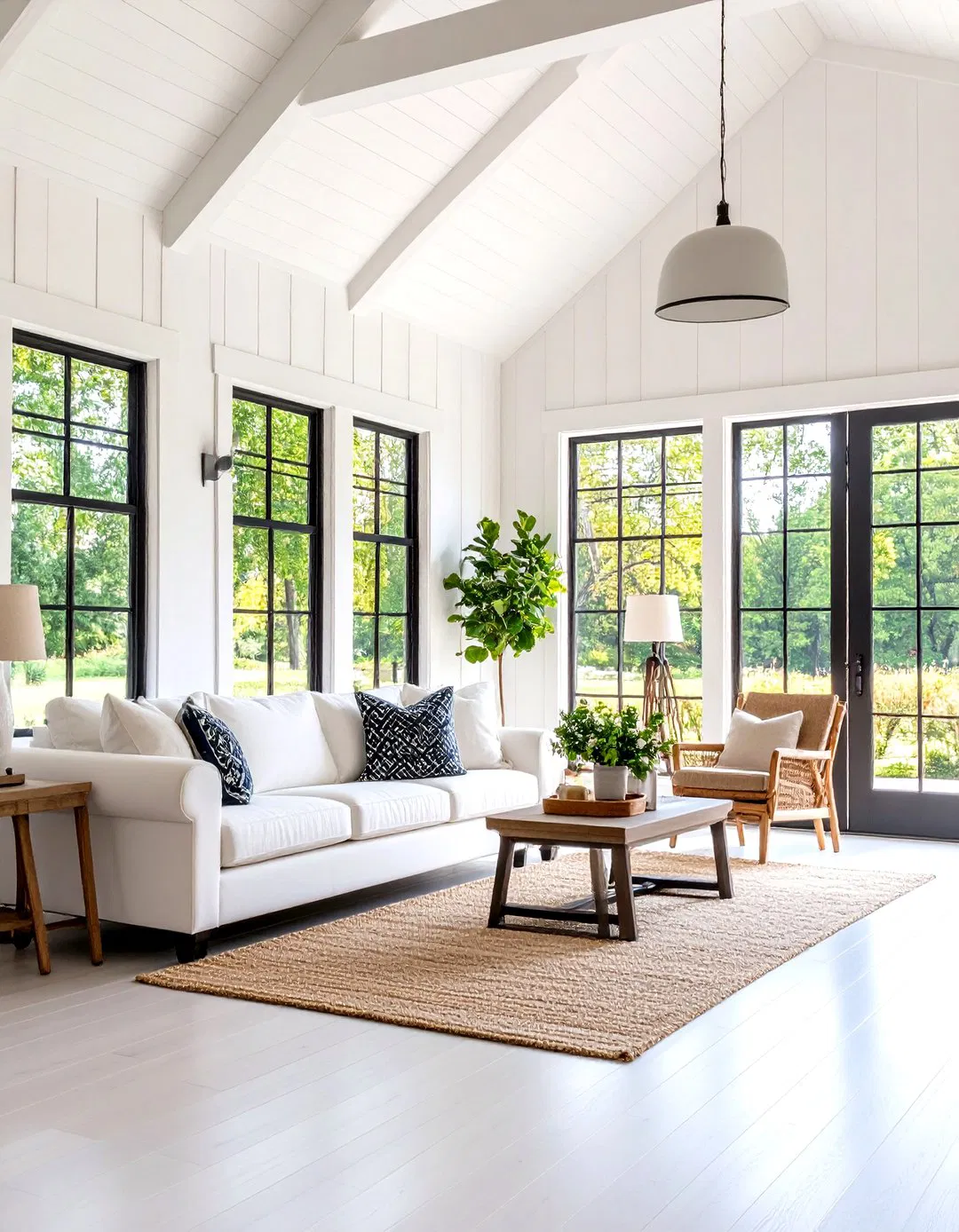
Achieving harmony between interior and exterior colors enhances your farmhouse’s cohesive feel. Interior window trim can either remain white for brightness or match the exterior black frames for dramatic continuity. Consider how exterior colors appear from inside, especially in rooms with large windows where views become part of the interior design. Use accent colors that appear both indoors and outdoors-such as natural wood tones, soft blues, or warm grays-to create seamless transitions that uphold the sophisticated farmhouse style.
Garage Door Designs that Complement Farmhouse Aesthetics
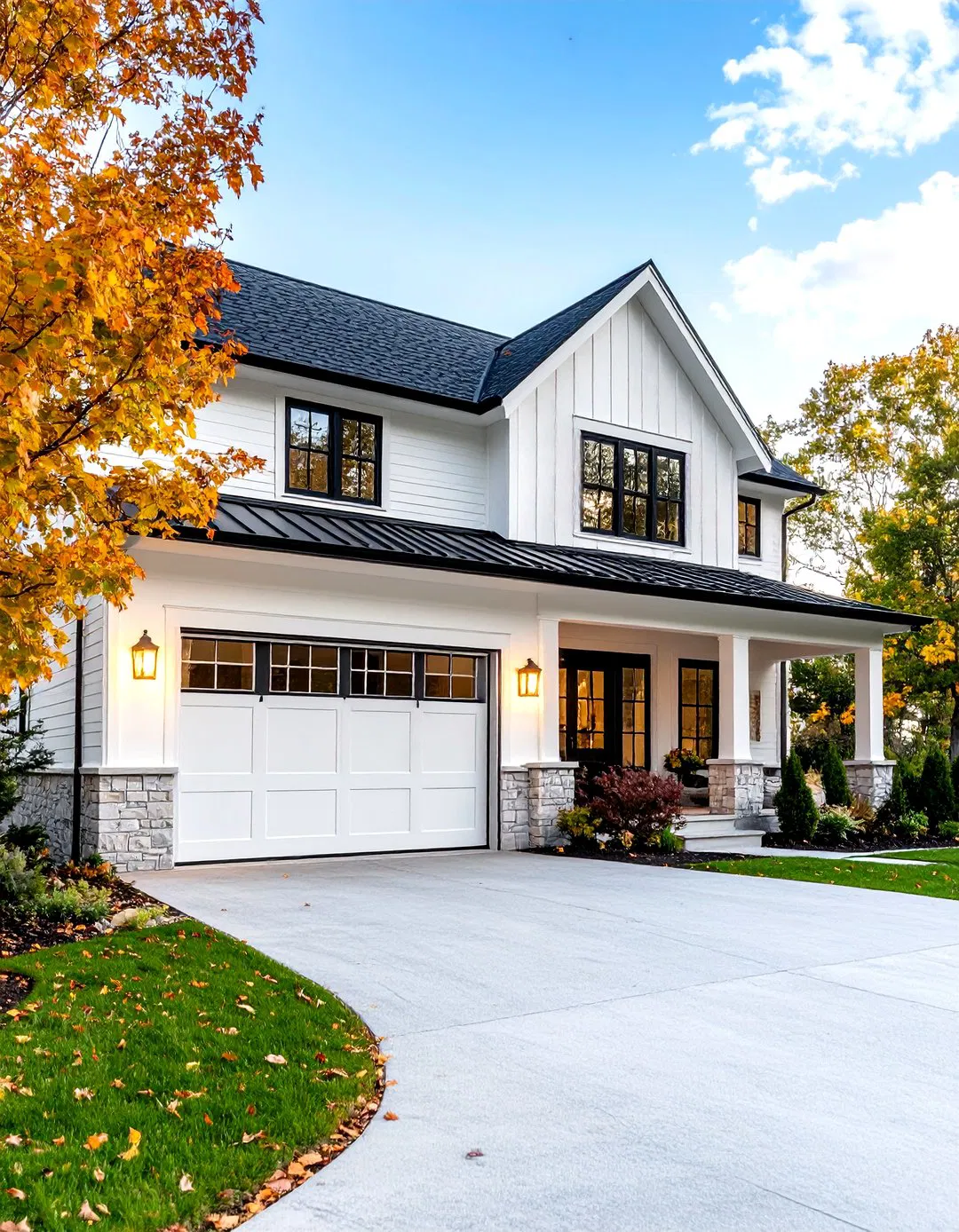
The garage door is a significant architectural feature that should harmonize with your farmhouse’s white siding and black window frames. Carriage-style doors painted white with black hardware maintain authentic farmhouse character and color balance. Alternatively, natural wood doors add warmth and texture that complement the black and white contrast. Ensure the garage door’s size is proportional to your home’s scale; multiple smaller doors often suit farmhouse designs better than a single large door. Thoughtful placement and design make the garage an asset that enhances your home’s overall aesthetic.
Coordinating Exterior Lighting for Nighttime Appeal
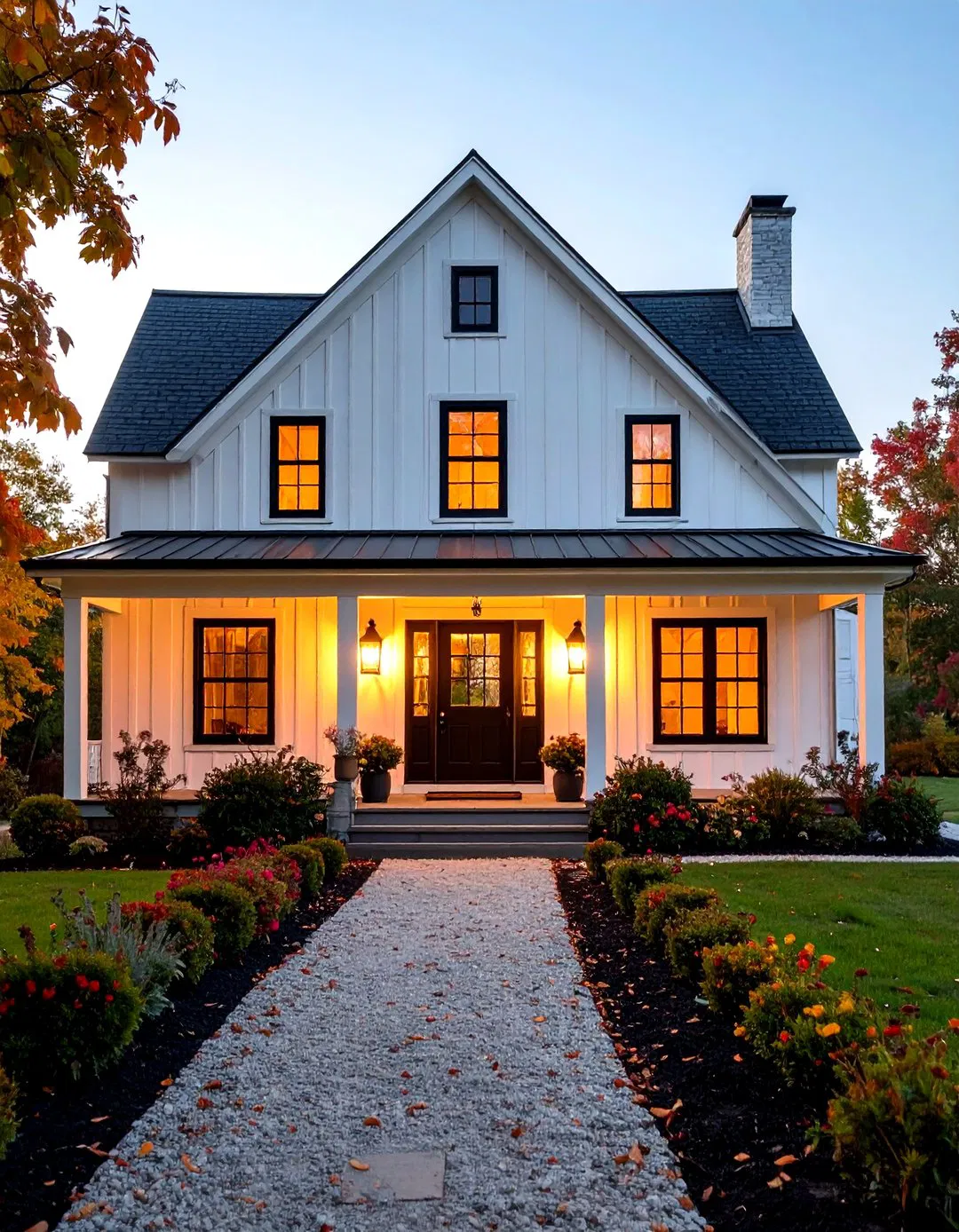
Exterior lighting enhances your farmhouse’s curb appeal after dark while ensuring safety. Black lantern-style fixtures complement window frames and reinforce farmhouse authenticity. Wall sconces flanking entryways provide warm, welcoming illumination and highlight architectural details. String lights on porches add cozy ambiance for gatherings. Landscape lighting should accentuate key features like foundation plantings and pathways. Additionally, interior lighting visible through black-framed windows contributes to your home’s nighttime charm and overall visual impact.
Refining Farmhouse Corners with Thoughtful Details
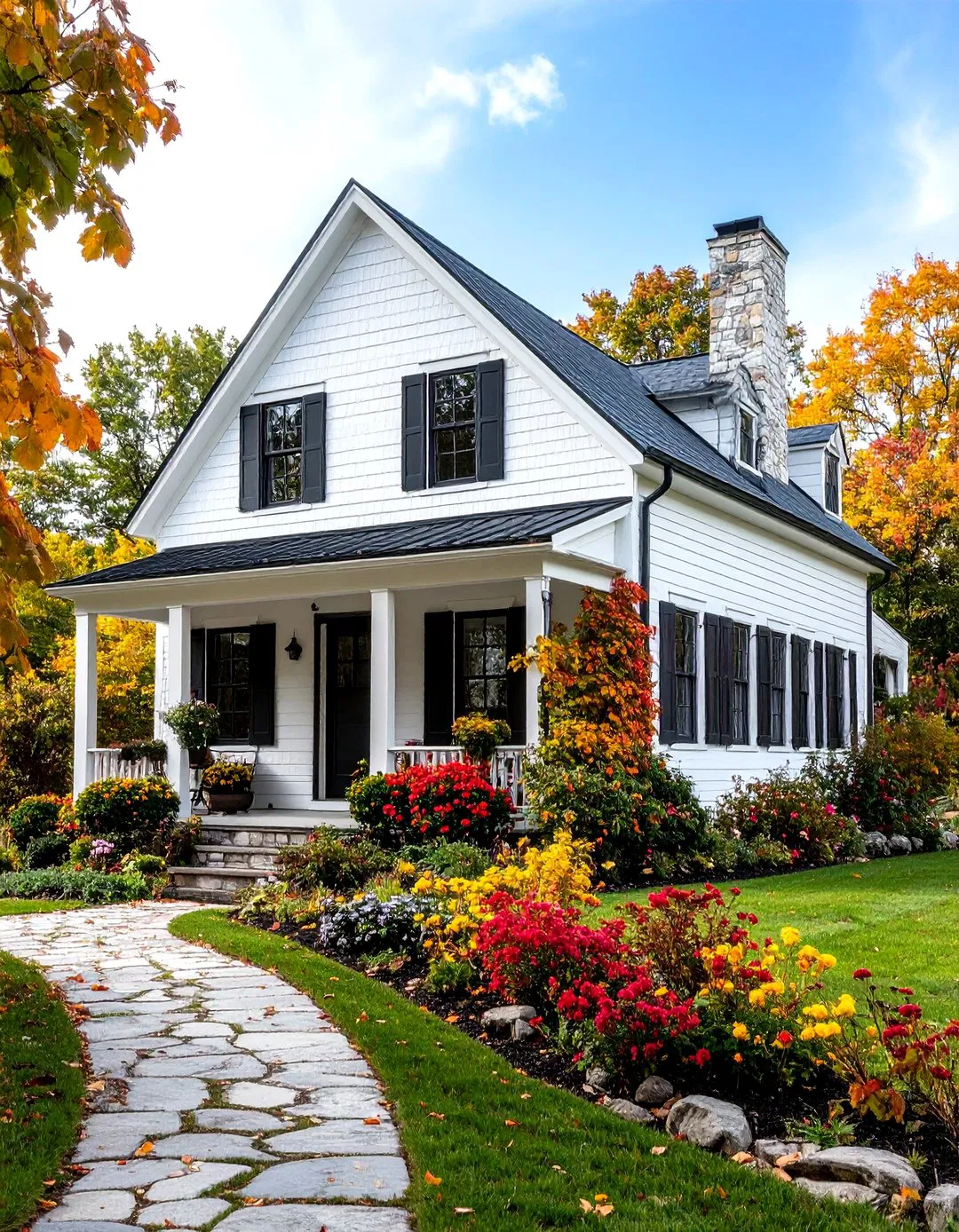
Corner treatments, though subtle, greatly influence your farmhouse’s perceived quality and style. White corner boards maintain clean, traditional lines, while darker corner accents add definition and architectural interest. Stone or brick corner details coordinate with foundation materials, providing visual weight and authenticity. Your corner strategy should align with your siding approach, whether emphasizing simplicity with painted boards or complexity with mixed materials. Consider how corners interact with window placement and other elements to create a cohesive, intentional design throughout your exterior.
Coordinating Outbuildings for Unified Property Design
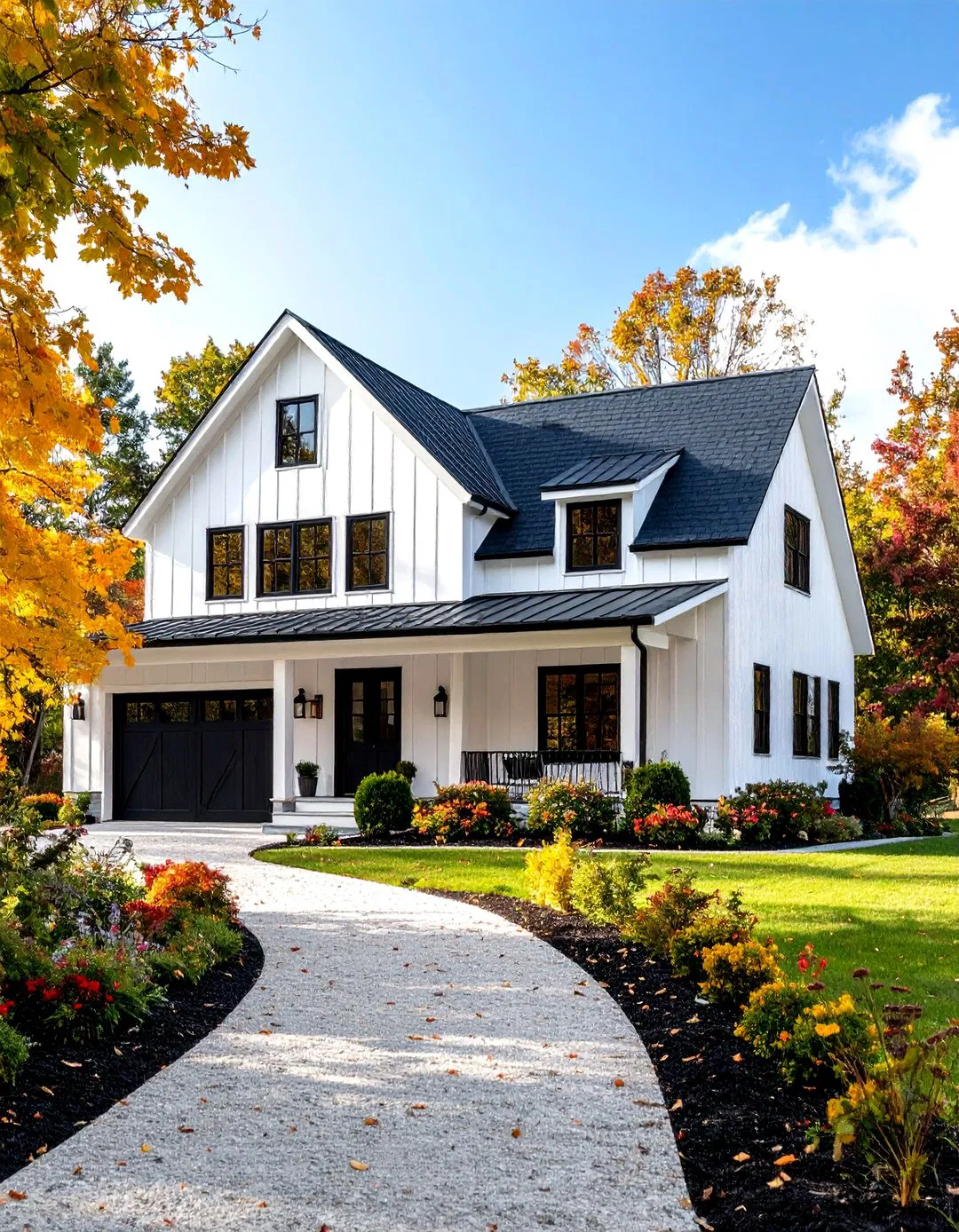
Outbuildings such as barns, sheds, and garages enhance your farmhouse property’s overall cohesion when designed to echo the main house. Use consistent white siding and black window or door trims to unify the look. Simplified versions of main house details-like board and batten siding or matching roof materials-create a family resemblance without exact duplication. Scale these structures appropriately for their function while maintaining visual harmony. Thoughtful placement ensures attractive compositions from key viewpoints and practical access, making outbuildings integral to your farmhouse’s authentic character.
Planning for Long-Term Maintenance and Durability
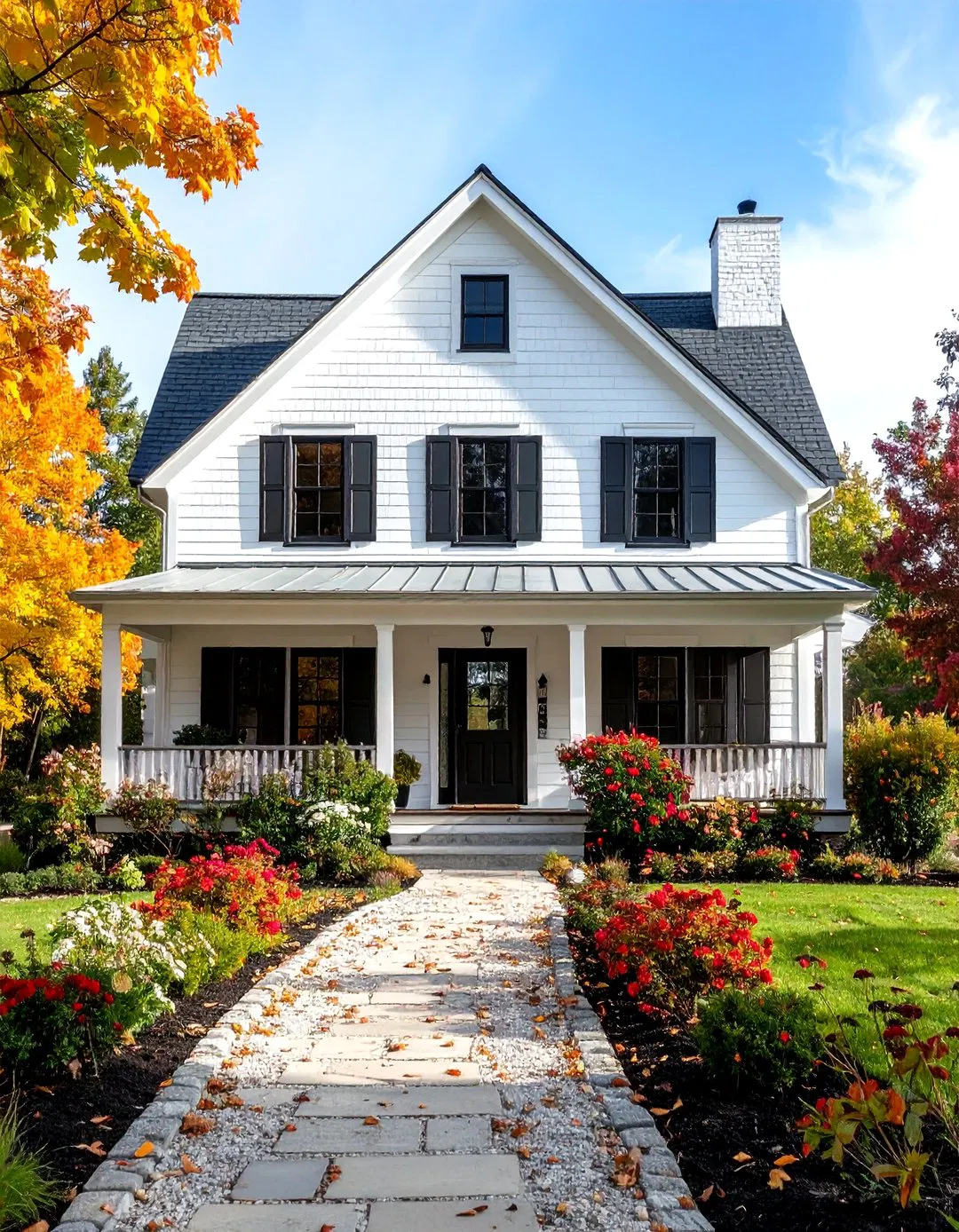
Ensuring your white farmhouse with black windows remains stunning over time requires careful material selection and maintenance planning. High-quality exterior paints and stains resist fading and chalking, preserving the crisp contrast between white siding and black trim. Fiber cement and metal siding offer superior durability compared to wood, reducing upkeep while maintaining farmhouse authenticity. Regular cleaning prevents mildew and staining, keeping surfaces fresh. Accessibility for maintenance tasks should be considered during design to facilitate safe cleaning and repainting. Investing in quality materials and installation pays off with reduced maintenance and lasting beauty.
Final Thoughts: Timeless Elegance in White and Black Farmhouse Design
The enduring charm of white farmhouse exteriors paired with black windows lies in their perfect blend of simplicity and sophistication. This classic color pairing offers limitless design opportunities, from traditional board and batten to innovative mixed-material facades. The bold contrast creates architectural drama while preserving the inviting warmth that defines farmhouse style. Incorporating elements like wraparound porches, dormers, and thoughtful landscaping contributes to a cohesive design that feels both authentic and fresh. Success hinges on attention to proportion, material quality, and climate considerations. These ideas demonstrate how this timeless palette adapts to diverse architectural styles and personal preferences, consistently delivering captivating curb appeal that lasts.
For those interested in enhancing their farmhouse exterior, explore black window frames, board and batten siding, and metal roofing options on Amazon to find quality materials that complement this timeless farmhouse aesthetic.