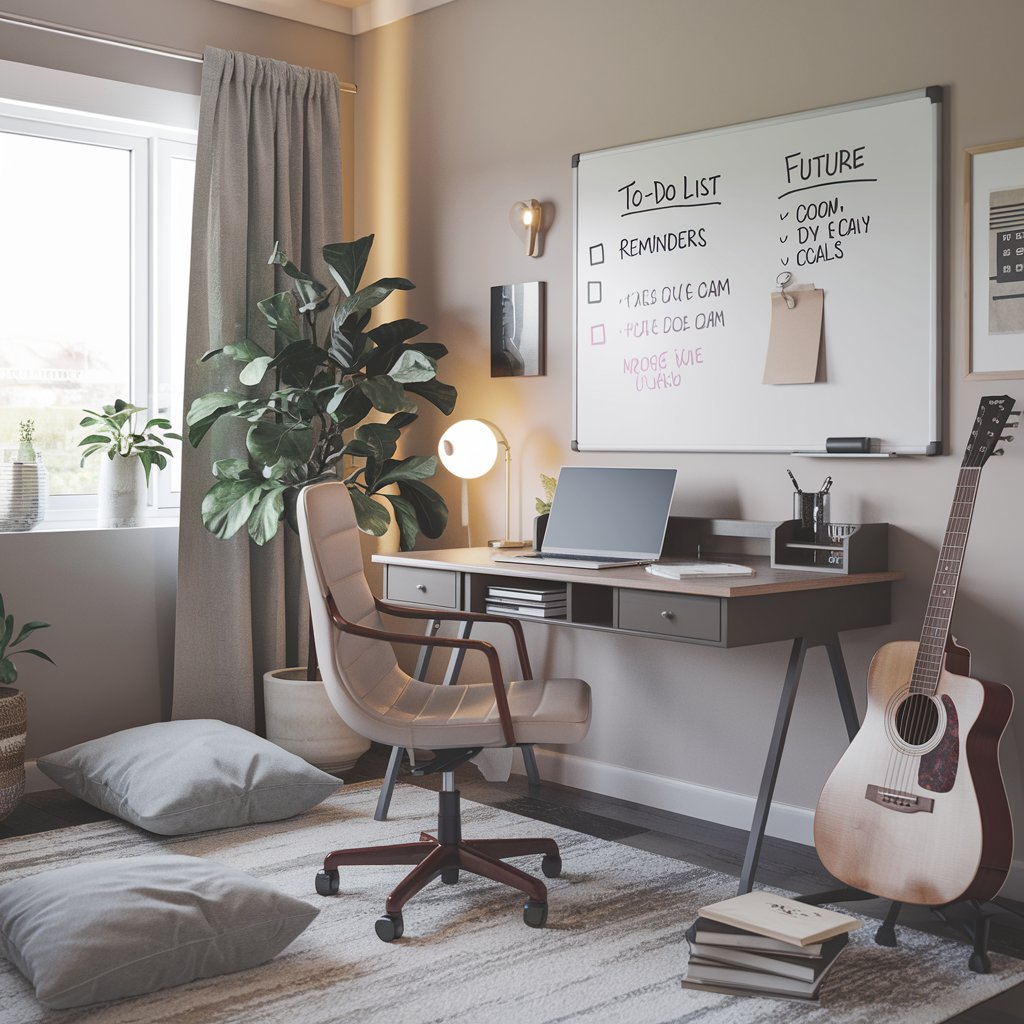
Remote work has evolved from a passing fad into a permanent way of life. Designing your home office to be both efficient and welcoming is essential for maintaining productivity and comfort.
Whether you’re transforming an unused room or designating a nook in your living area, these 21 innovative work-from-home office ideas will guide you in crafting a workspace that balances practicality with inspiration.
1. Select an Ideal Location
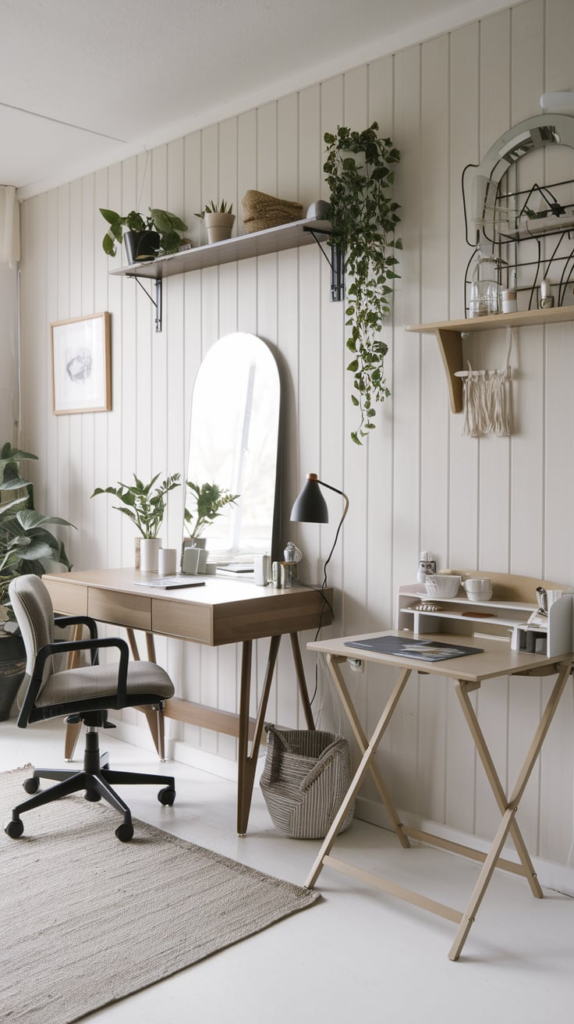
Begin by pinpointing a spot that suits your workflow. If you need tranquility, a quiet room or a tucked-away corner is perfect. Conversely, if you draw energy from household activity, situate your desk near communal spaces. The size of the area is less important than how well it supports your work style.
2. Embrace Natural Illumination
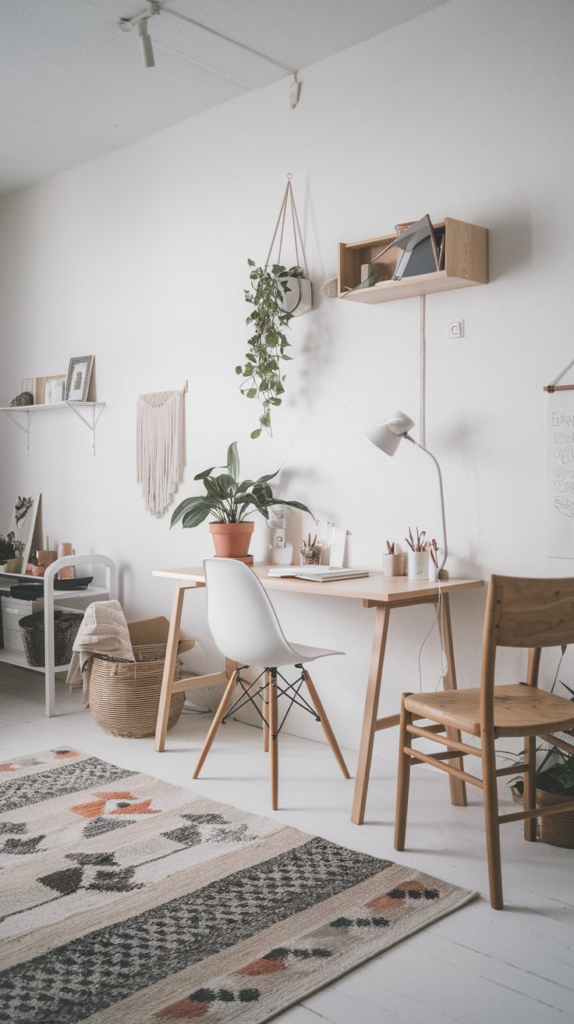
Position your workstation close to windows to take advantage of natural light. Sunlight not only elevates mood and concentration but also helps reduce electricity consumption during daylight hours.
3. Prioritize Ergonomic Seating
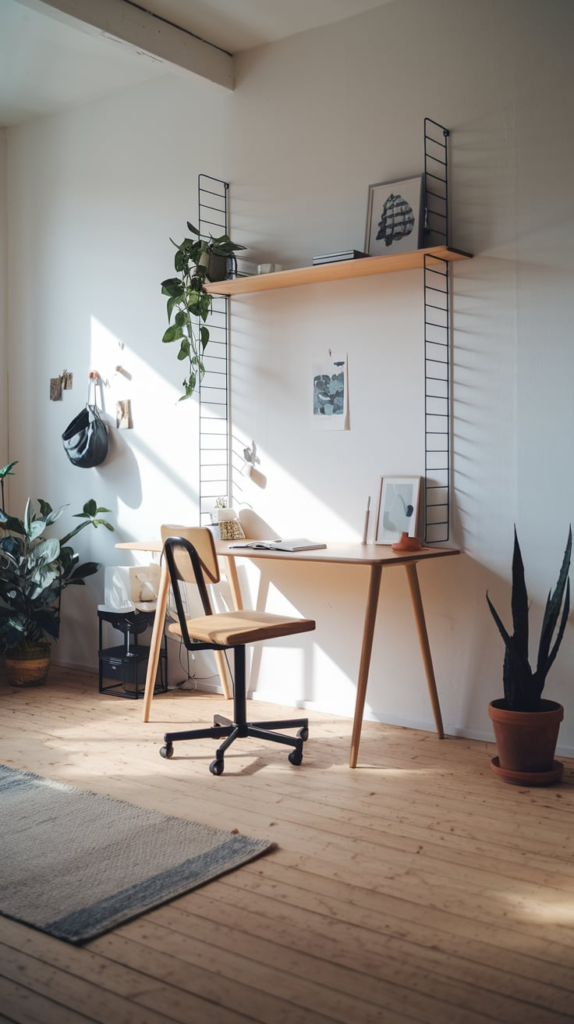
Your chair is fundamental to your comfort and productivity. Invest in an ergonomic model featuring adjustable height, lumbar support, and breathable materials. This can significantly reduce the risk of back discomfort during long work sessions.
4. Opt for a Desk That Matches Your Workflow
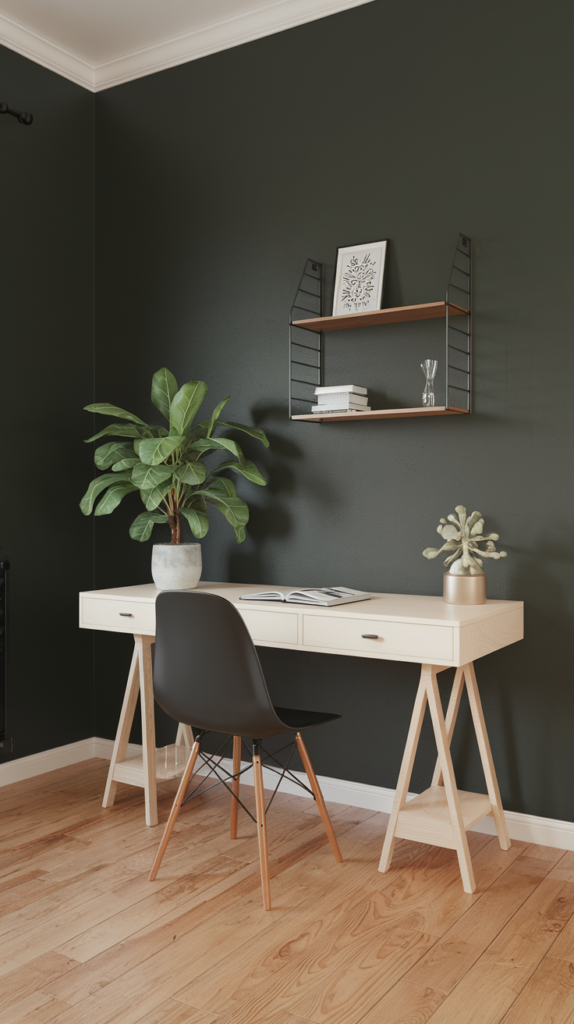
Choose a desk tailored to your daily tasks. For multitasking with several monitors, a spacious desk is ideal. If paperwork is your focus, select one with ample surface area. For compact spaces, consider foldable or wall-mounted desks to optimize room.
5. Maintain an Organized Environment
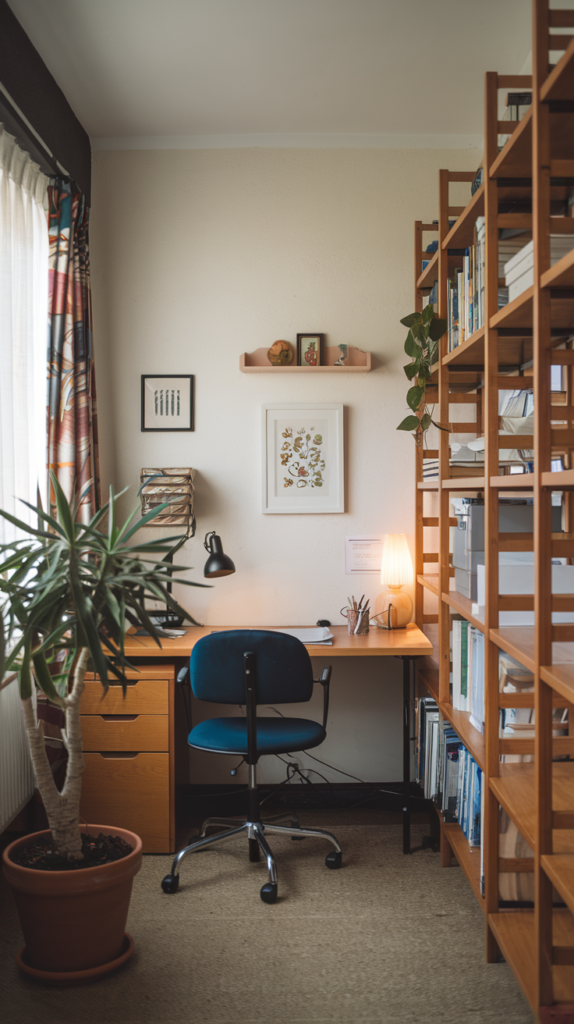
A tidy workspace promotes mental clarity. Utilize storage solutions like shelves, filing units, and desktop organizers to keep essentials in order and distractions at bay.
6. Utilize Vertical Storage
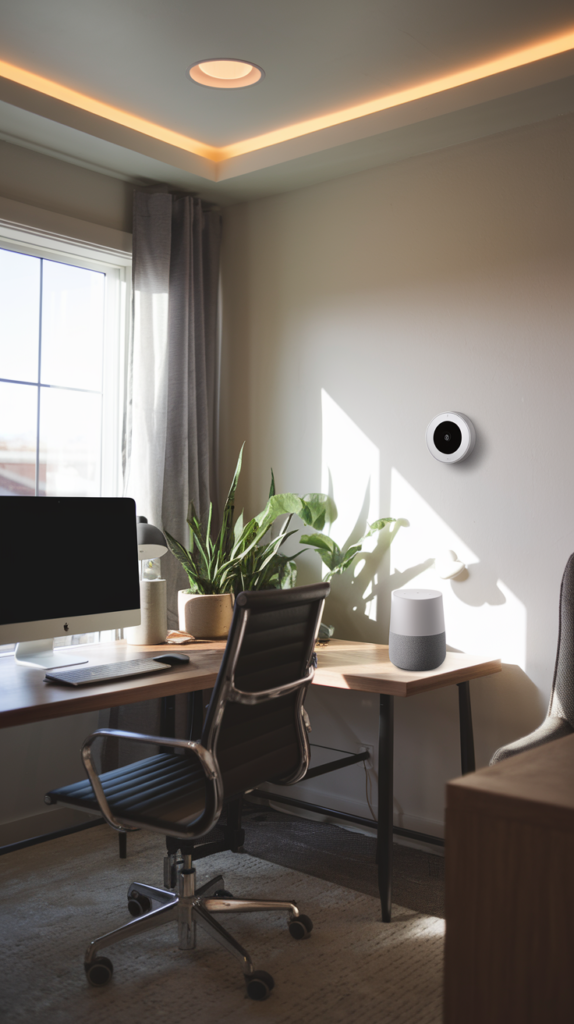
When floor space is limited, think upwards. Installing floating shelves, pegboards, or wall hooks can keep supplies accessible while freeing up desk and floor areas.
7. Incorporate Indoor Plants
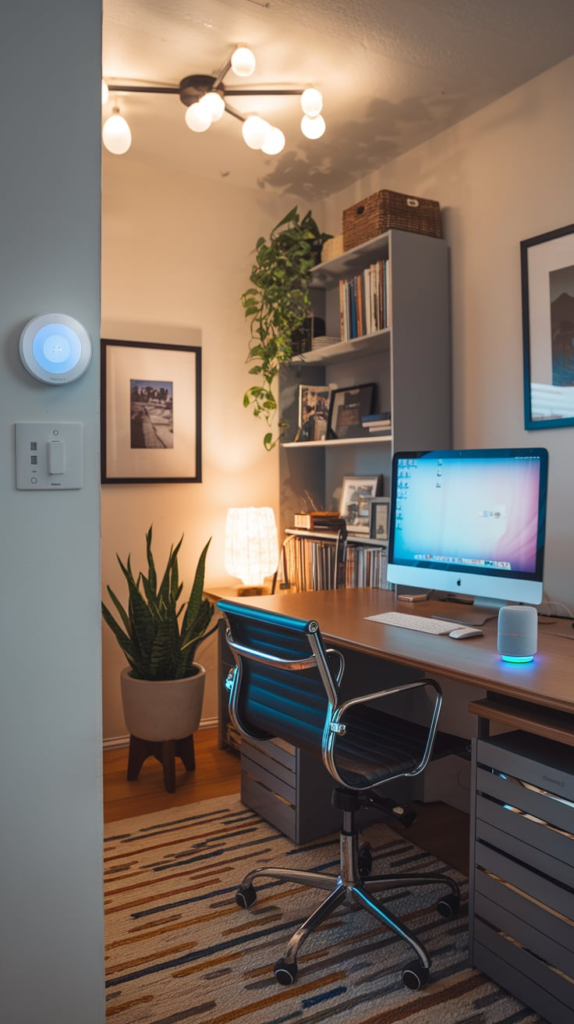
Adding greenery such as ferns or snake plants not only beautifies your space but also enhances air quality and reduces stress levels, creating a more pleasant work atmosphere.
8. Personalize Your Workspace
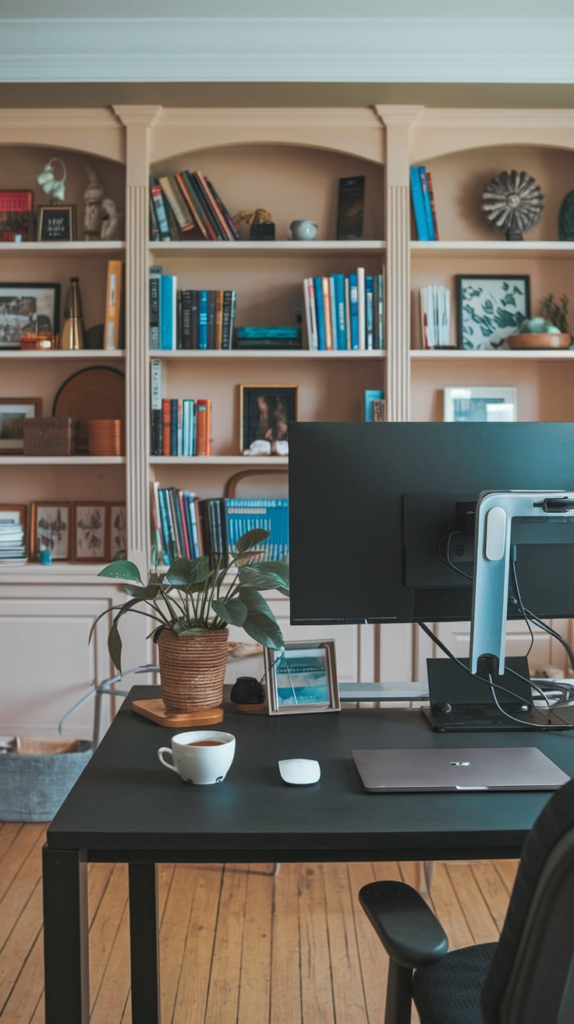
Make your office uniquely yours by displaying cherished photos, artwork, or meaningful mementos. These elements foster a welcoming environment that motivates and comforts.
9. Design for Ergonomic Efficiency
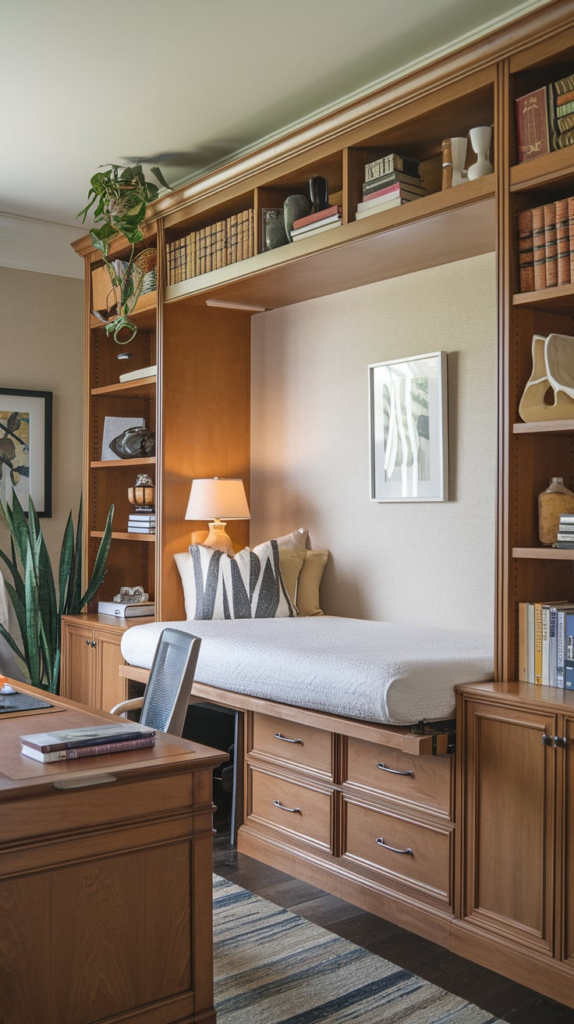
Ensure your monitor is positioned at eye level, your chair supports your lower back, and your feet rest flat on the floor. Such ergonomic considerations are vital for preventing strain during extended work periods.
10. Utilize Visual Planning Tools
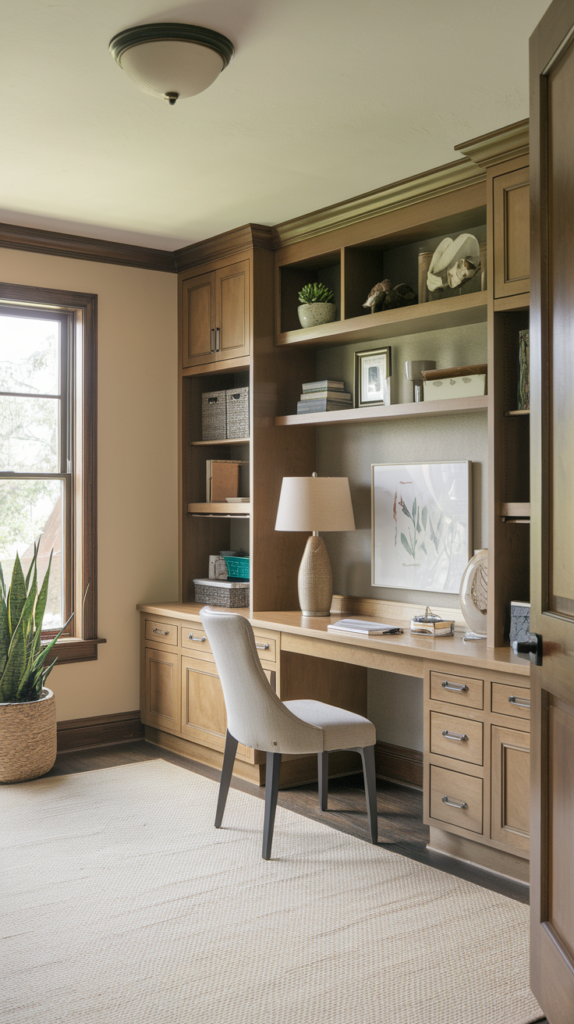
Incorporate a whiteboard or corkboard to organize tasks, deadlines, and brainstorm ideas. These tools enhance productivity and add a dynamic visual element to your office.
11. Optimize Lighting Layers
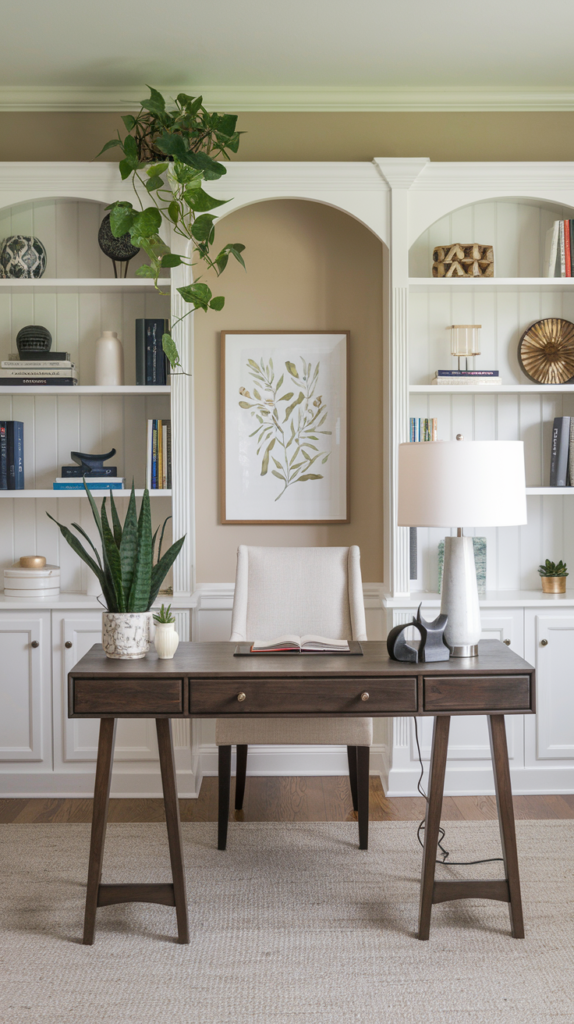
Combine ambient lighting with focused task lights like adjustable desk lamps. Choose warm light bulbs for a cozy ambiance or daylight bulbs to mimic natural light, reducing eye fatigue.
12. Define Separate Functional Areas
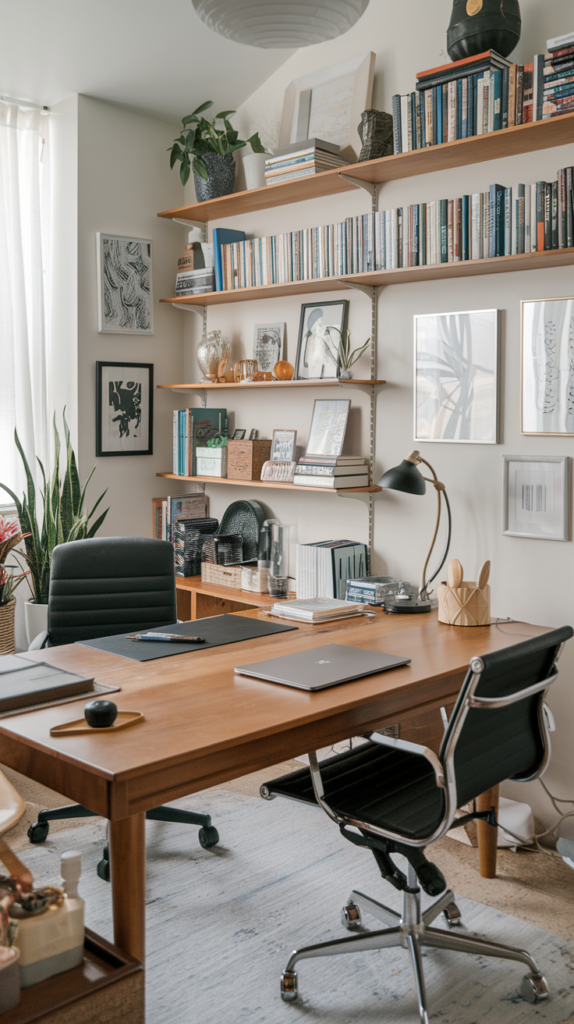
If your workspace doubles as another room, such as a guest bedroom, create clear boundaries using rugs, furniture arrangement, or shelving units to maintain focus and organization.
13. Harness the Power of Color Psychology
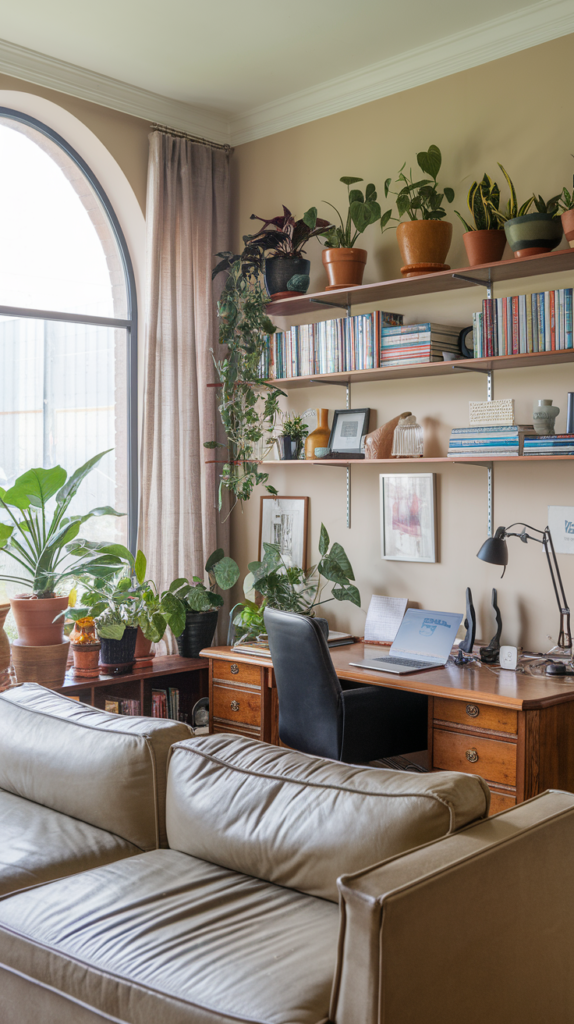
Colors influence emotions and productivity. Soft blues and greens promote calmness, yellows stimulate creativity, and neutral tones provide a clean, distraction-free backdrop. Select a palette that energizes your workflow.
14. Upgrade Your Technology Setup
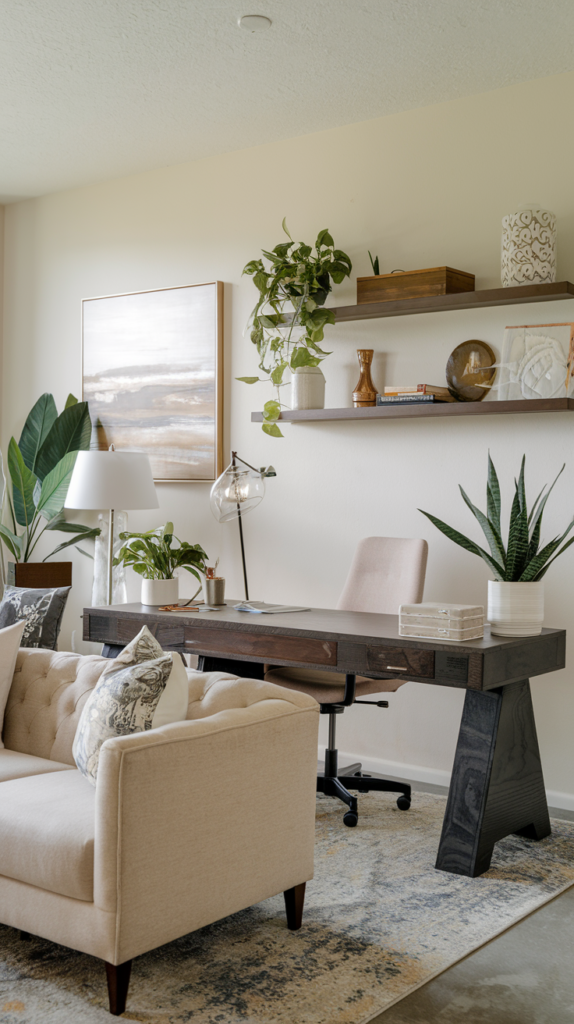
Equip your office with essentials like dual monitors, a fast and reliable laptop, high-speed internet, and noise-canceling headphones. Use cable organizers to maintain a neat appearance.
15. Create a Kid-Friendly Workspace
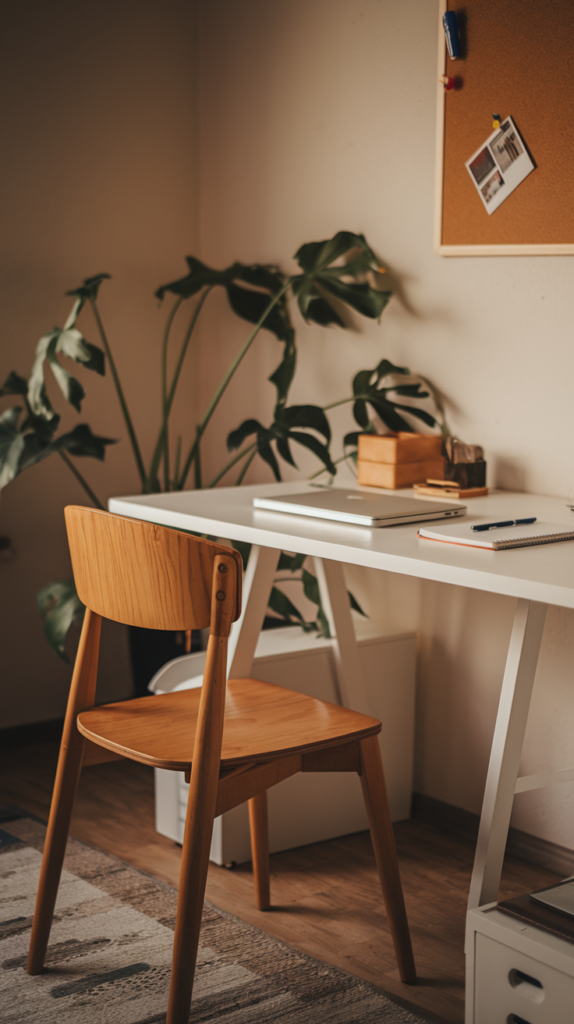
If children share your home office area, designate a nearby spot with quiet activities and a small desk to keep them engaged while you work uninterrupted.
16. Implement Sound Control Measures
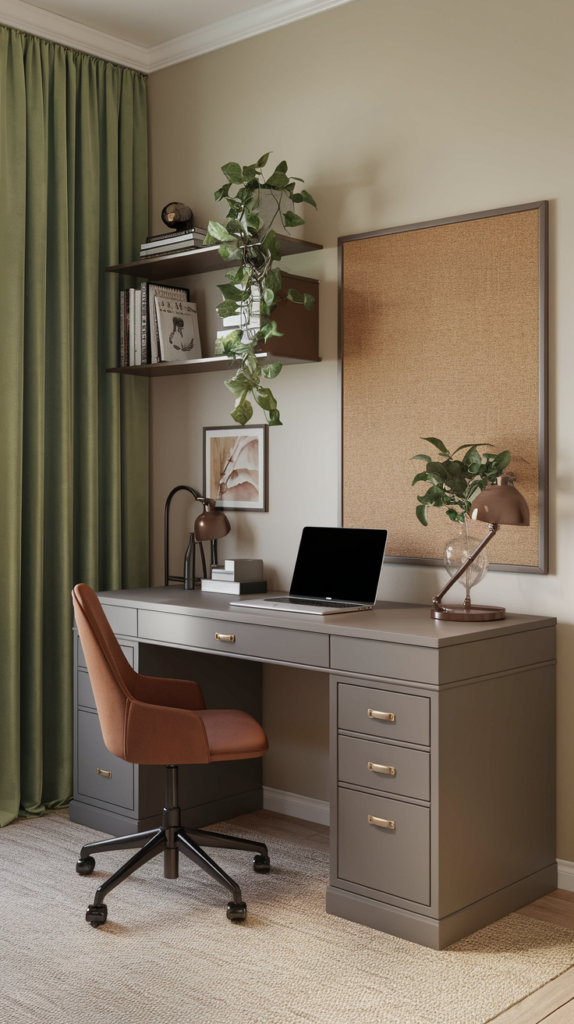
Minimize noise distractions by adding rugs, heavy curtains, or acoustic panels. Noise-canceling headphones are also an excellent investment for maintaining focus in noisy environments.
17. Blend Comfort with Professionalism
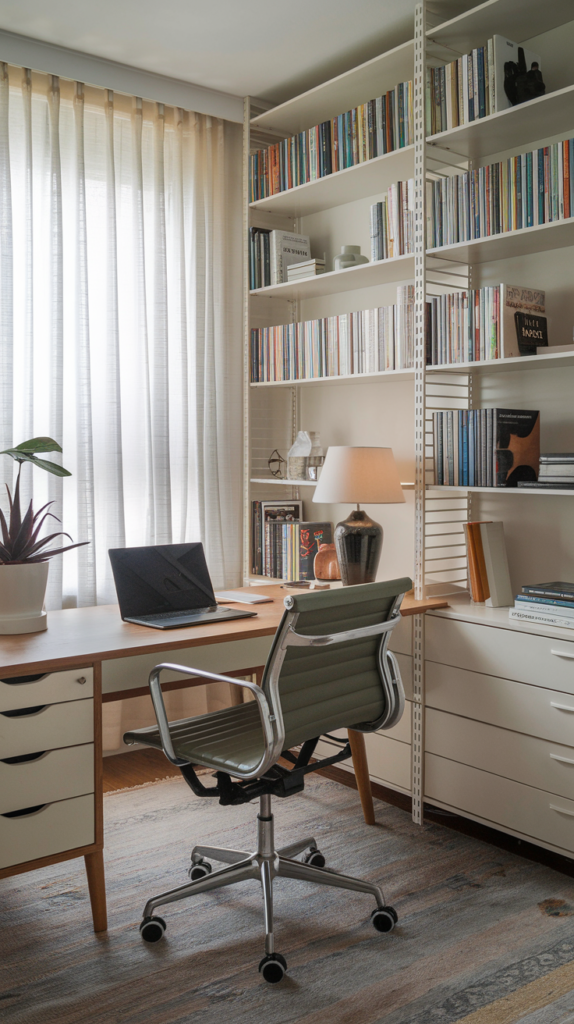
Incorporate cozy elements like a plush rug, a soft throw, or a subtly scented candle to make your workspace inviting without sacrificing its professional vibe.
18. Embrace Minimalism
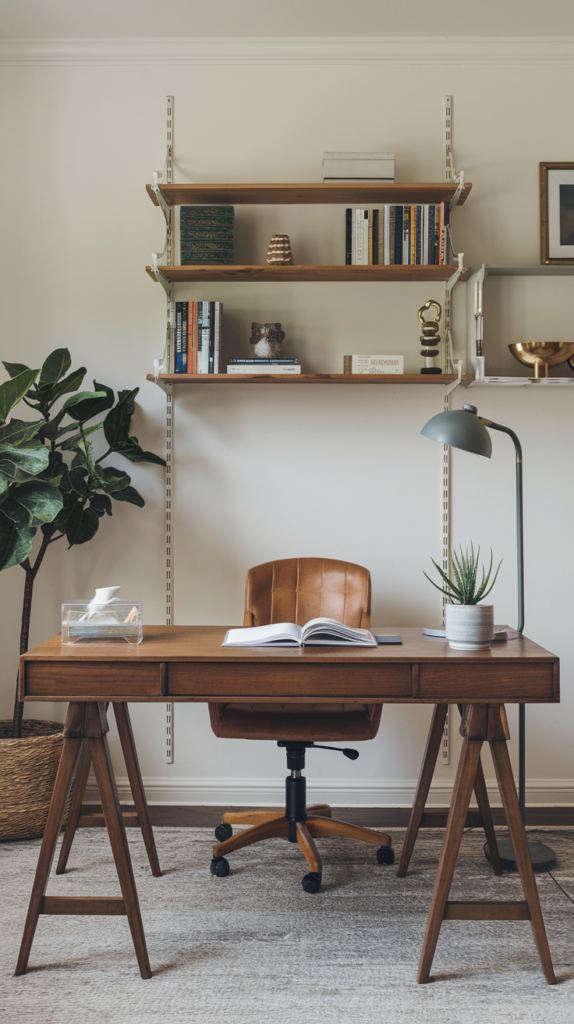
Adopt a minimalist philosophy by keeping only essential items on your desk. This approach reduces distractions and fosters a focused, efficient work environment.
19. Choose Multi-Functional Furniture
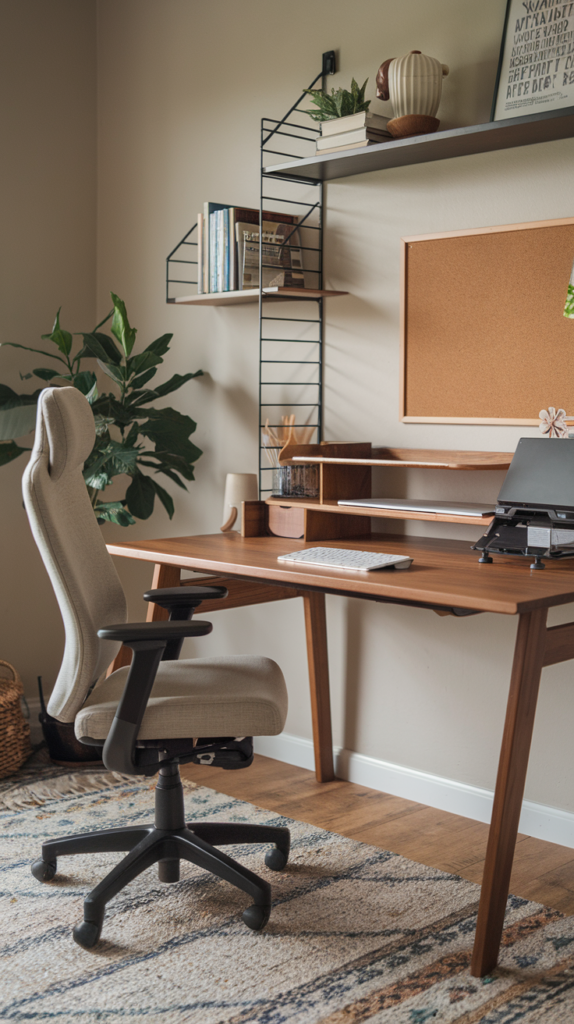
Maximize your space with furniture that serves multiple purposes, such as desks with built-in storage or foldable chairs. This flexibility is especially valuable in compact home offices.
20. Decorate with Motivational Elements
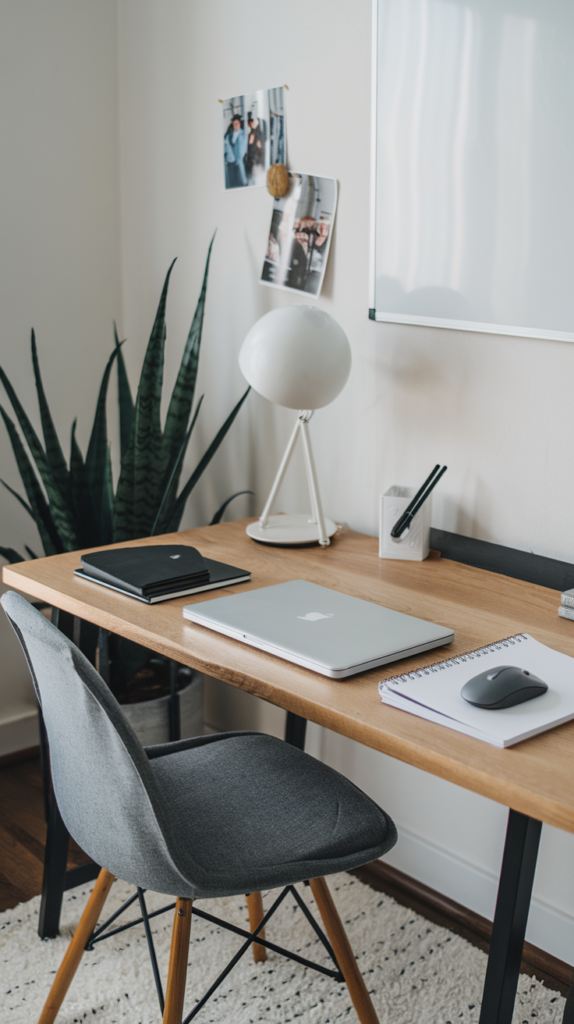
Inspire yourself daily by displaying motivational quotes, vision boards, or abstract art. These visual cues can boost creativity and maintain a positive mindset.
21. Maintain Adaptability in Your Setup
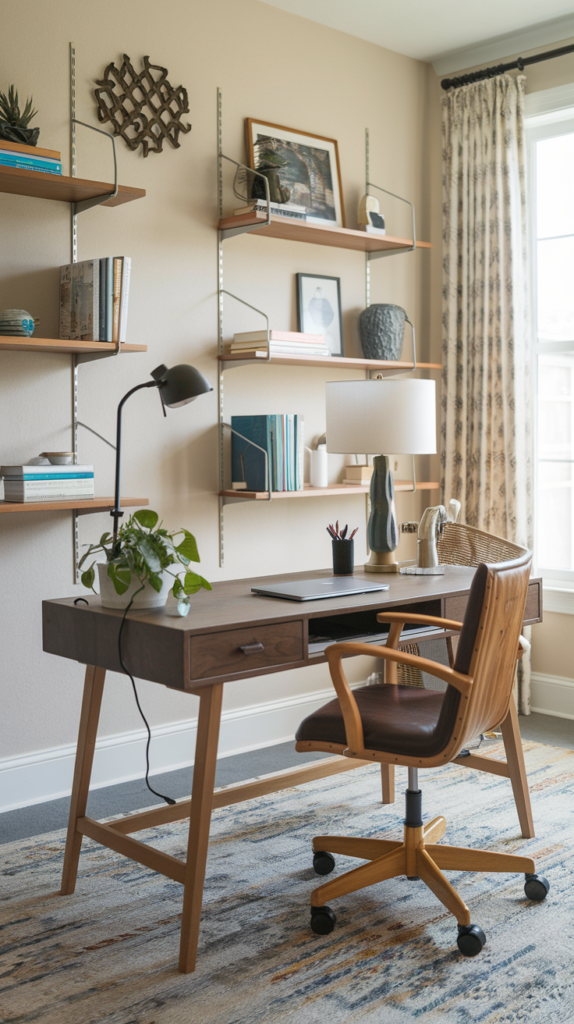
Your work needs may evolve, so select furniture and decor that can be easily rearranged or updated. Regularly reassess your setup to ensure it continues to support your productivity and comfort.
Final Thoughts
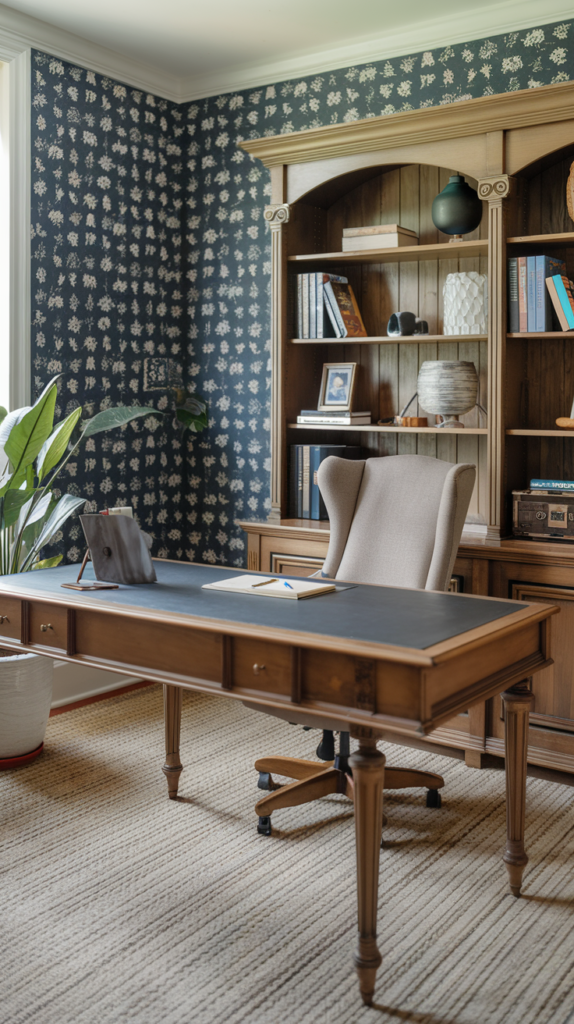
Your home office is more than just a workstation-it’s a creative hub where ideas flourish and goals are realized. By applying these 21 strategies, you can design a space that not only meets your professional demands but also nurtures your well-being and inspiration.
Remember, the perfect home office is one that reflects your unique preferences and adapts to your changing needs. Start crafting a workspace that truly supports your success today.