During a recent photo session at a sleek contemporary residence, everything was perfectly arranged-the furnishings, lighting fixtures, and overall layout. Yet, when we reached the dining area, one element stood out awkwardly: an accent wall that seemed out of place, disrupting the harmony. Although the color itself was acceptable, its placement clashed with the natural light and visually compressed the room. This was a textbook example of a promising idea lacking thoughtful execution.
This scenario is all too common. Many homeowners spot an appealing accent wall concept on social media, rush to buy paint, and dive in without a plan. However, a successful accent wall transcends mere color variation; it acts as a structural feature, serving as the room’s centerpiece and visual anchor. Mastering this design element distinguishes a space that feels deliberate and upscale from one that appears haphazardly decorated. Let’s explore how to approach accent walls with intention and finesse-no fluff, just practical insights.
Planning Your Dining Room Accent Wall: Foundations for Success
Before grabbing paintbrushes or wallpaper rolls, it’s crucial to establish a clear strategy. Skipping this step is the primary reason accent walls fall short. Investing time upfront prevents costly mistakes and frustration down the line.
Clarify the Accent Wall’s Role Within Your Dining Area
One of the most frequent questions I receive is, “Which wall should I highlight?” My response always redirects: “What function do you want this wall to serve?” An accent wall must have a defined purpose. Is it meant to dramatize the space and showcase a striking artwork? Should it visually extend the room by drawing attention to its farthest point? Or perhaps it’s intended to introduce architectural texture, such as with decorative paneling?

Don’t simply select the largest or emptiest wall. Think like a photographer framing a shot: your accent wall is the subject, and everything else supports it. Randomly painting a wall creates distraction, not focus. Start by articulating your wall’s mission in a single sentence-for example, “This wall will provide a warm, inviting backdrop for intimate dinners.” This clarity guides every subsequent choice.
With your wall’s intent established, it’s time to evaluate the room’s physical characteristics. Ignoring existing architectural features is a common pitfall.
Evaluate Room Configuration and Natural Lighting to Choose the Ideal Wall
Lighting is a game-changer. It can elevate a modest paint color to luxurious or render a rich hue dull and unappealing. Observe how sunlight traverses your dining space throughout the day. A wall bathed in gentle morning light will look very different under harsh afternoon sun. Rooms facing north receive cooler, indirect light, which can mute warm tones and make cool shades feel sterile. Conversely, southern exposures offer bright, warm light that supports bold, dark colors without making the space feel oppressive.

From personal experience, I once painted a deep navy accent wall in a west-facing room. While it looked stunning during the day, the intense glare of the setting sun made the color overwhelming and uncomfortable during dinner. I had to repaint. Choose a wall that complements the light rather than battles it. Often, the first wall you see upon entering the room is a strong candidate, provided it isn’t fragmented by windows or doors.
Next, consider the existing furnishings and decor. Your accent wall should harmonize with what’s already in place.
Integrate Your Accent Wall with Current Furniture and Decor Styles
Your accent wall should engage in a visual dialogue with your dining table, chairs, rug, and lighting. If these elements clash, the room feels disjointed. The common advice to “match” everything is misleading; instead, aim for complementarity. The wall should feel like part of the ensemble but retain its own character. Examine your furniture’s style-is it sleek and modern, ornate and traditional, or raw and industrial?

For instance, a rustic farmhouse table would feel out of place against a glossy lacquered wall, while reclaimed wood paneling might clash with a minimalist glass dining set. Look for subtle connections-perhaps the wood grain in your table can be echoed in a textured wallpaper, or metallic finishes in your chandelier can be reflected in wallpaper with delicate gold accents. These nuanced links create a polished, designer-worthy space.
Now, let’s broaden our horizons beyond just paint.
Consider Varied Accent Wall Materials to Add Dimension and Character
While paint is the simplest option, it’s a flat solution to a potentially multi-dimensional design challenge. Incorporating texture can transform your wall into a tactile and visual focal point. Imagine the feel of horizontal shiplap painted in a rich charcoal or the organic warmth of natural grasscloth wallpaper. These materials engage more senses and enrich the room’s ambiance.

Explore options like wood paneling for architectural depth, stone or brick veneer for an industrial edge, or large-format tiles for a sleek, dramatic effect. I once photographed a dining room with floor-to-ceiling fluted wood panels painted deep olive green. The interplay of light and shadow on the ridges created a dynamic, evolving feature throughout the day. Don’t limit yourself to paint before considering these rich textural alternatives.
From Vision to Reality: Planning and Budgeting Your Accent Wall
With your concept solidified, it’s time to translate ideas into actionable plans, balancing aesthetics with practical constraints.
Build a Mood Board to Refine Your Design Vision
Mood boards aren’t just for professionals-they’re invaluable tools for homeowners to maintain focus. Rather than a random Pinterest collage, curate a collection of physical samples: paint swatches, wallpaper fragments, wood veneers, and fabric samples that reflect your vision. Pin these in your dining room and observe them under different lighting conditions over several days.

This hands-on approach reveals surprises-colors may appear darker or patterns busier than expected. It’s the best way to avoid costly errors and ensures your choices harmonize with your space’s unique light and furnishings.
Establish a Realistic Budget and Timeline to Avoid Surprises
While paint itself is inexpensive, the full scope of materials and tools often doubles the cost. Primer, painter’s tape, brushes, rollers, drop cloths, and repair materials add up quickly. For paneling, factor in wood, adhesives, nails, fillers, and caulk. Create a detailed budget spreadsheet listing every item, then add a 15-20% contingency to cover unexpected expenses like extra primer or replacement materials.

Similarly, build buffer time into your schedule for drying, unforeseen delays, and life’s unpredictability. Rushing leads to mistakes; patience yields quality.
Material Selection and Installation: Crafting a Flawless Accent Wall
Now comes the exciting phase of choosing finishes and preparing for installation. Attention to detail here elevates your wall from good to exceptional.
Pick the Ideal Paint Finish Balancing Beauty and Durability
While color grabs attention, the paint’s sheen profoundly affects both appearance and maintenance. Dining rooms endure frequent contact-chairs scraping, spills, and fingerprints. Flat or matte finishes, though elegant, are prone to scuffing and difficult to clean, making them better suited for ceilings. High-gloss paints are durable and washable but reflect light intensely, revealing every imperfection.

Eggshell or satin finishes strike the perfect balance, offering enough sheen for easy cleaning without harsh glare. They enrich color depth and texture subtly. While some new scrubbable matte paints exist, satin remains the reliable choice for dining spaces.
Ready to explore beyond paint? Let’s delve into wallpaper options.
Choose Wallpaper Patterns and Textures to Add Personality and Depth
Contemporary wallpaper has evolved dramatically, featuring exquisite textures and bold designs that can transform a wall into a work of art. From understated linen and grasscloth textures that add warmth to striking geometric or botanical prints, wallpaper offers a unique dimension paint cannot replicate. Scale is critical: small, busy patterns can appear noisy in large rooms, while oversized prints may overwhelm compact spaces.

Always order large samples and test them on your wall at different times of day to see how they interact with your lighting. For renters or those hesitant about permanence, high-quality peel-and-stick wallpaper offers a bold look with easy removal.
Incorporate Paneling for Architectural Interest and Texture
Paneling adds structure and depth, transforming flat walls into dynamic features. Wainscoting, covering the lower third of a wall, lends a timeless, formal elegance. Board and batten, with its simple grid of vertical and horizontal strips, can evoke modern farmhouse charm or contemporary minimalism depending on design and finish.

Though it may seem daunting, paneling is achievable for dedicated DIYers equipped with a miter saw and nail gun. Precision in measuring and meticulous finishing-caulking seams and filling nail holes-are essential for a professional appearance.
Make a Bold Statement with Tile or Stone Accent Walls
For a dramatic focal point, consider thin brick veneer, stacked stone, or large-format porcelain tiles. These materials introduce rich texture and a grounded, substantial feel. Exposed brick can evoke urban loft vibes, while natural stone like slate or travertine adds earthy sophistication.

However, these installations require proper preparation, such as cement backer boards to support weight, and careful layout planning to avoid awkward tile cuts. Unless you have advanced tiling experience, hiring a professional is advisable to ensure flawless results.
Executing Your Accent Wall: Installation and Safety Essentials
As you approach installation, making informed decisions about DIY versus professional help and prioritizing safety will safeguard your project’s success.
Evaluate When to DIY and When to Hire Experts
Honesty about your skills, tools, and patience is vital. Tackling complex materials without experience can lead to costly errors. Investing in professional installation often saves money and stress in the long run, delivering a polished finish that DIY attempts may not achieve.

Craig’s DIY vs. Professional Installation Checklist:
Regardless of who installs, the next step is non-negotiable.
Prepare Your Wall Thoroughly for a Flawless Finish
Preparation accounts for the majority of a successful project. Neglecting this stage leads to peeling paint, bubbling wallpaper, or uneven paneling. A pristine surface is essential.

Follow these steps in order:
- Clean the wall thoroughly with a trisodium phosphate (TSP) substitute to remove grease and dust.
- Repair all imperfections-holes, cracks, dents-with spackle, then sand smooth.
- Wipe down the wall with a damp cloth to eliminate sanding residue.
- Apply a high-quality primer to seal the surface and ensure paint adhesion.
Skipping any of these is like building on shaky ground-initially fine but destined to fail.
Prioritize Safety with Proper Ventilation and Protective Gear
Beyond paint fumes, sanding drywall and cutting materials release harmful dust and particles. Adhesives and cleaners may emit volatile organic compounds (VOCs).

Always open windows and use a box fan to create airflow that expels contaminants. Wear an N95 mask when sanding or cutting, and safety glasses when handling chemicals. Keeping your workspace tidy reduces accident risks. These precautions protect your health and ensure a smooth project.
Enhancing Your Accent Wall: Styling, Lighting, and Longevity
With the wall complete, it’s time to integrate it seamlessly into your dining room through thoughtful styling and lighting, and plan for its upkeep.
Complement Your Accent Wall with Art or Mirrors
An empty accent wall is a missed chance to add personality. Avoid cluttering it with numerous small frames. For patterned walls, a large, minimalist mirror with a slim frame adds depth and reflects light, brightening the room without competing with the design.

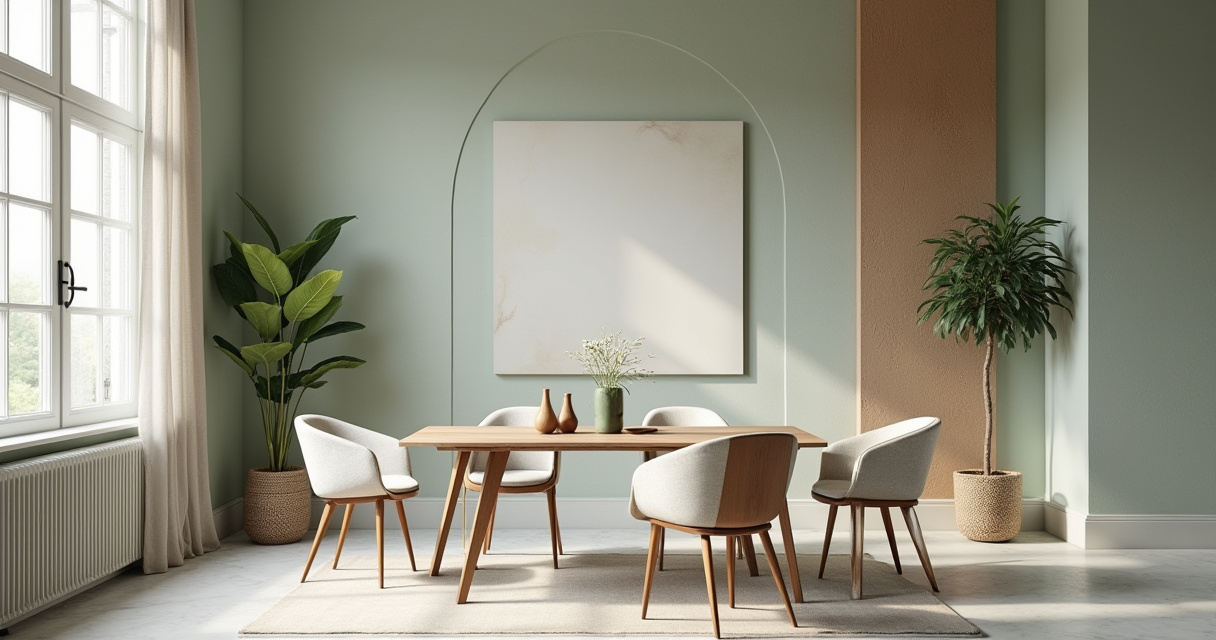
For solid-colored walls, opt for one large, impactful artwork rather than multiple small pieces. Position it centrally and hang at eye level (approximately 57-60 inches from the floor) to create a confident focal point.
Use Lighting Techniques to Showcase Texture and Color
Lighting dramatically influences how your accent wall is perceived. For textured surfaces like brick or fluted paneling, “wall grazing” lighting-placing fixtures close and angling light across the surface-casts shadows that emphasize depth.

For walls focused on rich color, “wall washing”-lighting placed further away to evenly illuminate the surface-enhances vibrancy by minimizing shadows. Installing dimmer switches is essential, allowing you to adjust ambiance from bright and lively to soft and intimate.
Arrange Furniture to Highlight Your Accent Wall
Don’t obscure your hard work behind bulky furniture. Center your dining table along the accent wall to create a clear visual axis. Sideboards or buffets can be placed against the wall but should be low-profile and not overwhelm the space.

Step back and assess from the doorway: does your eye naturally gravitate to the accent wall? Is the path unobstructed? If a large piece blocks the view, consider relocating it. Confident design requires decisive choices.
Ensure Seamless Transitions with Adjacent Walls and Trim
How your accent wall meets adjoining surfaces can elevate or undermine the design. Abrupt color stops at corners can feel jarring. A professional trick is to “wrap” the accent color around small wall returns, creating a cohesive architectural feel.

For a bold statement, consider “color drenching”-painting the wall, baseboards, crown molding, and window or door trim in the same hue and finish. This creates a striking, modern monolithic effect. If that’s too daring, at least use high-quality painter’s tape to achieve crisp, clean lines between colors.
Preserving Your Accent Wall: Future-Proofing and Maintenance
Your dining room looks stunning, but maintaining that beauty requires foresight and care.
Design for Easy Updates Without Major Renovations
Styles evolve, and your preferences may shift. Avoid permanent installations that lock you in for decades. Embrace “design flexibility” by using removable peel-and-stick wallpaper for bold patterns, allowing effortless changes without wall damage.

Another innovative approach is mounting panels on French cleats. These panels can be covered with fabric, wallpaper, or wood veneer and swapped out quickly to refresh the look with minimal effort and expense. Planning your exit strategy from the start is a savvy move.
Maintain Your Accent Wall According to Its Material
Cleaning methods vary widely by material. Painted walls with satin or eggshell finishes typically require only a soft cloth with mild soap and warm water. Always test cleaners in inconspicuous spots first.

Textured or natural fiber wallpapers like grasscloth should be vacuumed gently with a brush attachment, and spills blotted immediately. Wood surfaces need dedicated wood cleaners rather than all-purpose sprays. Keep manufacturer care instructions handy to ensure your accent wall remains pristine for years.
Final Thoughts
Transforming a dining room with an accent wall is a powerful design move, but it demands more than impulse and paint. It requires deliberate planning, understanding of light and texture, and thoughtful integration with existing elements. When approached as an architectural feature rather than mere decoration, your accent wall becomes a storytelling element that defines the space.
Don’t shy away from bold choices. The most memorable dining rooms are those with character and personality. Armed with this comprehensive guide, you’re ready to create a dining area that’s not just functional but expressive-a space that reflects your unique story.
For inspiration and materials, explore options on dining room accent wall paint, wallpaper for dining room, and wood paneling for walls to find quality products that bring your vision to life.