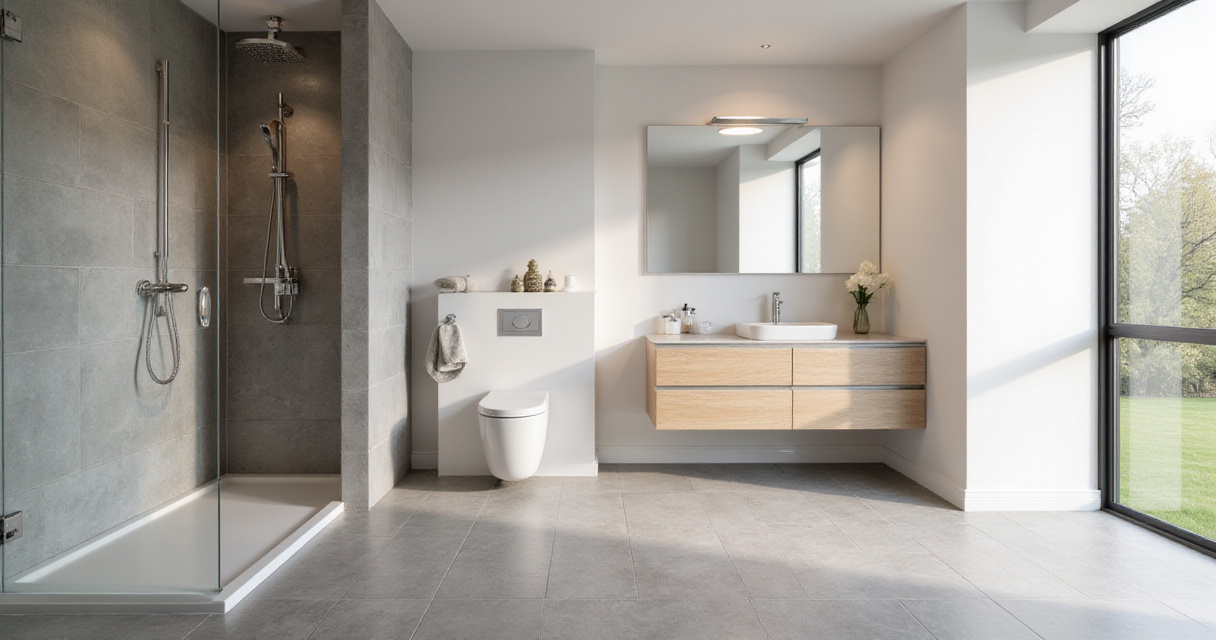
Bathrooms have transcended their original functional purpose to become vital personal retreats within our homes. In today’s fast-paced world, this private area offers a sanctuary for relaxation and rejuvenation. Yet, many homeowners face the challenge of outdated fixtures, limited space, and uninspired designs, longing to transform their bathrooms into sleek, spa-inspired havens seen in high-end design showcases.
Modern bathroom design excels through its elegant simplicity. By combining clean architectural lines, carefully selected materials, and well-planned lighting, these spaces achieve a refined yet calming atmosphere. Whether embarking on a full remodel or seeking budget-friendly upgrades, grasping the core principles of contemporary design will help you make informed choices and optimize your investment.
This guide presents a curated selection of enduring modern bathroom decor concepts favored by design professionals. From essential elements like color schemes and textures to subtle accents that infuse warmth and character, each idea offers a route to crafting a serene, sophisticated environment emblematic of modern living.
1. Warm Neutral Tones: The Foundation of Calm Elegance
At the heart of a refined modern bathroom lies a palette that soothes rather than overwhelms. Moving beyond stark whites, contemporary designs favor warm neutrals such as creamy limestone, soft travertine, and muted greige. These earth-inspired shades interact beautifully with natural daylight, shifting subtly throughout the day to create a dynamic yet tranquil backdrop.
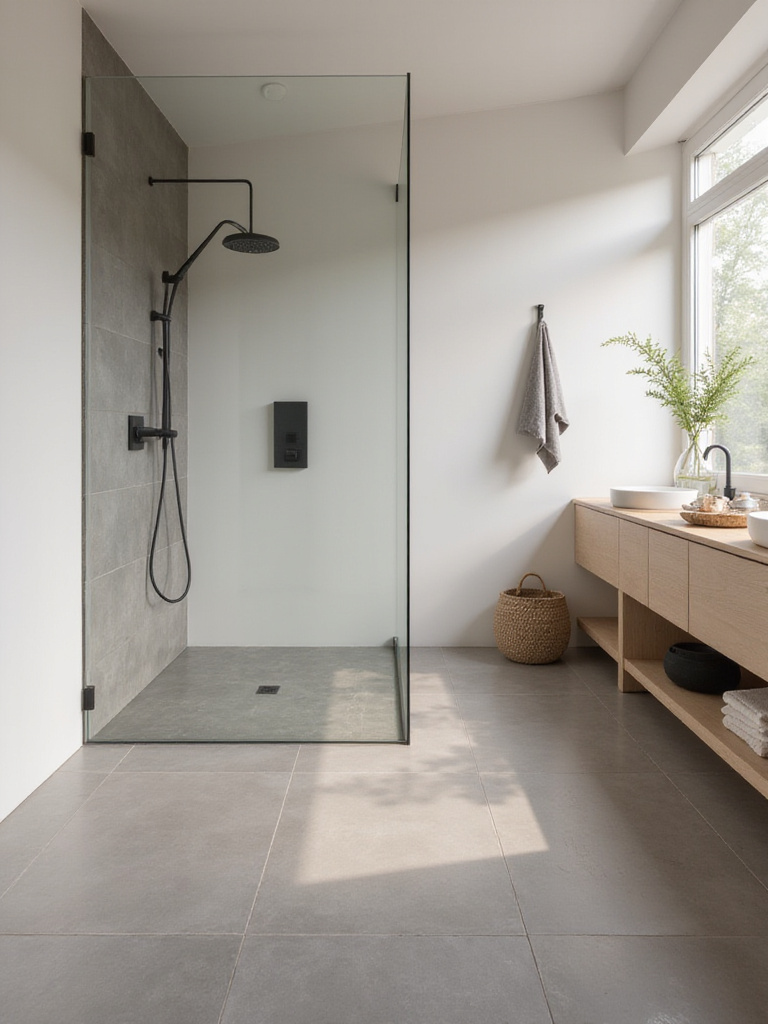
Scientific studies reveal that neutral environments can lower stress hormones and enhance mental clarity, making these hues ideal for personal sanctuaries. When selecting materials, consider how finishes affect light reflection-polished marble adds brightness and drama, while honed surfaces offer understated elegance. Layering textures within the same color family-combining matte, glossy, smooth, and rough surfaces-creates visual intrigue without clutter.
This subtle foundation allows standout design features to take center stage.
2. Large Format Tiles: Expanding Space and Simplifying Maintenance
Large format tiles, typically 24 inches or larger, revolutionize bathroom surfaces by minimizing grout lines and creating expansive, uninterrupted planes. This design choice visually enlarges compact bathrooms, replacing the fragmented look of smaller tiles with a sleek, gallery-like finish.
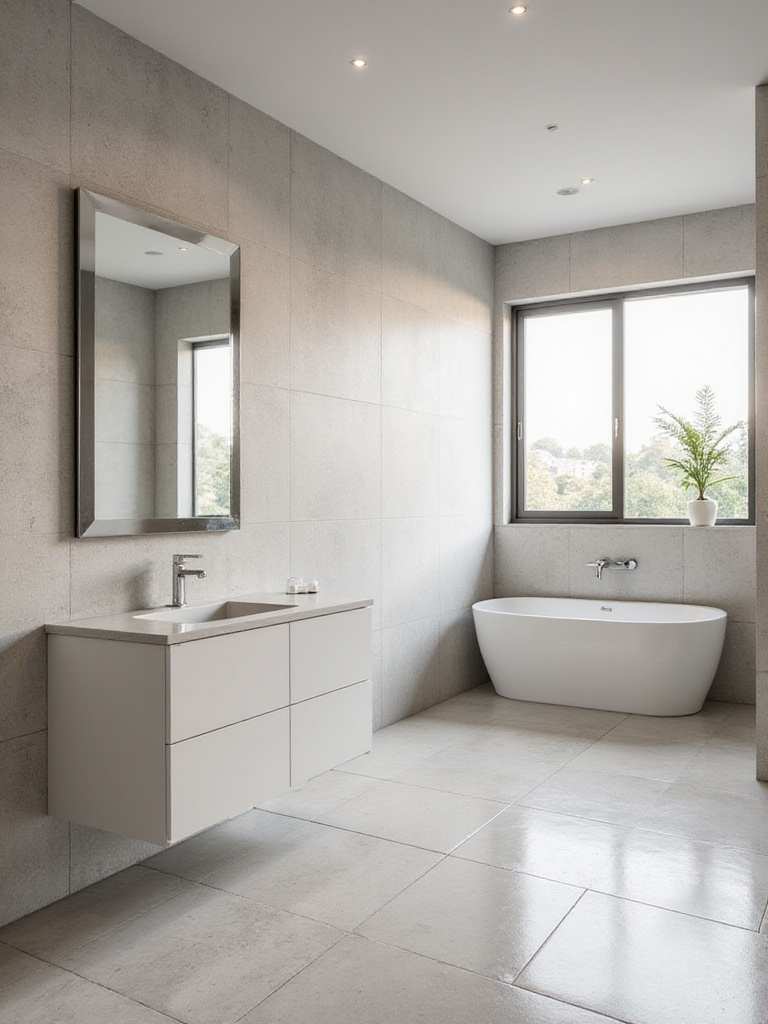
Beyond aesthetics, large tiles reduce cleaning time due to fewer grout lines, which are often the most porous and maintenance-intensive areas. Installation demands precision-substrates must be perfectly level, and specialized adhesives are necessary to prevent uneven edges. Porcelain tiles are a popular choice for their durability and water resistance, outperforming many natural stones in longevity.
- Material Tip: Porcelain offers excellent durability and moisture resistance
- Installation Note: Requires flat substrates and expert adhesive application
- Grout Advice: Ultra-thin grout lines (1/16″ to 1/8″) enhance seamlessness
The smooth surfaces created by large tiles set the stage for incorporating natural warmth.
3. Natural Wood Accents: Bringing Organic Warmth Indoors
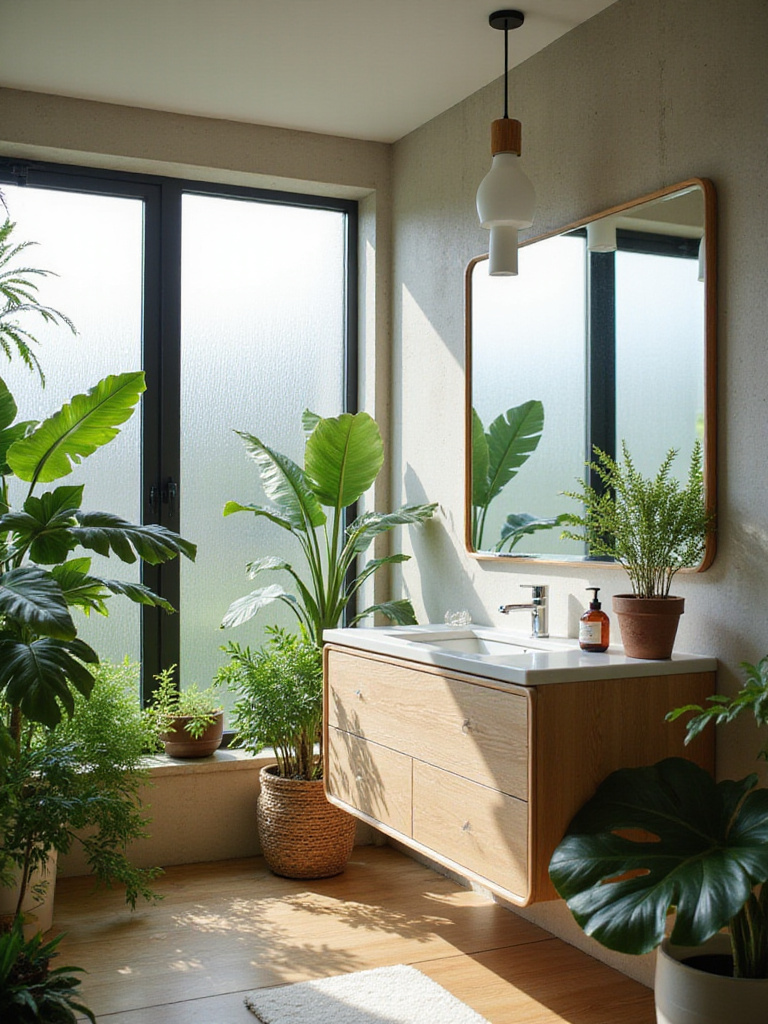
While wood may seem unconventional in wet environments, carefully chosen species and finishes introduce inviting warmth that balances modern minimalism. Moisture-resistant woods like teak, ipe, and cedar, or engineered marine-grade plywood, withstand bathroom humidity while adding tactile richness. A floating walnut vanity or a cedar accent wall behind a freestanding tub can create a natural focal point that softens the space.
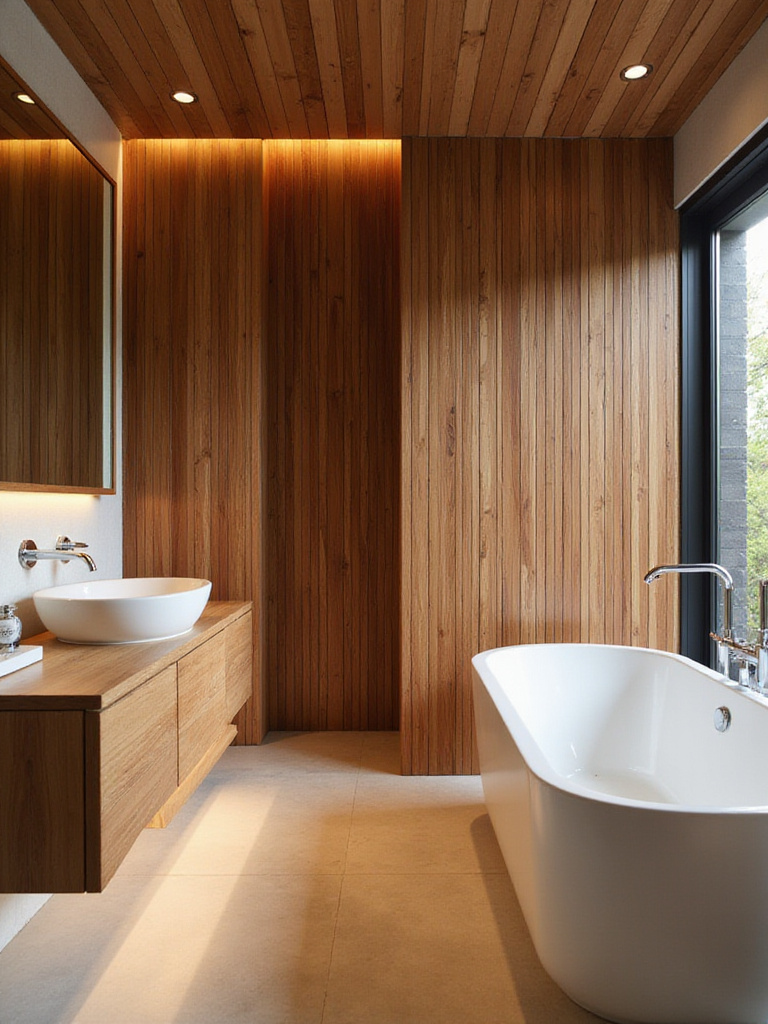
For areas exposed to direct water, wood-look porcelain tiles offer the grain and warmth of wood without the maintenance concerns. Proper ventilation is essential to preserve real wood elements-exhaust fans should be appropriately sized and run sufficiently after showers to reduce moisture buildup. Investing in quality materials and installation ensures longevity and daily tactile pleasure.
- Recommended Woods: Teak, ipe, cedar, and sealed bamboo
- Engineered Alternatives: Marine-grade plywood with hardwood veneers
- Wet Area Solution: Wood-look porcelain tiles for durability
Wood’s warmth complements luxurious stone surfaces beautifully.
4. Statement Stone: Elevate Countertops and Accent Walls
Natural stone infuses bathrooms with timeless elegance and geological grandeur. Marble varieties like Calacatta and Statuario offer dramatic veining that acts as natural artwork, while quartzite provides similar aesthetics with enhanced resistance to etching and wear. For a truly unique effect, book-matched slabs create symmetrical patterns that transform walls into captivating focal points.
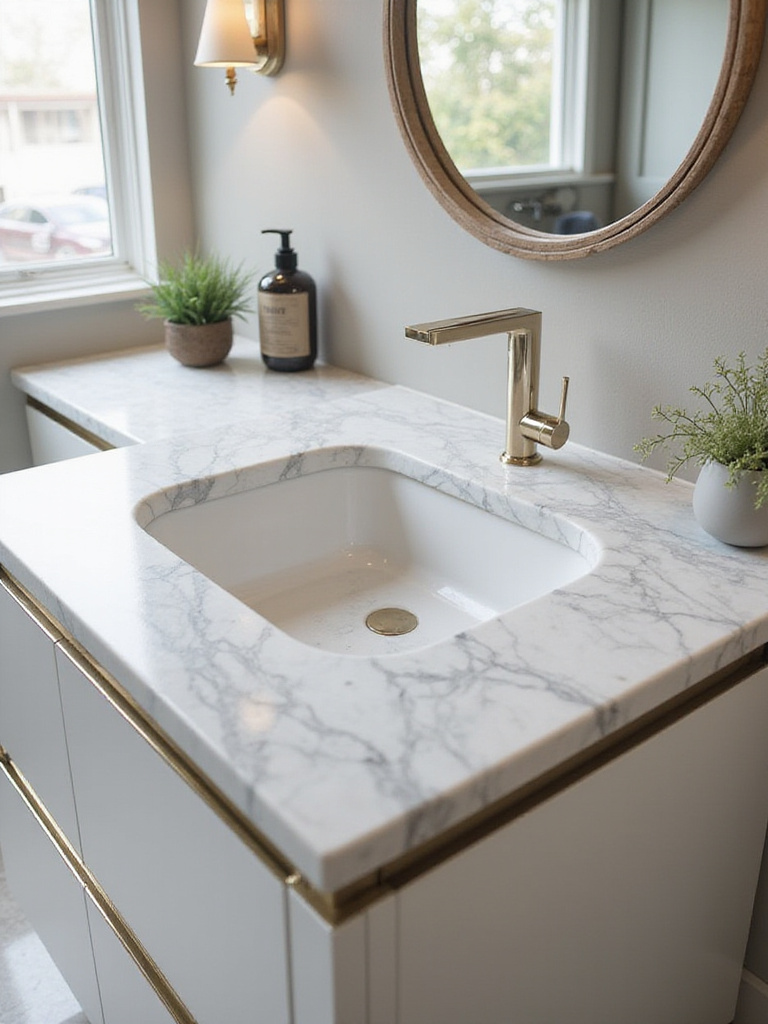
Always view full slabs before selection, as natural stone varies widely even within the same quarry. Collaborate with skilled fabricators to optimize seam placement and orientation, ensuring the stone’s natural beauty is showcased. Though initial costs are higher, quality stone ages gracefully, developing a patina that enhances its character over decades.
Stone’s visual weight invites lighter design elements to balance the space.
5. Floating Vanities: Enhance Openness and Storage Efficiency
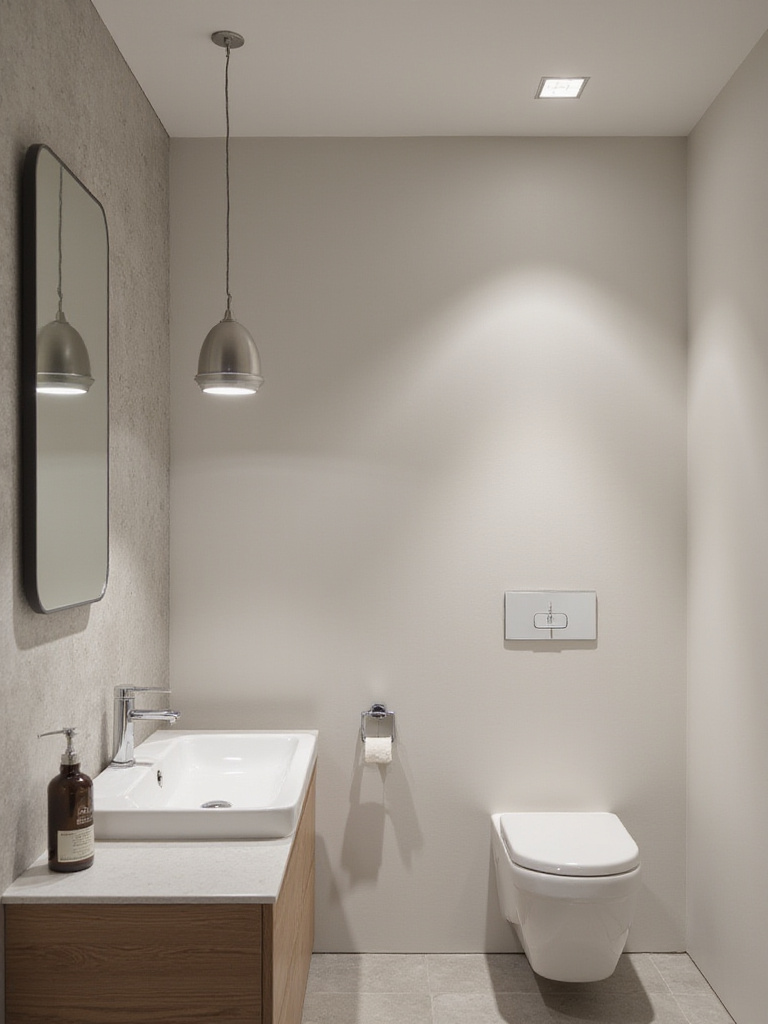
Wall-mounted vanities create an airy feel by freeing up floor space while providing essential storage. This design is especially advantageous in compact bathrooms, where visual openness is at a premium. Structural reinforcement within walls is critical to support the weight of a fully loaded vanity, often exceeding several hundred pounds. Professional installation guarantees safety and durability.
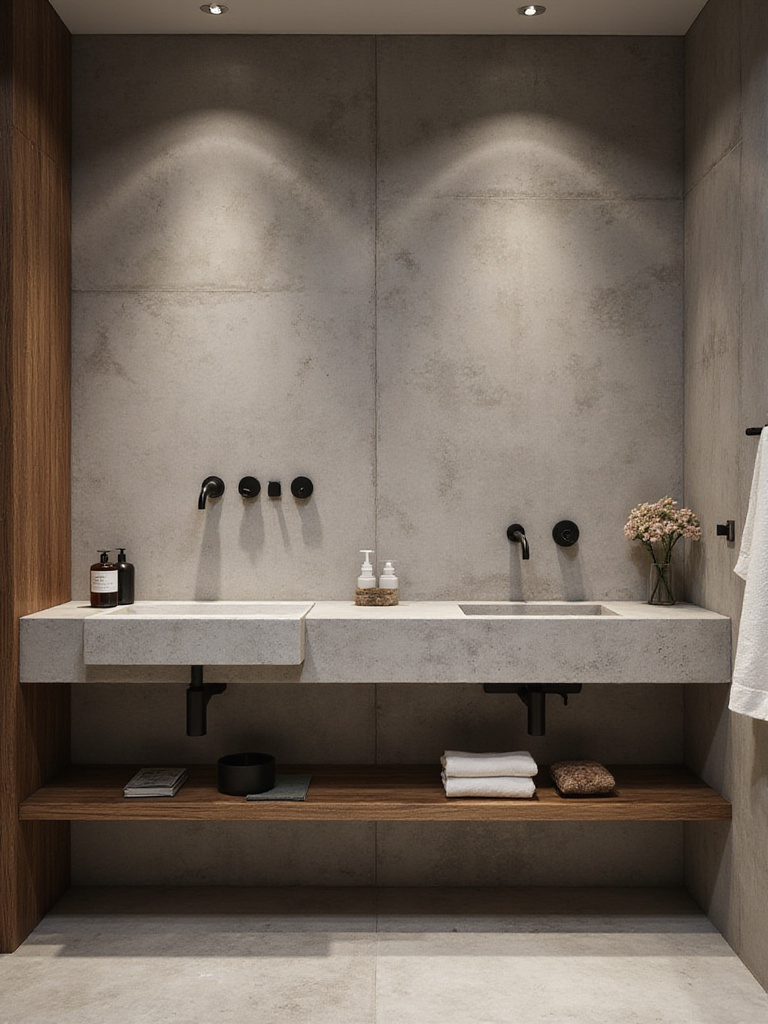
Design options range from minimalist lacquered units that blend into walls to sculptural wood slabs that serve as statement pieces. Incorporating LED strip lighting beneath the vanity enhances the floating illusion and adds subtle ambient glow. The open space below can house decorative baskets or remain clear to emphasize clean lines. Pairing floating vanities with wall-mounted faucets creates uninterrupted countertop surfaces that are both elegant and practical.
- Structural Needs: Reinforced wall blocking rated for 200+ pounds
- Plumbing Tips: Use wall-mounted or concealed floor connections
- Lighting Ideas: LED strips to accentuate floating effect
Complement floating vanities with sleek, minimalist plumbing fixtures.
6. Wall-Mounted Faucets: Precision and Minimalism Combined
Wall-mounted faucets epitomize minimalist elegance by removing clutter from countertops and creating striking geometric compositions against tile or stone backdrops. Installation requires early planning to position supply lines within walls accurately. The payoff is a clean, uninterrupted surface that simplifies cleaning and highlights carefully selected accessories.
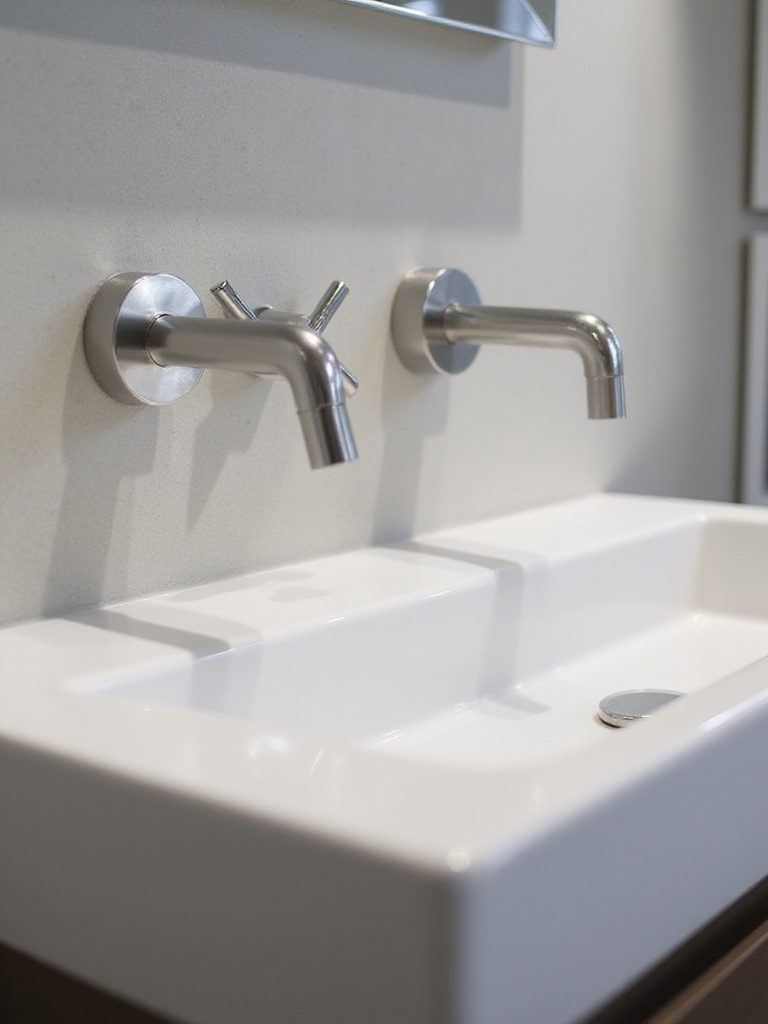
Choose faucets with appropriate spout reach and height to ensure water flows centrally into basins and accommodates users comfortably. Since repairs involve accessing in-wall components, investing in high-quality, reliable fixtures is essential to avoid future complications.
Wall-mounted faucets also offer a chance to introduce bold metallic finishes that define the room’s character.
7. Matte Black Hardware: Bold Contrast with Practical Benefits
Matte black fixtures provide a striking contrast in modern bathrooms, grounding light color schemes and adding graphic interest. This finish excels against white or pale stone surfaces, creating timeless compositions that photograph beautifully. Unlike glossy finishes, matte black conceals water spots and fingerprints, making it ideal for high-use elements like faucets and cabinet pulls.
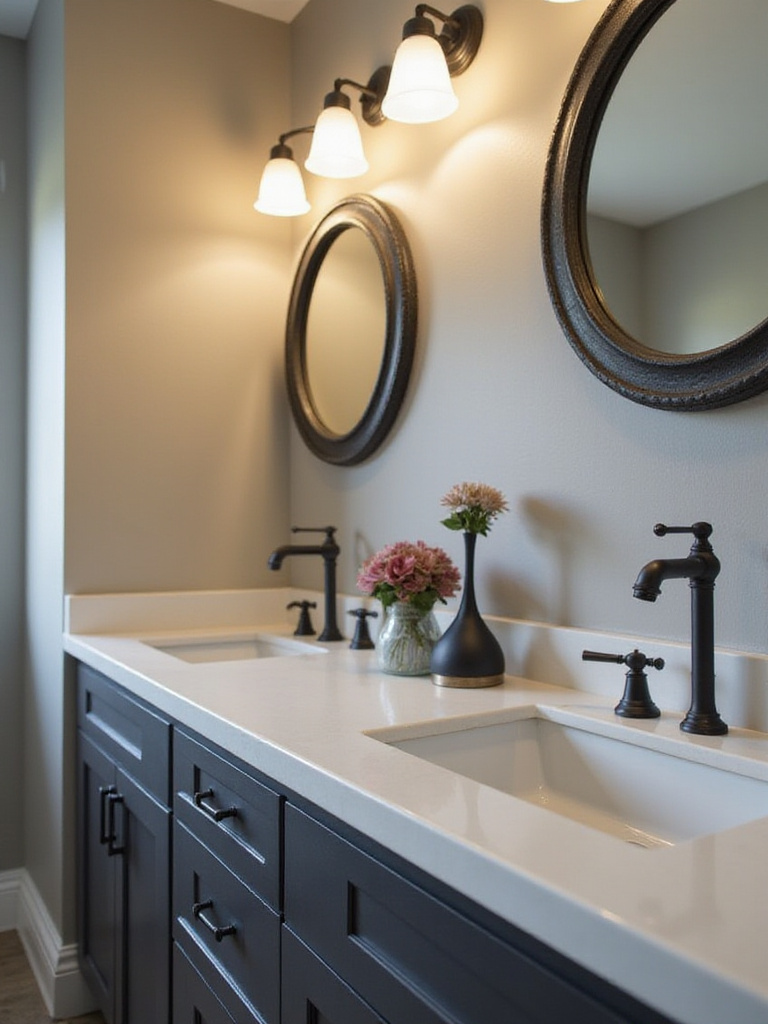
Consistency is key-apply matte black across all visible hardware for a cohesive look. Combining it with warm metals like brass or copper can add sophisticated layers but requires a discerning eye. Opt for fixtures with durable PVD or powder-coated finishes from reputable brands to ensure longevity.
- Consistency: Use matte black on all hardware elements
- Quality: Select durable finishes like PVD or powder coating
- Accent Metals: Warm brass or copper for layered sophistication
Matte black hardware pairs well with modern lighting solutions.
8. Linear LED Lighting: Sleek, Even, and Energy-Efficient
Linear LED strips provide uniform, shadow-free lighting that complements modern design’s clean lines. Unlike traditional vanity lights, LEDs can be recessed into mirror frames, hidden under floating vanities, or integrated into shower niches, offering seamless illumination.
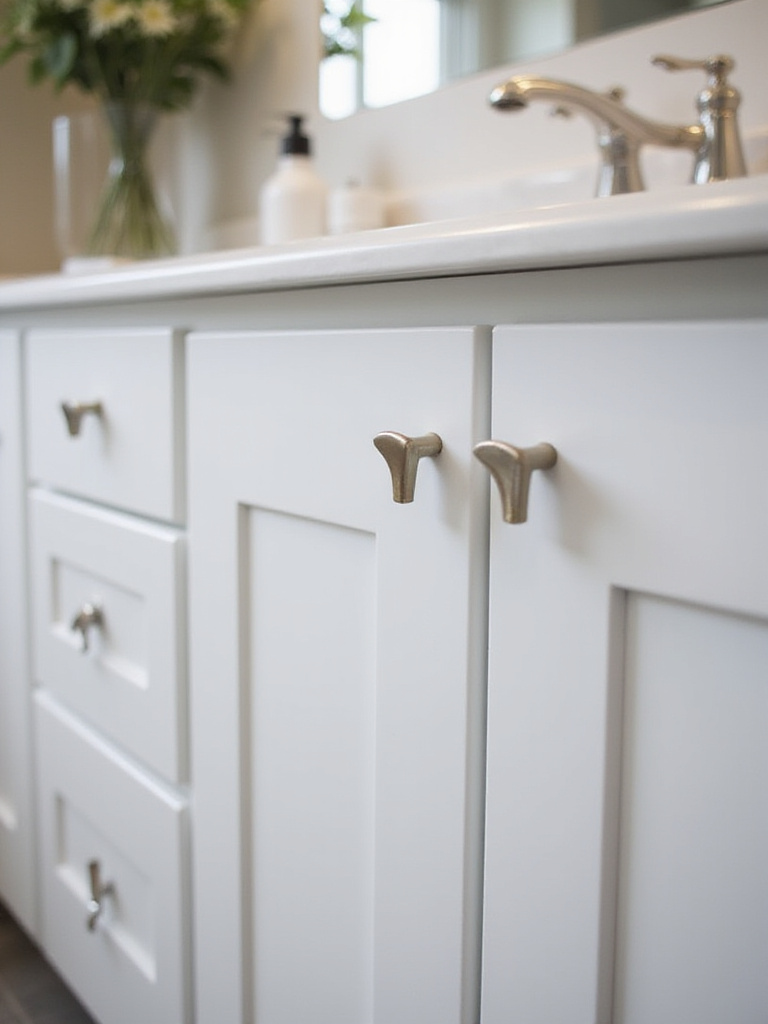
Choosing the right color temperature is crucial: warm white (2700K-3000K) fosters relaxation, while neutral white (3500K-4000K) ensures accurate color rendering for grooming. Dimmable systems offer flexibility throughout the day. Professional installation guarantees moisture protection and electrical integration. LEDs are energy-efficient, allowing extended use with minimal power consumption.
Effective lighting design naturally leads to smart storage solutions.
9. Recessed Storage Niches: Functional Elegance Without Clutter
Built-in niches provide discreet storage for toiletries and decorative items, reducing countertop clutter. Best planned during construction or major renovations, niches require coordination with plumbing and electrical systems. Tailoring niche dimensions to specific items enhances usability and aesthetics.
Waterproofing is critical-proper membranes and attention to corners prevent leaks. Adding LED lighting inside niches creates a subtle glow that enhances ambiance. Using the same tile or stone as surrounding surfaces ensures seamless integration, while contrasting materials can highlight niches as design features. Efficient drainage prevents water pooling and mold growth.
These storage solutions complement accessible shower designs.
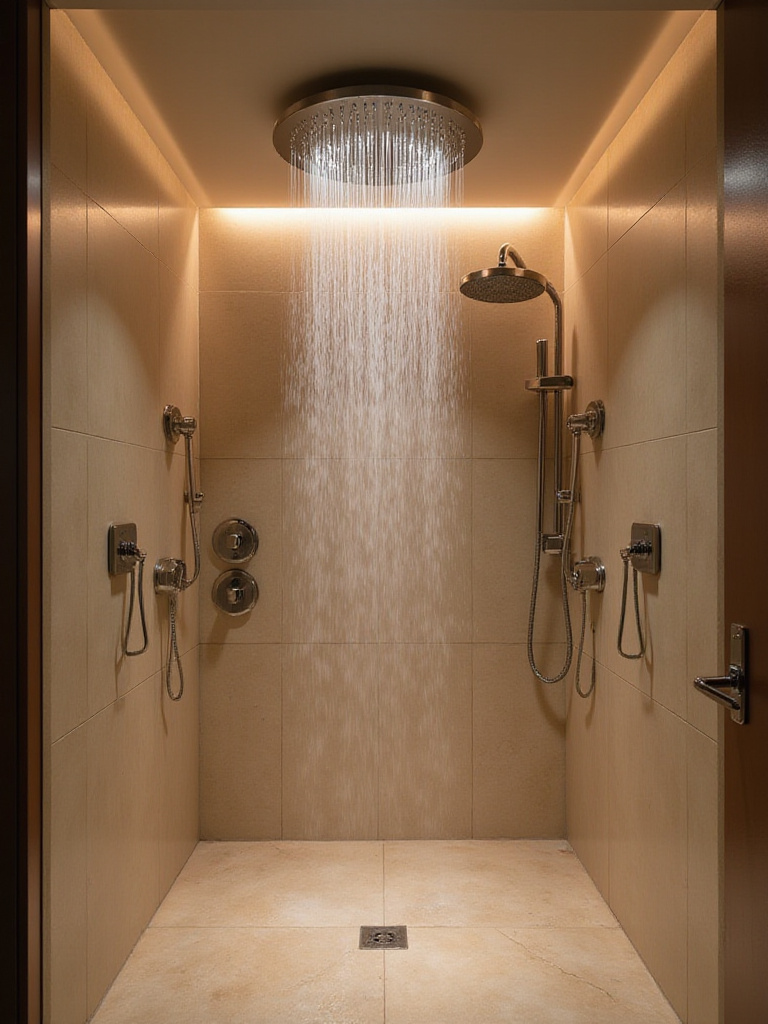
10. Curbless Showers: Accessibility Meets Sleek Design
Curbless showers offer barrier-free entry, enhancing accessibility for all users while visually expanding the bathroom. The smooth transition from floor to shower area creates a cohesive look. Proper floor slope and drainage planning are essential to prevent water spread.
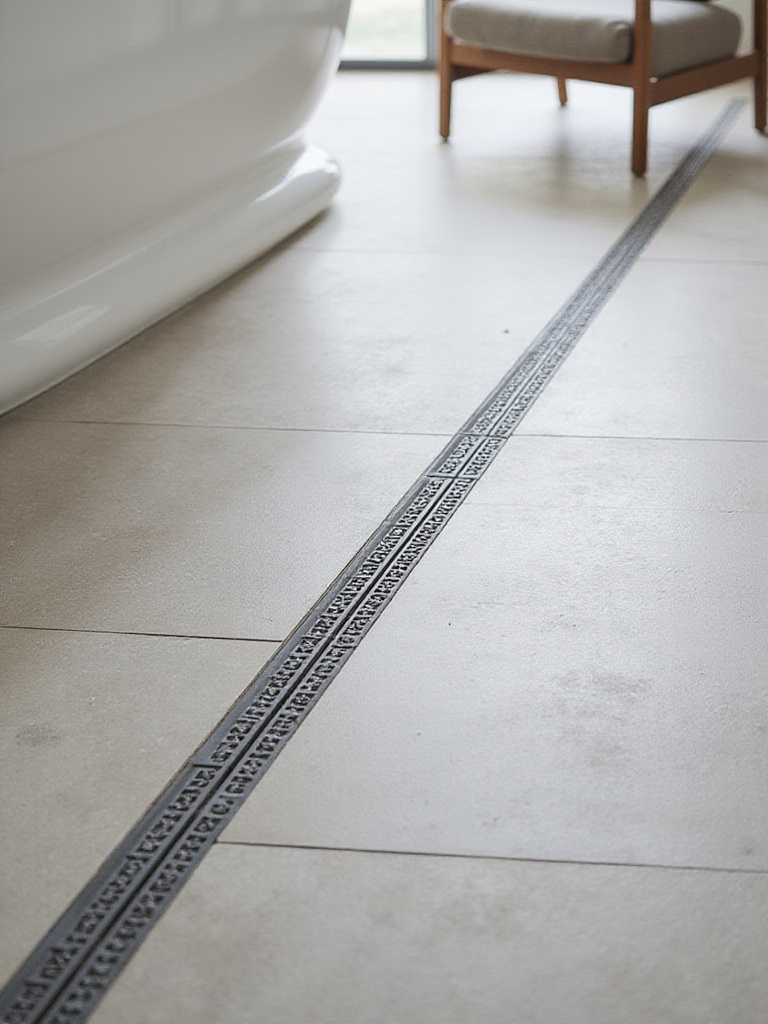
Typically, a gentle slope of 1/4 inch per foot directs water toward a linear drain, which outperforms traditional center drains in capacity and aesthetics. Waterproof membranes must be meticulously installed, as there is no curb to contain leaks. The result is a shower that feels integrated and spacious.
- Slope: Minimum 1/4 inch per foot toward drain
- Drain Type: Linear drains for superior function and style
- Waterproofing: Enhanced membranes to prevent leaks
Curbless showers pair naturally with frameless glass enclosures.
11. Frameless Glass Enclosures: Transparency and Elegance
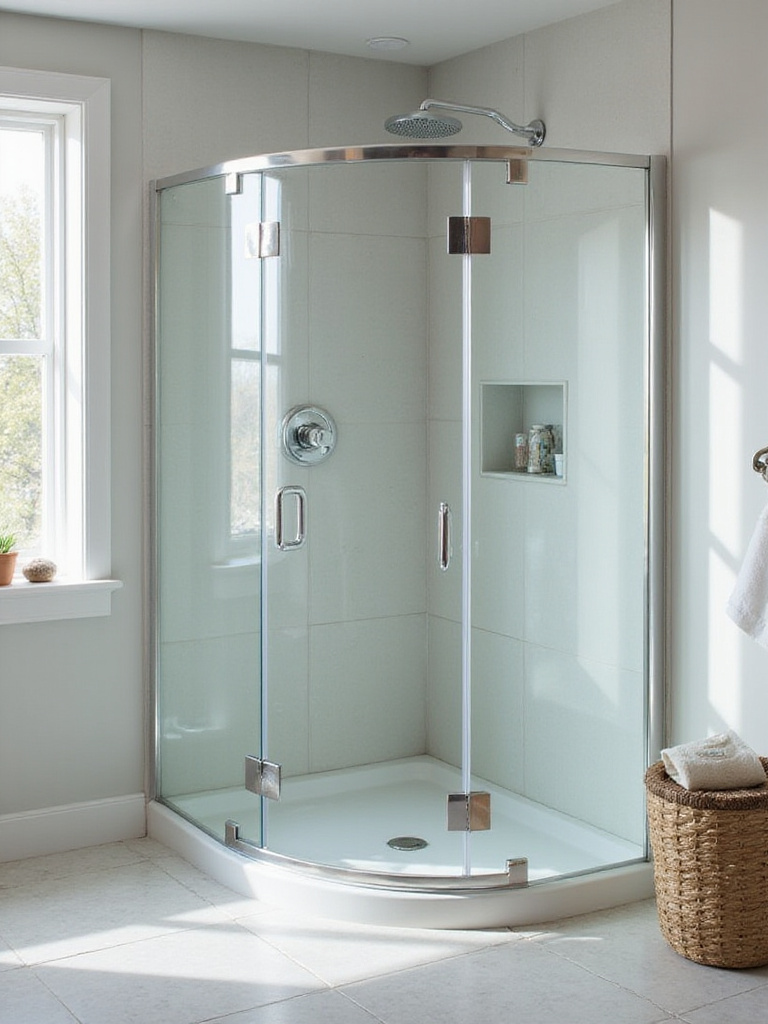
Frameless glass shower doors maximize openness by removing bulky frames, allowing uninterrupted views of tile and stone surfaces. Thick tempered glass panels (3/8″ to 1/2″) require minimal hardware, maintaining clean lines and enhancing the sense of space-especially valuable in smaller bathrooms.
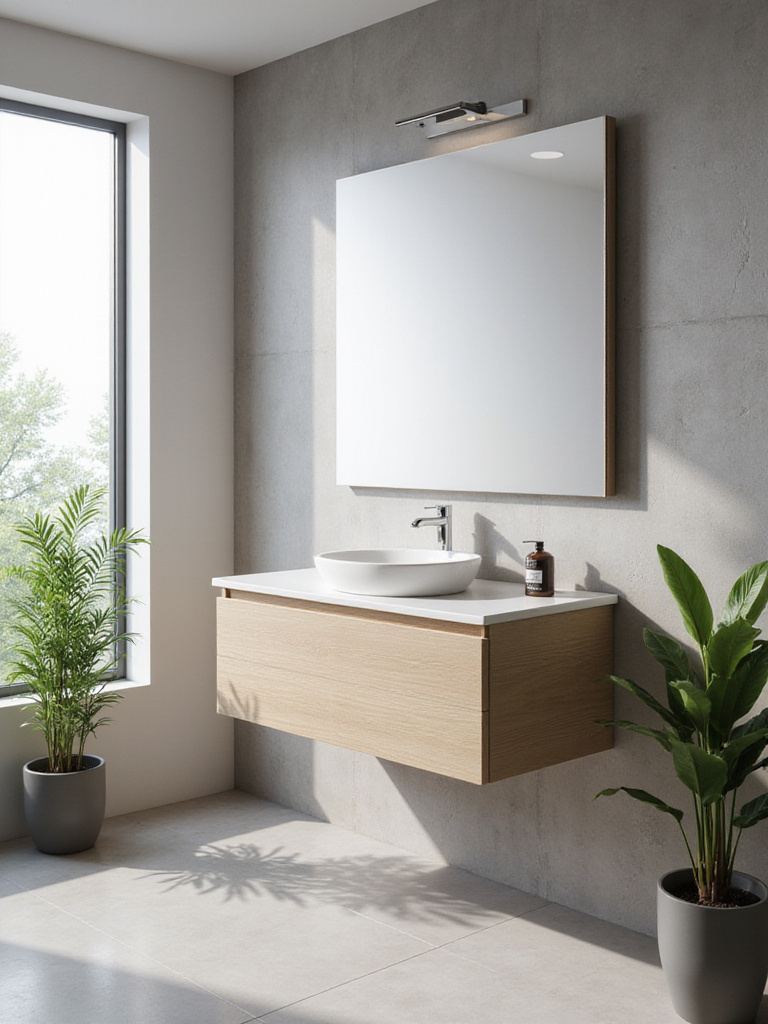
Installation demands precise measurements and professional expertise to accommodate wall and floor irregularities. Durable hardware ensures smooth operation and longevity. Frameless glass is easier to clean than framed alternatives, with fewer crevices for soap scum buildup. Protective coatings can further reduce maintenance by promoting water sheeting.
Transparent enclosures highlight dramatic tile work effectively.
12. Dramatic Tile Patterns: Adding Personality Without Clutter
Incorporating patterned or textured tiles introduces focal points that enliven modern bathrooms while preserving clean aesthetics. Geometric shapes like hexagons, linear arrangements, or book-matched marble slabs create visual intrigue. Restraint is vital-one statement wall or floor area suffices to avoid overwhelming the space.
Scale should match room size: large patterns suit spacious bathrooms, while smaller motifs fit intimate areas. Lighting influences pattern perception, with some designs casting dynamic shadows. Skilled installers are essential for precise alignment and flawless execution. Investing in quality materials and craftsmanship elevates your bathroom beyond standard finishes.
- Placement: Limit to one statement area
- Scale: Match pattern size to room dimensions
- Installation: Requires expert craftsmanship
Patterned tiles provide a stunning backdrop for sculptural fixtures.
13. Freestanding Tubs: Sculptural Elegance and Relaxation
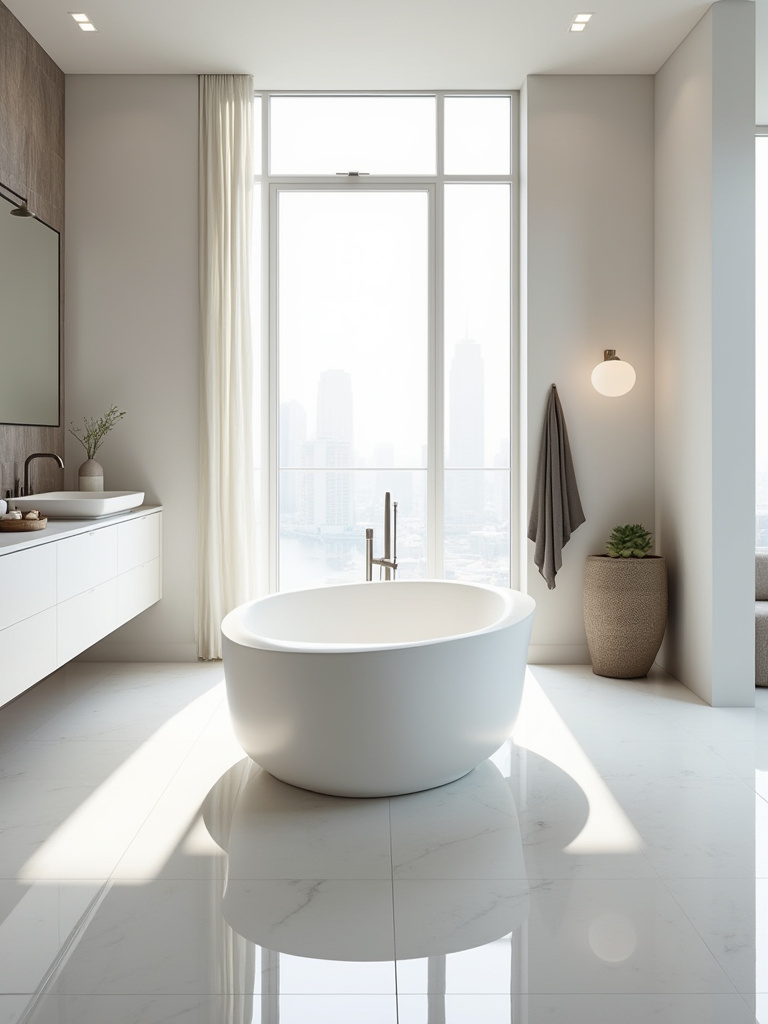
A freestanding tub serves as both a luxurious retreat and a sculptural centerpiece. Modern designs range from sleek geometric forms in materials like solid surface or cast iron to organic shapes that soften angular surroundings. Thoughtful placement considers room flow and proportions, ensuring the tub feels intentionally integrated.
Plumbing varies by tub style; floor-mounted fillers create dramatic vertical accents, while wall-mounted faucets maintain clean sight lines. Filled tubs can be heavy, sometimes necessitating floor reinforcement, especially on upper levels. Positioning near windows or architectural features enhances the bathing experience.
The tub’s presence invites complementary delicate design touches throughout the space.
14. Smart Technology: Seamless Integration for Enhanced Living
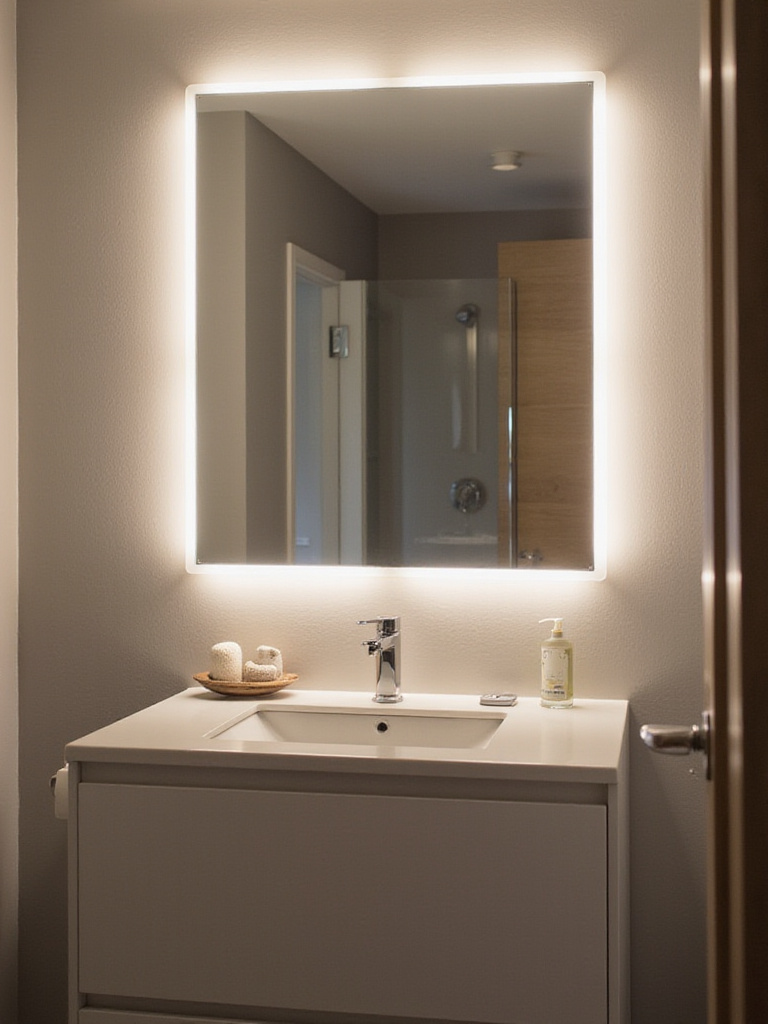
Incorporating smart technology elevates bathroom functionality without visual clutter. Features like smart mirrors with built-in lighting and defogging eliminate post-shower fog and provide optimal illumination. Programmable showers allow users to preset temperature and flow, delivering spa-like experiences while conserving water.
Choose bathroom-rated electronics designed to withstand humidity. Heated floors controlled by smart thermostats offer comfort and energy efficiency. Voice-activated controls for lighting and ventilation add convenience, especially when hands are wet. The goal is intuitive, unobtrusive technology that enhances daily routines.
- Moisture Resistance: Use bathroom-specific components
- Integration: Conceal wiring for clean aesthetics
- User-Friendly: Prioritize simple, intuitive controls
Smart features pair well with radiant heating for ultimate comfort.
15. Radiant Floor Heating: Comfort Beneath Your Feet
Radiant heating transforms bathroom comfort by warming floors evenly, eliminating the shock of cold tiles. Electric heating mats install beneath tile or stone with minimal added height and offer precise temperature control. This system is ideal for renovations, requiring installation before final flooring.
Proper insulation beneath heating elements improves efficiency by reducing heat loss. Programmable thermostats allow warming floors before use and conserving energy when unoccupied. Operating costs are modest relative to the comfort and luxury provided.
Warm floors complement heated towel rails for a spa-like experience.
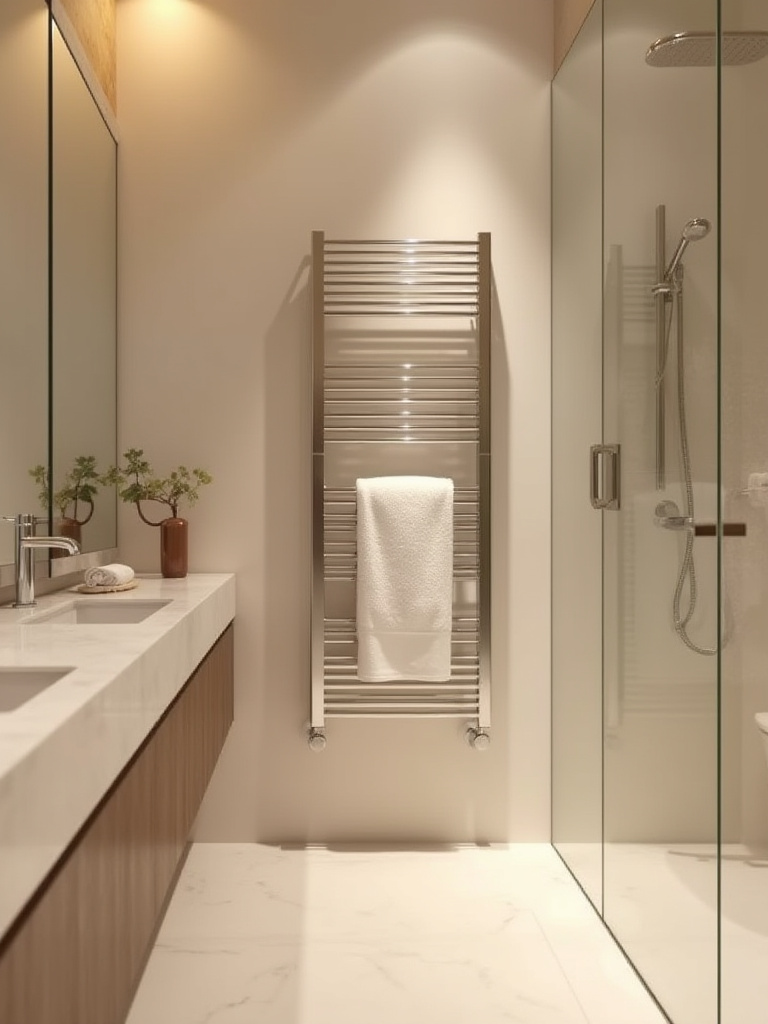
16. Heated Towel Rails: Everyday Indulgence and Humidity Control
Heated towel rails offer the luxury of warm, dry towels while helping reduce bathroom humidity and mildew. Designs range from minimalist geometric styles to traditional ladder racks. Electric models are flexible for retrofits, while hydronic systems integrate with home heating for efficiency.
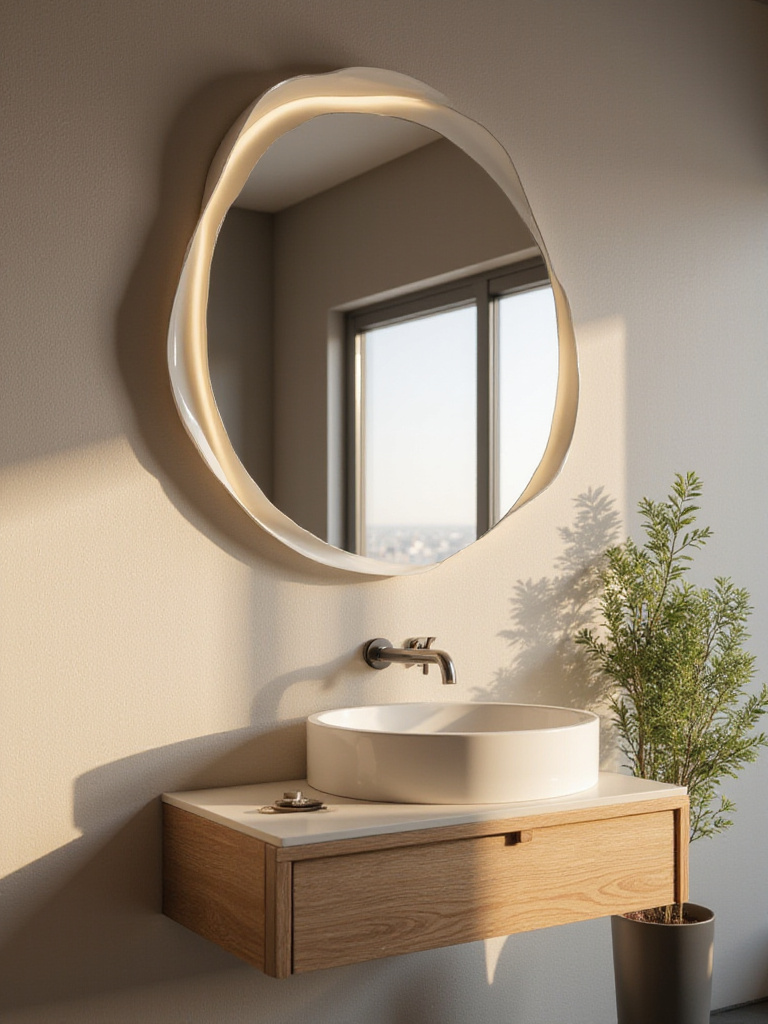
Proper sizing ensures sufficient heat without waste. Placement should allow easy access near showers or tubs without obstructing movement. Timers and thermostats optimize energy use by operating only when needed. The psychological comfort of a warm towel enhances the daily bathroom ritual.
- Size: Match heating capacity to towel quantity and room size
- Controls: Use timers and thermostats for efficiency
- Placement: Accessible without impeding traffic
Natural elements further enrich the bathroom atmosphere.
17. Strategic Greenery: Infusing Life and Freshness
Incorporating plants transforms bathrooms into vibrant, living spaces that connect us with nature and improve air quality. The humid environment suits tropical species that struggle elsewhere. Snake plants and ZZ plants thrive in low light, while ferns and orchids appreciate consistent moisture.
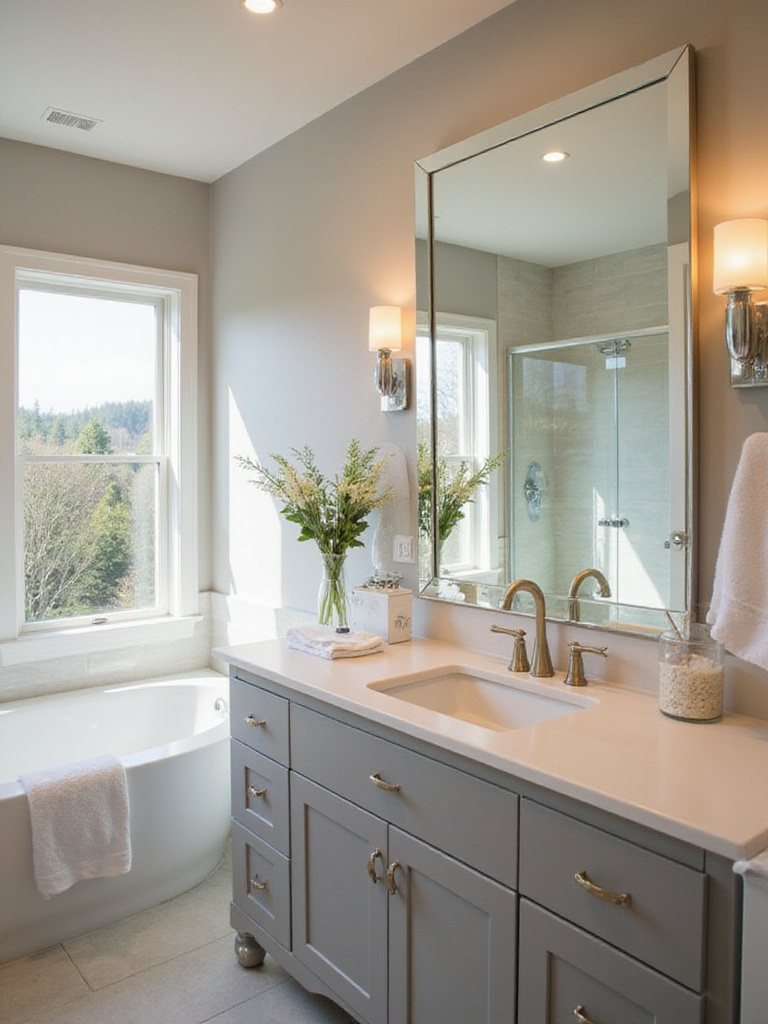
Consider light levels, humidity zones, and maintenance access when placing plants. Hanging planters benefit from shower steam, while countertop plants should avoid direct water spray. Proper drainage prevents root rot and odors. Grouping plants of varied heights and textures softens hard surfaces and geometric lines.
Organic shapes in mirrors complement natural elements.
18. Organic Mirror Shapes: Softening Geometric Lines
Mirrors with rounded or asymmetrical forms contrast the angularity of modern bathrooms, adding softness and visual interest. Circular, oval, or freeform shapes create focal points that feel both contemporary and timeless. Size matters-mirrors should be large enough to serve practical needs and make a design statement.
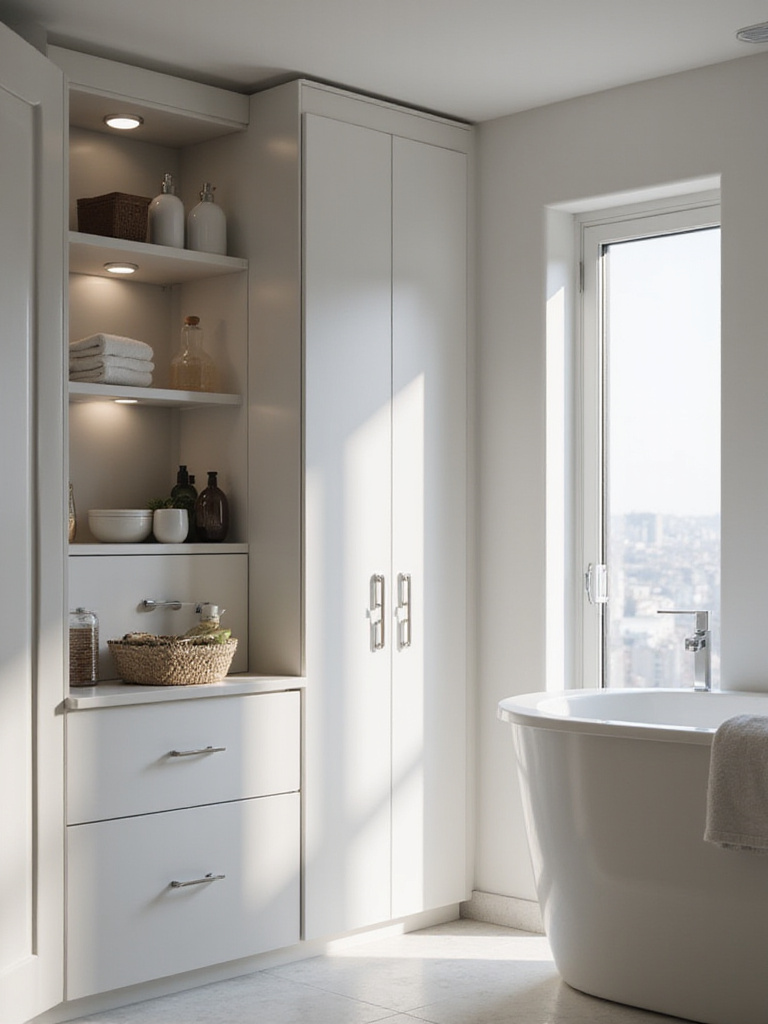
Frameless mirrors maintain clean aesthetics, while thin metal frames add subtle definition. Backlit mirrors enhance drama and provide even lighting for grooming. Position mirrors to reflect the room’s best features, such as tile work, views, or curated accessories.
Textural layering enhances the tactile experience.
19. Layered Textures: Creating Depth and Tactile Appeal
Combining varied textures enriches modern bathrooms, preventing flatness or sterility. The interplay of smooth marble, rugged stone, soft textiles, and sleek metals adds dimension. Materials should balance function and aesthetics-textured tiles provide slip resistance while enhancing visual interest.
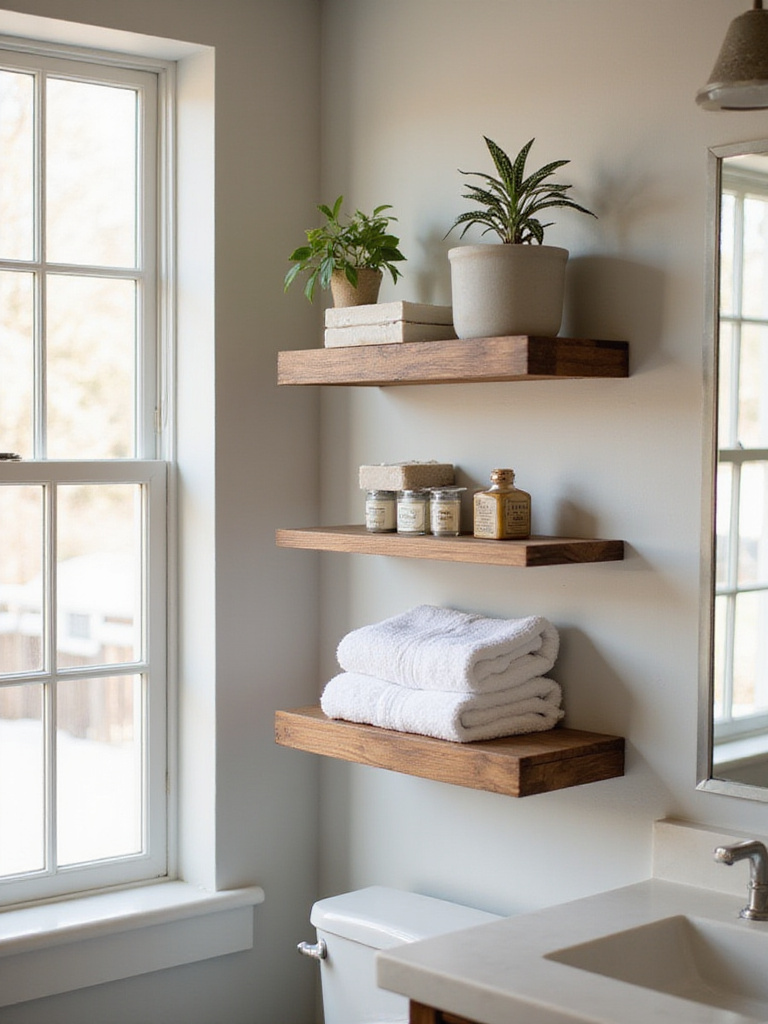
Balance is crucial-limit material variety while varying finishes and textures. For example, using the same stone in polished and honed finishes creates subtle contrast within a cohesive palette. Textiles like towels and mats introduce softness and color, easily updated to refresh the look.
- Balance: Limit materials, vary textures
- Function: Textured surfaces for safety
- Flexibility: Textiles allow seasonal updates
Minimalist accessories complete the curated look.
20. Minimal Accessories: Intentional and Impactful
Modern bathrooms thrive on restraint-each accessory should serve a purpose or add beauty without clutter. A single sculptural vase, a piece of art, or an elegant soap dispenser can personalize the space subtly. The focus is on curation, selecting items that complement rather than compete with architectural features.
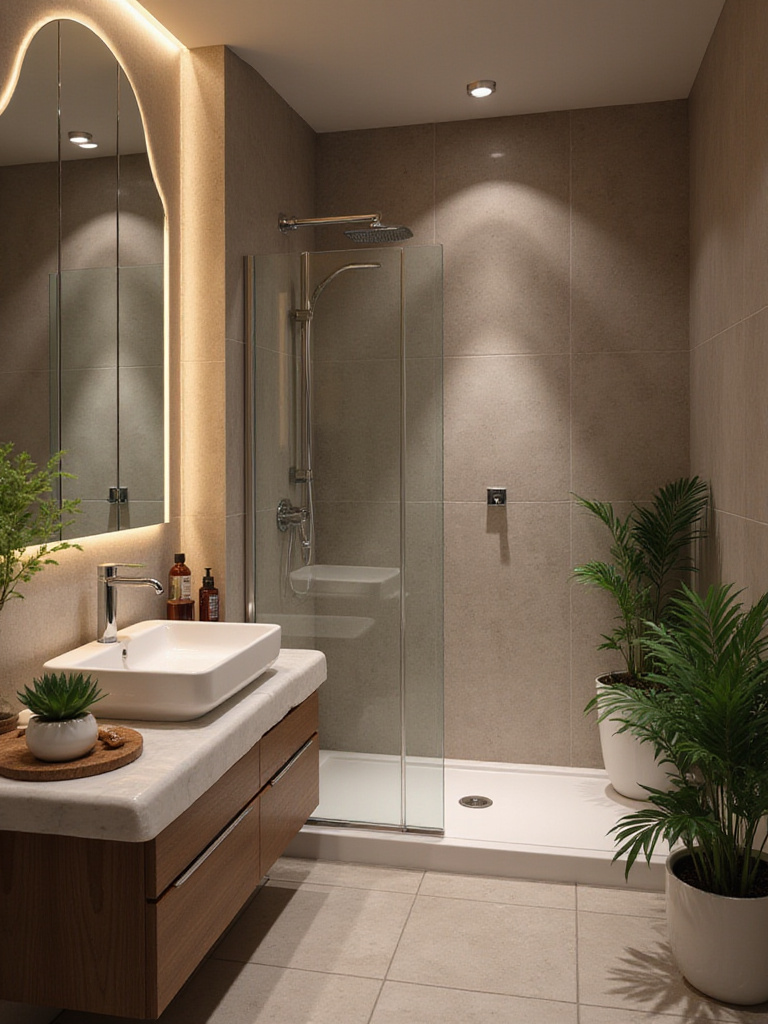
Storage solutions should accommodate daily essentials while maintaining visual calm. Attractive containers can organize items and contribute to the aesthetic. Choose accessory colors that harmonize with the palette-neutral tones preserve serenity, while selective accents inject personality. The result is a space that feels intentional, uncluttered, and sophisticated.
Thoughtful accessory curation aligns with optimizing light and privacy.
21. Balancing Natural Light and Privacy: Bright Yet Discreet
Natural light enhances bathrooms by making them feel spacious and connected to the outdoors. Privacy concerns require creative solutions such as frosted or textured glass, window films, or strategically placed openings. Skylights offer excellent illumination without compromising discretion.
Window treatments should complement the modern style. Motorized shades provide convenience and clean lines, while cellular blinds add insulation and light control. Consider seasonal light variations-what works in summer may differ in winter. Artificial lighting should enhance, not replace, natural light for seamless transitions.
- Privacy: Frosted glass and films maintain light and discretion
- Seasonal Planning: Account for changing daylight
- Treatments: Motorized options for ease and style
Layered lighting schemes support mood and function.
22. Ambient Lighting Layers: Control and Comfort
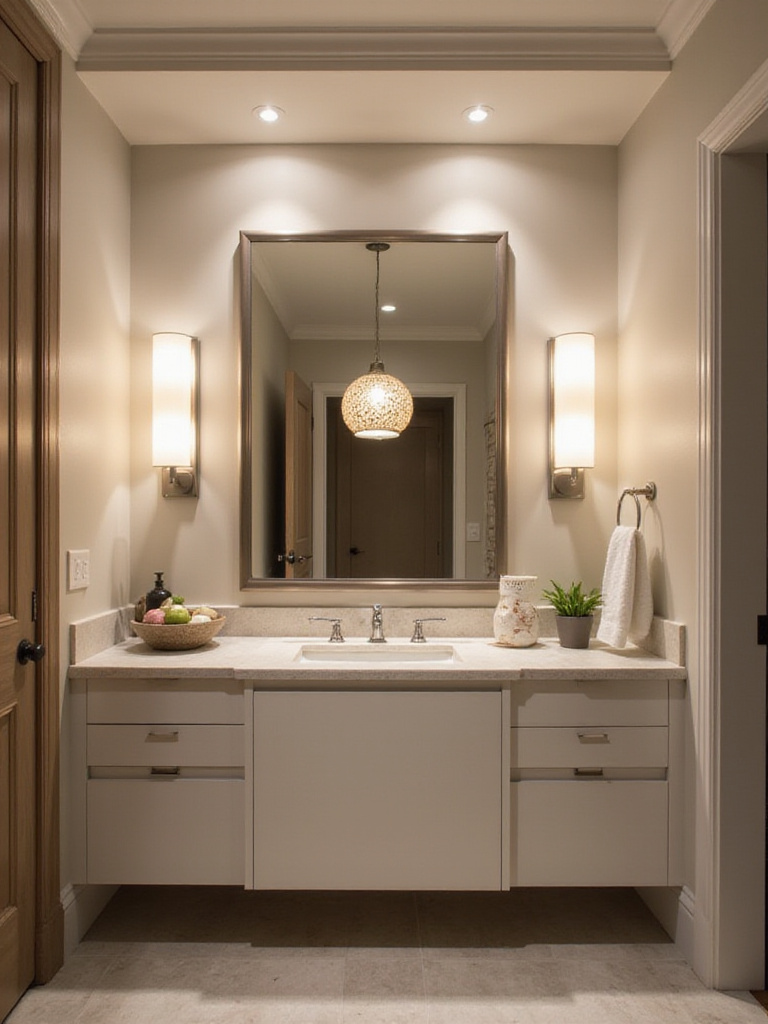
Effective bathroom lighting combines general, task, and accent sources. Recessed ceiling lights provide overall illumination, vanity lights eliminate shadows for grooming, and accent lighting in niches or under vanities adds depth and ambiance. Dimmers enable transitions from bright task lighting to soft relaxation modes.
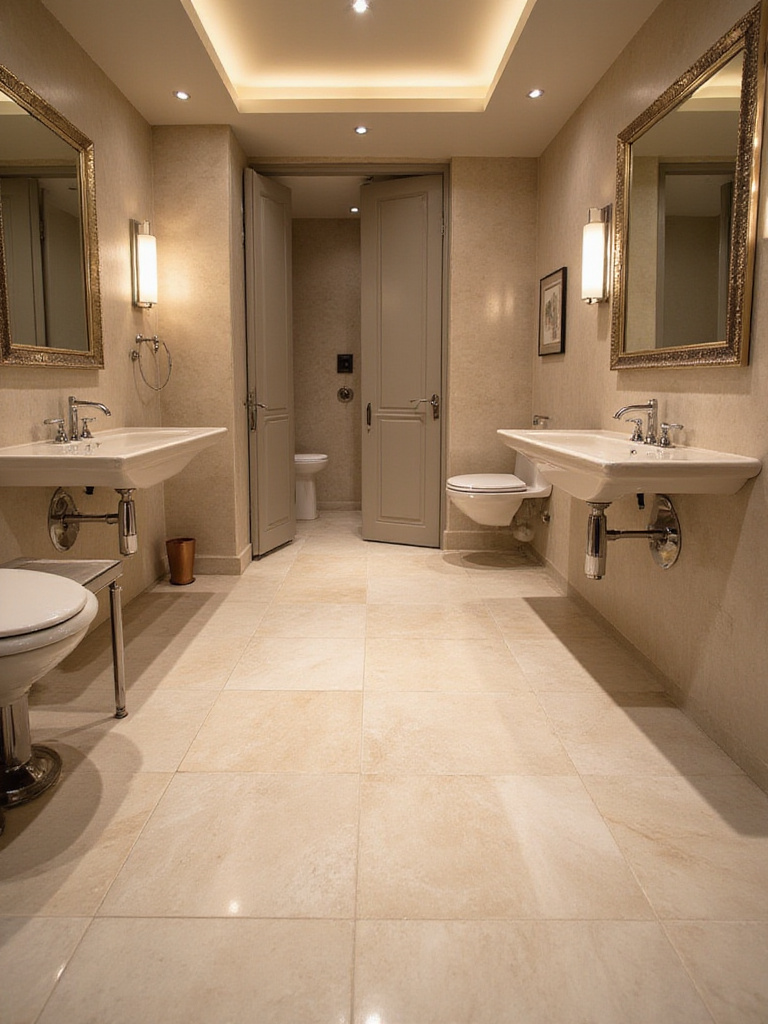
Color temperature influences both mood and function: cooler light (3500K-4000K) aids precision tasks, while warmer tones (2700K-3000K) foster relaxation. LED technology offers energy efficiency and long life, with precise control over brightness and color.
Acoustic comfort completes the sensory environment.
23. Acoustic Design: Enhancing Serenity Through Sound Control
Sound quality profoundly affects bathroom comfort but is often overlooked. Hard surfaces like tile and glass can cause echoes and amplify mechanical noises. Incorporating soft textiles such as towels and mats absorbs sound, while textured surfaces break reflections. Choose quiet ventilation fans rated at 1.0 sone or less and plumbing fixtures designed for low noise.
- Material Mix: Combine hard and soft surfaces to reduce echo
- Equipment: Select quiet fans and plumbing fixtures
- Noise Control: Invest in quality fixtures for peaceful operation
Addressing acoustics completes the immersive bathroom experience.
24. Planning for Longevity: Adaptability and Upkeep
Exceptional bathroom designs anticipate future needs while maintaining timeless style. Universal design features-wider doorways, curbless showers, comfort-height fixtures-improve accessibility without sacrificing aesthetics. These elements often prove invaluable sooner than expected, accommodating temporary injuries, aging, or convenience.
Maintenance considerations should guide material and fixture choices. Natural stone offers unmatched beauty but requires sealing and careful cleaning. Engineered alternatives can mimic aesthetics with less upkeep. Consider how finishes age-some develop attractive patinas, others may show wear. The goal is a bathroom that remains functional and beautiful for decades, adapting gracefully to changing needs.
Thoughtful planning ensures your modern bathroom remains a source of daily joy and practical value.
Conclusion: Crafting Your Modern Bathroom Sanctuary
Designing a modern bathroom that enriches your daily life involves more than chasing trends-it requires deliberate choices that balance function and ambiance. These ideas reflect proven strategies used by professionals to create spaces that feel both current and enduring. From calming neutral palettes and expansive tiles to smart technology and curated accessories, each element contributes to a tranquil, efficient, and personalized environment.
Begin by assessing your needs, preferences, and constraints. Whether updating a compact powder room or a spacious master bath, prioritize quality, embrace simplicity, and invest in lasting elements. Remember, transformations can happen in stages-you don’t need to implement every idea simultaneously to achieve meaningful improvement.
Your modern bathroom retreat awaits. Select the concepts that resonate with your vision, plan realistically, and invest thoughtfully. The result will be a beautifully appointed space that elevates everyday routines into moments of calm and renewal, rewarding you every time you enter.